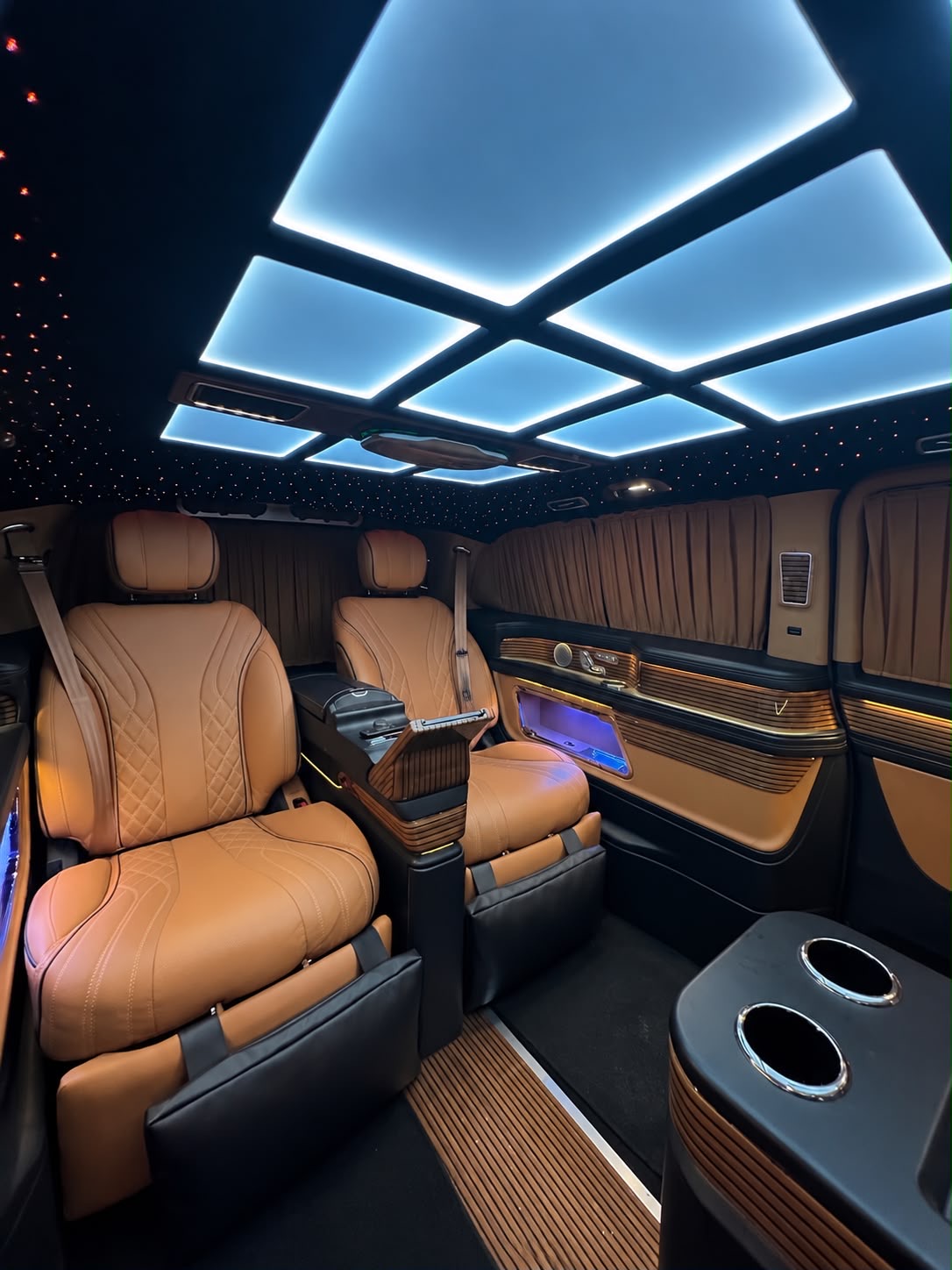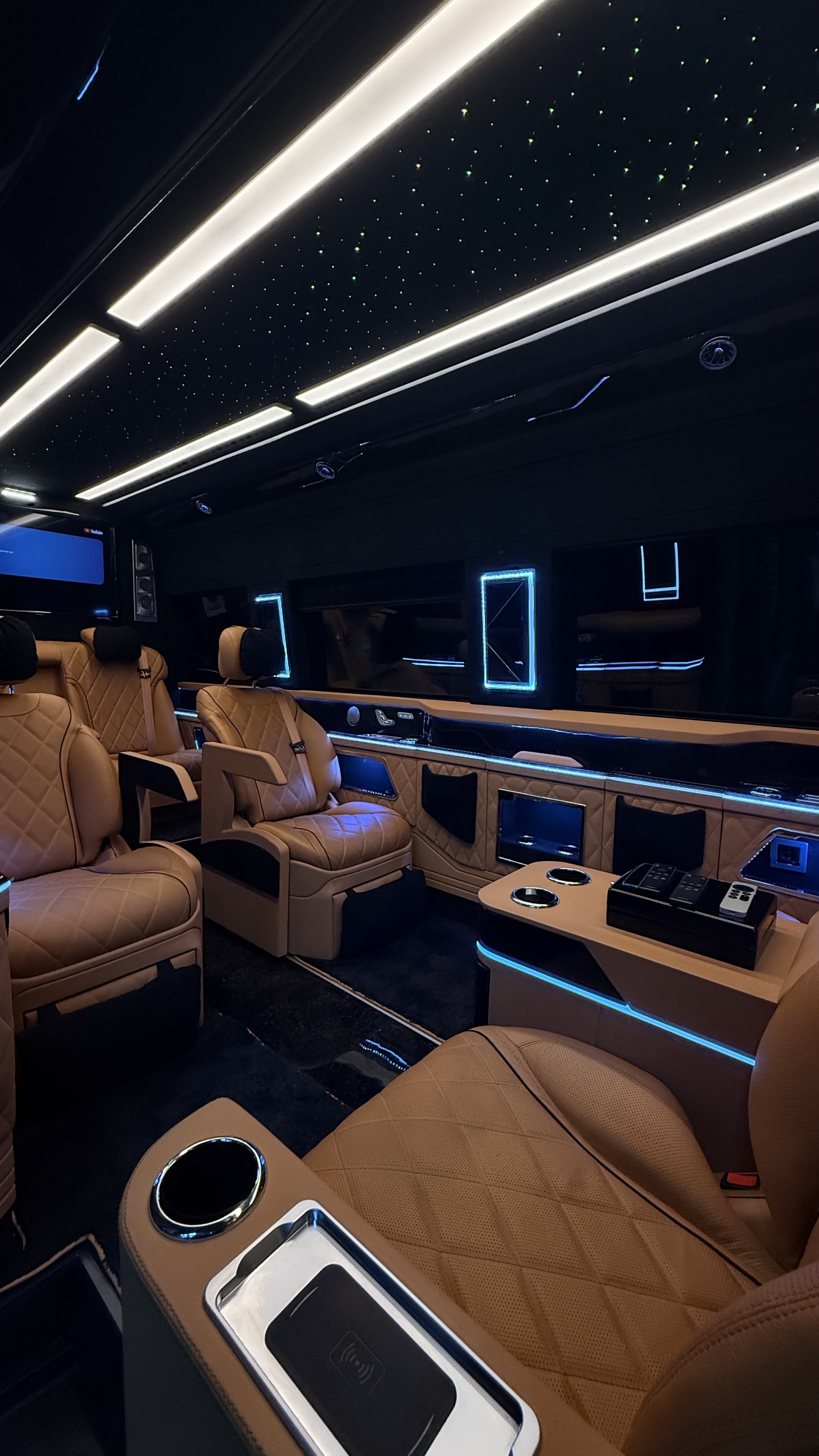
Planning a Mercedes V-Class VIP conversion in the UK? Explore three executive interior layout approaches for chauffeur-driven travel, including forward-facing executive seating, face-to-face configurations and passenger-focused console arrangements. Learn how privacy, legroom, access and everyday usability influence a bespoke V-Class conversion.
Mercedes V-Class VIP Conversion UK: Why the Interior Layout Matters
A Mercedes V-Class VIP conversion should begin with one question: how will the rear passengers actually use the vehicle?
For a UK executive client, a chauffeur-driven V-Class may be used for short city journeys, airport collections, business appointments or longer intercity travel.
Each situation places different demands on seating, legroom, privacy and equipment.
Rather than selecting seats and consoles separately, the complete interior layout should be planned around the intended journey.
Layout 1: Forward-Facing Executive Seating
A forward-facing executive layout prioritises passengers who spend most journeys seated in the direction of travel.
This arrangement can suit owners who want a calm, individual seating environment.
Advantages for Executive Passengers
Depending on the vehicle configuration and approved installation, forward-facing seating may support:
- Clear personal seating positions
- Convenient access to individual controls
- A straightforward passenger experience
- A layout designed around private executive travel
Seat size and reclining movement must be checked against the actual cabin dimensions.
A large luxury seat is not useful if it cannot operate comfortably within the available space.
Layout 2: Face-to-Face VIP Seating
A face-to-face arrangement can create a more conversational cabin atmosphere.
This concept may appeal to clients who frequently travel with colleagues or guests.
However, it requires careful assessment of legroom, passenger movement, seat orientation and applicable safety requirements.
Is Face-to-Face Seating Suitable for Every Journey?
Not necessarily.
A layout that looks impressive in photographs may feel less practical during frequent short journeys.
Seat orientation, occupant restraint systems and installation approval must be assessed before choosing this configuration.
The decision should follow the passengers' needs rather than a visual trend.
Layout 3: Executive Seating with a Bespoke Centre Console
Some UK clients prefer a more individual environment with a dedicated centre console.
Depending on the available space, a console can incorporate cup holders, storage, charging and selected passenger controls.
Avoid Reducing Usable Legroom
Console width and position should be assessed together with the full movement range of the seats.
A centre console should improve the passenger experience without restricting access or making the cabin unnecessarily crowded.
Chauffeur-Driven Travel: Privacy and Passenger Access
For chauffeur-driven vehicles, rear passenger privacy can be an important design priority.
Window curtains, privacy glazing where lawful, interior lighting and selected partition solutions may all affect the experience.
However, additional components must not obstruct required visibility, emergency access or essential vehicle functions.
The appropriate approach depends on the vehicle and the applicable technical requirements.
Planning Seat Controls and Charging Positions
Charging points and passenger controls should be accessible from the actual seated position.
Their locations should be considered before side panels and consoles are manufactured.
A well-designed executive cabin avoids long visible cables and awkwardly positioned switches.
Why the Base Vehicle Specification Matters
Mercedes V-Class vehicles can differ in length, original seating configuration and factory equipment.
Before commissioning a conversion, the actual vehicle specification should be reviewed.
The design must account for factory climate control, electrical systems, doors, seat mounting points and other relevant equipment.
For further background, explore our Mercedes V-Class VIP conversion UK guide.
V-Class or Sprinter for Executive Travel?
A V-Class may suit customers who prioritise a refined passenger cabin within a comparatively compact vehicle.
A Mercedes Sprinter offers more interior volume for projects requiring additional seating, larger equipment or a more extensive passenger lounge.
Our Mercedes Sprinter conversion UK guide explores that alternative.
Technical Planning Before Production
Interior design approval should not be based on appearance alone.
Seating installation, restraint systems, electrical integration, service access and relevant UK vehicle approval requirements should be evaluated for the individual project.
Our article on VIP conversion documentation and seat anchorage provides additional technical context for larger conversions.
Bespoke Mercedes V-Class Executive Interiors by Silver VIP Design
Silver VIP Design develops personalised Mercedes VIP interiors at its Istanbul production centre for customers in Turkey and international markets.
For UK clients considering a Mercedes V-Class VIP conversion, the best layout is the one that balances passenger comfort, practical access, suitable technical integration and the intended style of travel.
A successful executive conversion starts with the way the vehicle will be used, not simply the number of luxury features it can accommodate.