What stages does the VIP vehicle design process consist of, from needs analysis to design, from insulation to electrical and flooring applications, from assembly to final checks?
The VIP vehicle design process is a comprehensive transformation that begins with understanding how the vehicle will be used and continues through interior design, technical planning, production, installation and final checks.
Since every vehicle and every customer's expectations are different, the first step of a successful VIP conversion project is careful planning. At Silver VIP Design, each project is developed according to the vehicle model, intended use, passenger layout, comfort requirements and the customer's design preferences.
A well-planned VIP interior should not only look luxurious. Seating comfort, passenger movement, electrical infrastructure, climate control, insulation, multimedia, storage and the long-term usability of the vehicle should all work together as part of the same design.
For an overview of our approach to Mercedes vehicles, you can also explore our Mercedes Luxury Van Conversion UK content.
1. Needs Analysis and Project Planning
The first stage of the VIP vehicle design process is determining exactly how the vehicle will be used.
The requirements of an executive vehicle may be very different from those of a family vehicle, chauffeur-driven vehicle or luxury passenger transport vehicle.
For this reason, seating capacity, passenger layout, storage requirements, luggage space and technological equipment should be considered before production begins.
Determining the Purpose of Use
The number of passengers, frequency of long-distance travel, urban use and the functions specifically requested by the customer are evaluated at this stage.
A chauffeur-driven vehicle may place greater emphasis on rear-passenger comfort, privacy and controls, while a vehicle intended for long journeys may require greater attention to seating ergonomics, storage, luggage capacity and climate control.
Defining these requirements early helps create a more coherent project during the following stages.
2. Creating the Interior Design
Once the requirements have been identified, the interior concept can be developed.
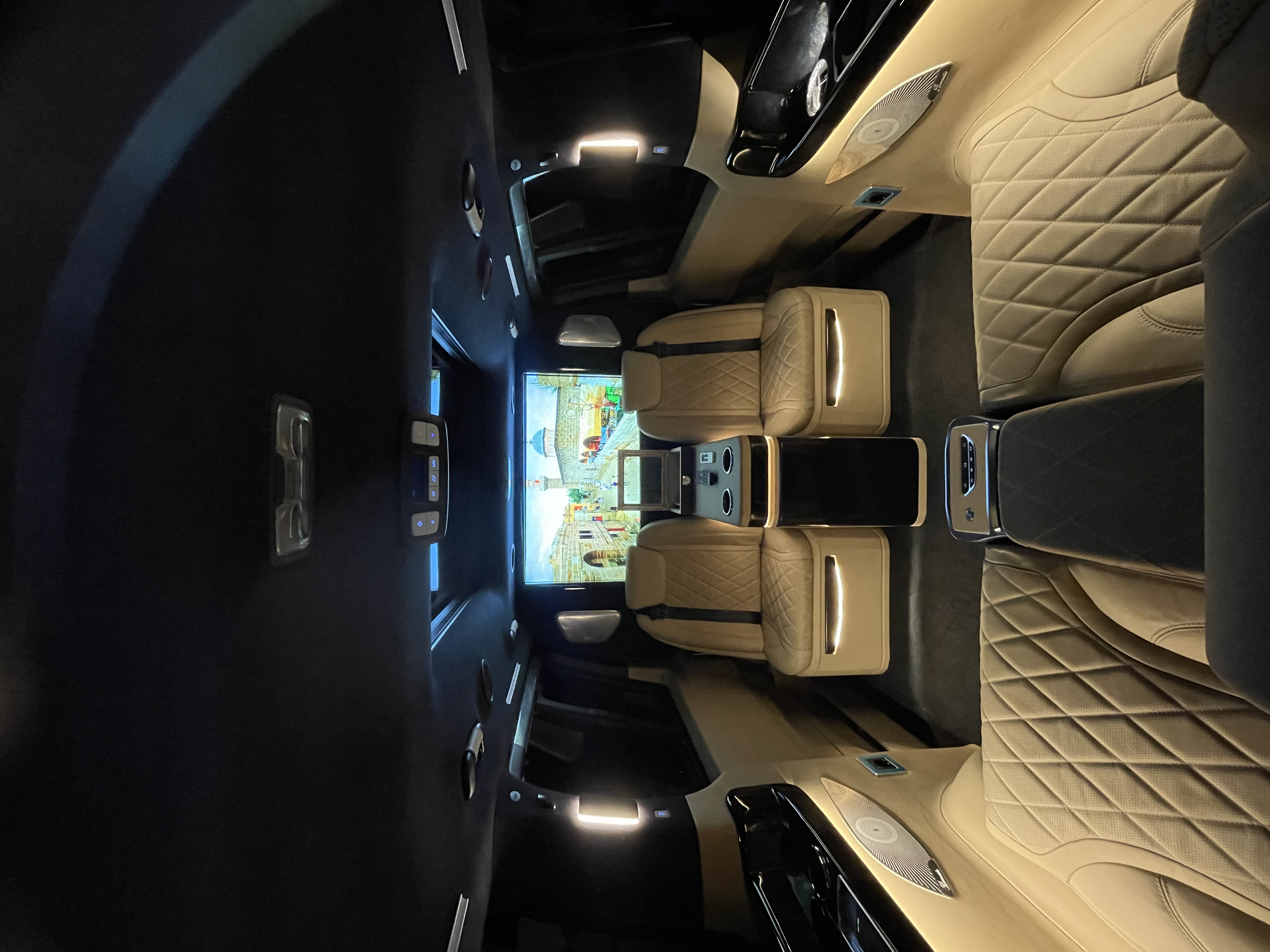
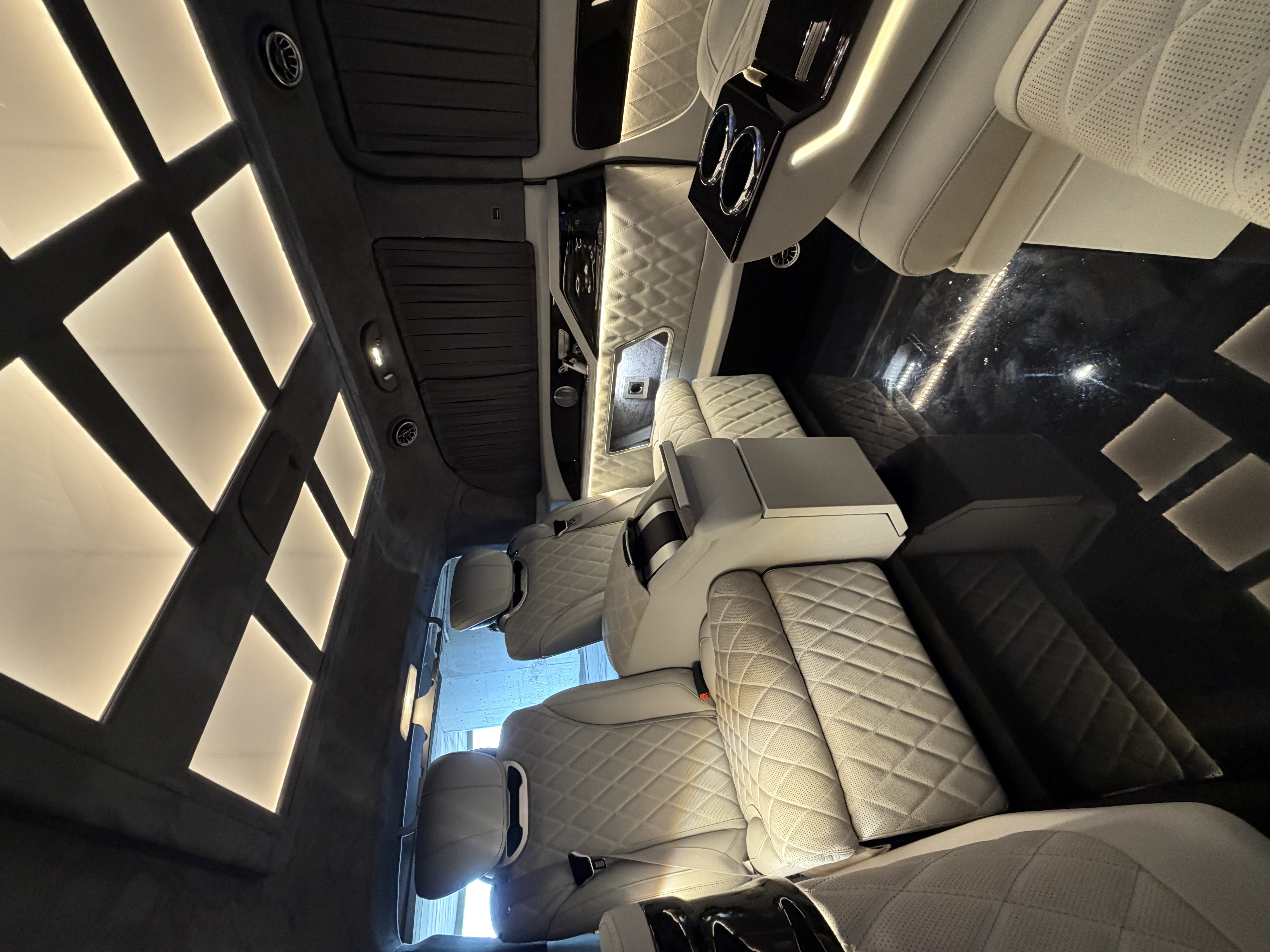
The position of the seats, centre console, side panels, ceiling design, storage areas and other interior components should be planned as parts of the same environment.
Seat Layout and Passenger Space
VIP seats can require considerably more room than standard passenger seats, particularly when they include powered adjustment or leg rests.
The design should therefore consider not only the normal seating position but also the space required when the seats move, recline or extend.
Passenger access and movement through the cabin should also remain practical.
Colour and Material Selection
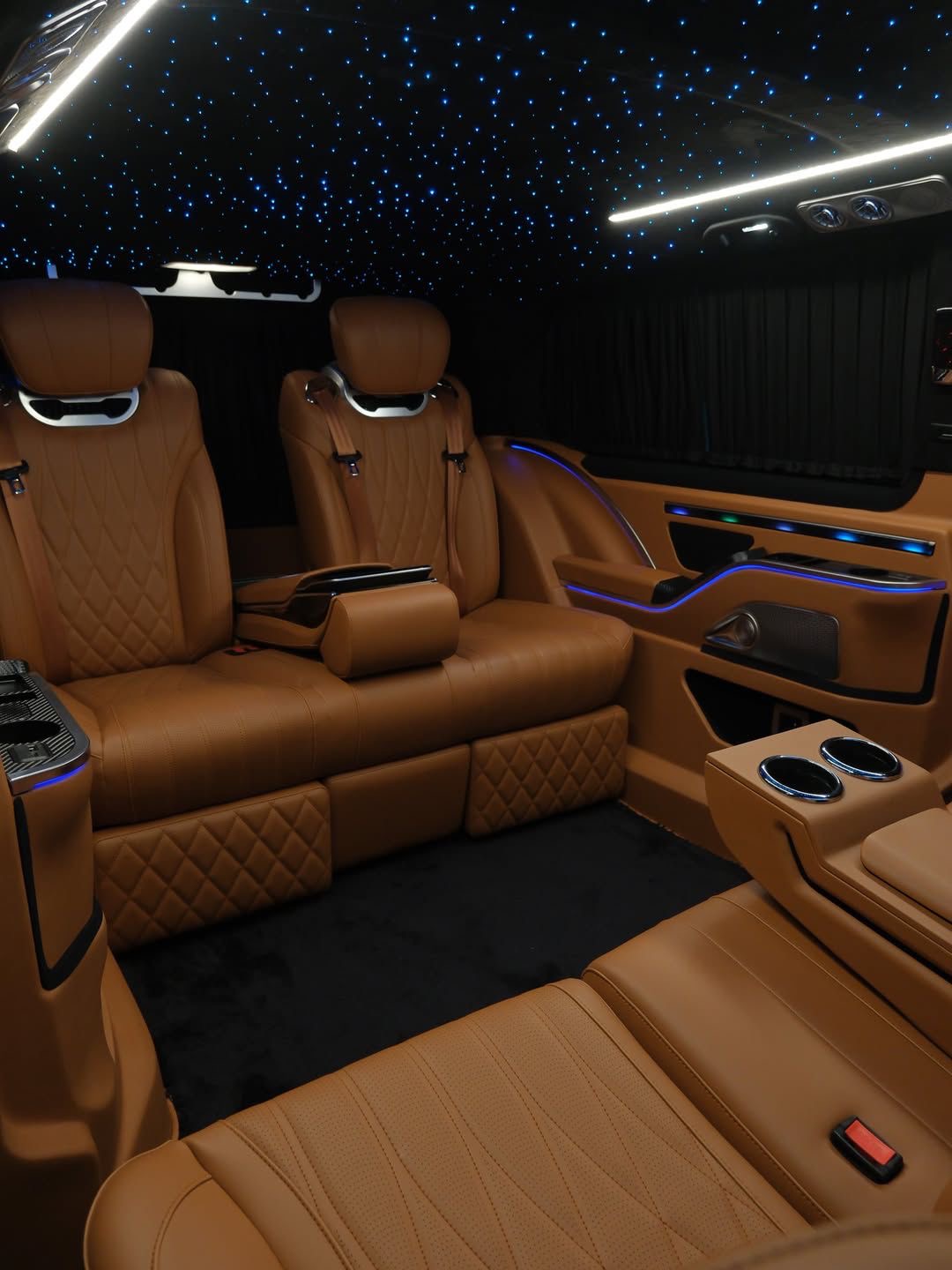
Leather colour, stitching details, Alcantara, decorative surfaces and other materials are selected according to the overall design direction of the project.
The objective is not simply to combine individually attractive components. The materials should create a consistent design language throughout the vehicle.
3. Preparing the Vehicle Interior for Conversion
After the design and project planning have been completed, the vehicle can be prepared for the production stage.
The areas included within the scope of the conversion are prepared in a controlled manner so that the required technical and interior work can be carried out in the correct sequence.
Planning the Production Sequence
The order of production is important because many systems are located behind the finished surfaces.
Insulation, wiring and other technical infrastructure should generally be considered before decorative panels and upholstery are completed.
Planning this sequence can help reduce unnecessary intervention in finished interior components later in the project.
4. Sound and Thermal Insulation
Before the finished interior is installed, sound and thermal insulation required by the project can be applied.
Appropriate sound insulation can help reduce the effect of road, tyre and body-related noise inside the passenger compartment.
Thermal insulation can also support passenger comfort under different weather conditions.
Why Is Insulation Completed Early?
Insulation materials are generally positioned behind the finished interior surfaces.
For this reason, the relevant work should be planned before decorative panels, flooring and other finished components are installed.
The effectiveness of an insulation application depends not only on the material selected but also on where and how it is installed.
5. Electrical and Technology Infrastructure
A modern VIP vehicle can contain numerous electrical and electronic systems.
Powered seats, ambient lighting, star ceilings, televisions, refrigerators, USB and USB-C connections, wireless charging and multimedia equipment all require suitable electrical planning.
Wiring Should Be Planned Before the Finished Interior
Cable routes and connection points should be considered before the decorative interior is completed.
This allows the electrical system to be integrated more cleanly into the vehicle.
Where practical, access to important technical components should also be considered so that future inspection or service does not unnecessarily require major interior disassembly.
6. Climate Control and Passenger Airflow
Climate control is an important part of VIP vehicle design, particularly when the original ceiling, side panels or seating arrangement are significantly changed.
A powerful air-conditioning system alone does not guarantee comfortable airflow throughout the passenger compartment.
Air Must Reach the Passenger Positions
New panels, consoles or other interior components should not unnecessarily obstruct important air outlets.
The location of the passengers should be considered when planning how warm or cool air moves through the rear cabin.
This becomes particularly important in larger vehicles such as the Mercedes Sprinter, where the passenger compartment can be considerably longer.
7. Upholstery and Interior Components
Once the main technical infrastructure has been prepared, the components that establish the visual character of the interior can be installed.
Leather upholstery, Alcantara ceiling surfaces, side panels, decorative components and project-specific interior parts are applied according to the selected design.
Workmanship and Design Integrity
Stitching lines, joints, panel transitions and the relationship between different surfaces influence the overall appearance of the finished cabin.
For this reason, material quality alone does not determine the final result.
The way those materials are cut, fitted and combined is also an important part of VIP vehicle design.
8. VIP Seat Installation
Seats are one of the most important components in determining passenger comfort.
Depending on the project and the selected seating system, VIP seats may include powered adjustment, heating, ventilation or cooling, massage and powered leg-rest functions.
Seat Movement Must Be Tested in the Real Cabin
A seat may fit perfectly in its normal position but interfere with another component when moved backwards or when its leg rest is extended.
For this reason, seat positioning should be considered together with consoles, side panels and other seats.
Legroom and passenger movement should remain part of the overall calculation.
9. Bespoke Centre Console
A centre console can become both a functional and visual focal point of a VIP interior.
Depending on the project, it can incorporate storage, cup holders, a refrigerator, wireless charging and passenger controls.
Console Dimensions Should Follow the Cabin Layout
A larger console can provide additional functions, but it should not unnecessarily restrict seat movement or passenger access.
Its dimensions should therefore be determined according to the actual seating configuration rather than considered as an independent component.
10. Multimedia and Connectivity
Technology is now an integral part of a modern VIP interior.
Large displays, premium audio, wireless charging, USB and USB-C connections and passenger control systems can be incorporated according to the requirements of the project.
Technology Should Be Positioned for Real Use
The location of a screen affects its viewing angle.
Likewise, charging connections and controls should be positioned where passengers can reach them comfortably.
Technology should make the cabin more practical rather than simply increasing the number of visible features.
11. Star Ceiling and Ambient Lighting
Lighting can significantly influence the atmosphere of a VIP passenger compartment.
Star ceiling systems, ambient LED lighting and indirect illumination can be incorporated according to the overall interior concept.
Balanced Lighting Creates a Better Cabin Environment
The objective is not necessarily to use the greatest possible amount of lighting.
Different lighting levels can be considered for travelling, relaxing or working, particularly during night journeys.
The lighting should complement the leather, Alcantara and decorative surfaces used throughout the interior.
12. Mercedes Vito and V-Class VIP Conversion
Mercedes Vito and V-Class models can provide a practical platform for a VIP conversion where exterior dimensions and everyday usability remain important.
Careful use of the available cabin space becomes particularly important when large VIP seats, centre consoles and additional technology are installed.
Efficient Use of Interior Space
Every component should have a clear purpose.
The seating layout, storage, charging points and other equipment should be positioned without unnecessarily reducing passenger movement.
For more on bespoke V-Class interiors, see our Mercedes V-Class VIP Conversion UK article.
13. Mercedes Sprinter VIP Conversion
The Mercedes Sprinter offers significantly more interior volume and allows different passenger layouts to be considered.
It can be developed for executive travel, private use, chauffeur-driven transport and other premium passenger applications.
More Space Still Requires Careful Planning
A larger cabin should not automatically be filled with more equipment.
Seating, passenger movement, centre consoles, storage and luggage capacity should remain balanced.
The specification of the base vehicle can also influence the possibilities of the finished conversion. You can read more in our guide to Mercedes Sprinter VIP Conversion UK and base vehicle selection.
14. Storage and Luggage Planning
Passenger comfort should not be achieved at the expense of practical storage.
A vehicle designed for family use, chauffeur service or long-distance journeys may need sufficient space for suitcases and personal belongings.
Balance Luxury with Practicality
Adding more seats or larger consoles does not automatically create a better VIP vehicle.
Passenger capacity, luggage requirements and cabin equipment should be balanced according to how the vehicle will actually be used.
15. Lighting and System Checks
After the main installation has been completed, the electrical and functional systems included in the project should be checked.
Ambient lighting, star ceiling functions, powered seats, charging systems, multimedia and other equipment can be tested individually and together.
Systems Should Work Together
It is not enough for each component to function independently.
The overall cabin should also be evaluated in realistic passenger positions to confirm that controls are accessible and moving components do not unnecessarily interfere with one another.
16. Final Check and Vehicle Delivery
The final stage of the VIP vehicle transformation is the overall inspection of the completed interior.
Interior components, upholstery details, lighting, electrical systems and functional equipment are reviewed before delivery.
Final Interior Review
Panel alignment, upholstery transitions, seat operation and the general condition of the passenger compartment can be checked as part of the completion process.
After the relevant checks have been completed, the vehicle is prepared for delivery to the customer.
Why Is Planning Important in VIP Vehicle Design?
A quality VIP vehicle transformation is not determined only by the final appearance.
The relationship between interior design, passenger comfort, technical infrastructure and the order of production has a major influence on how practical the finished vehicle will be.
At Silver VIP Design, we develop personalised interior projects for different vehicle models, particularly Mercedes Vito, V-Class and Sprinter, according to the customer's intended use and design requirements.
The objective is to create a VIP interior in which design, comfort, technology and functionality work together as one complete passenger environment.