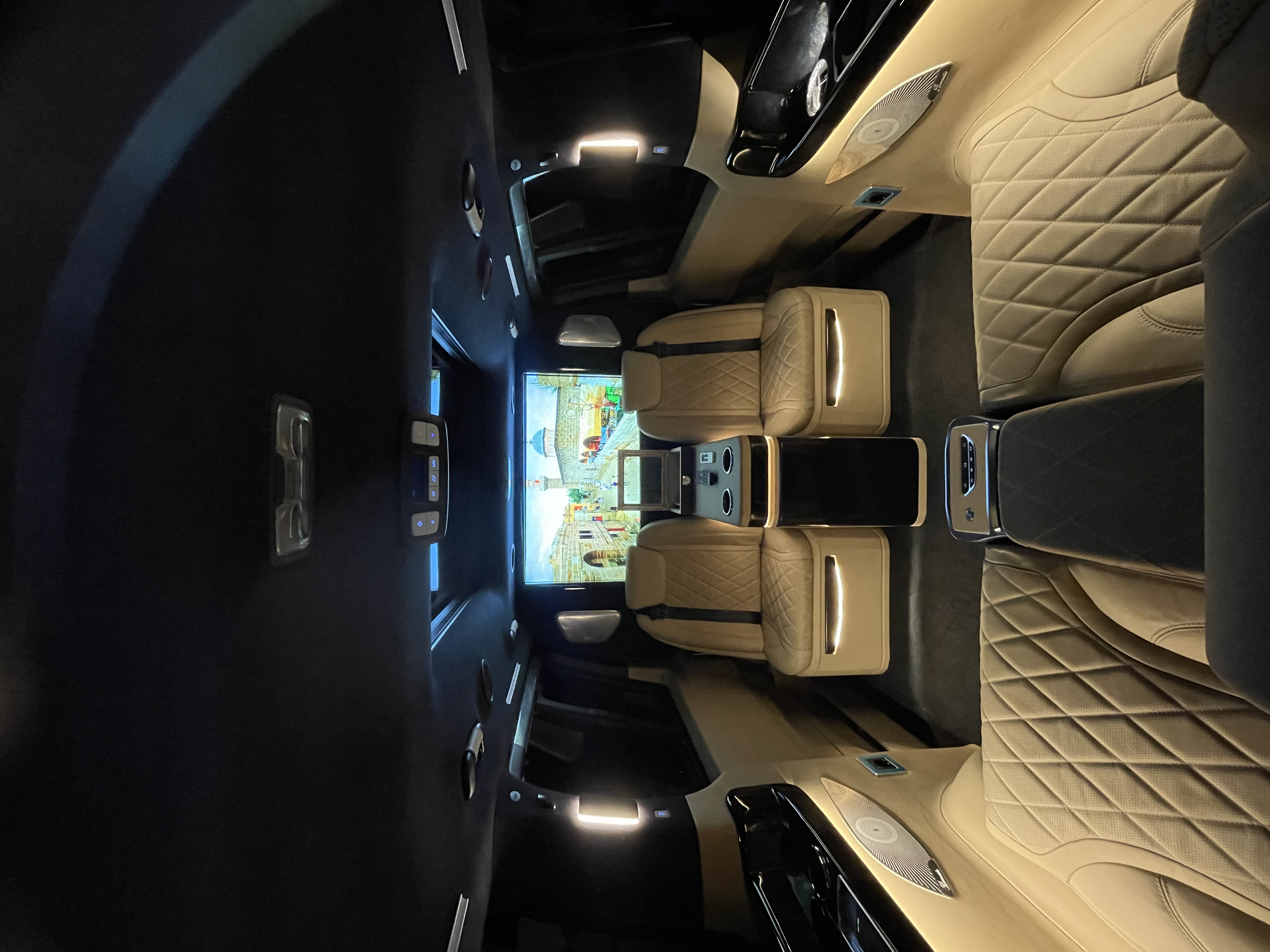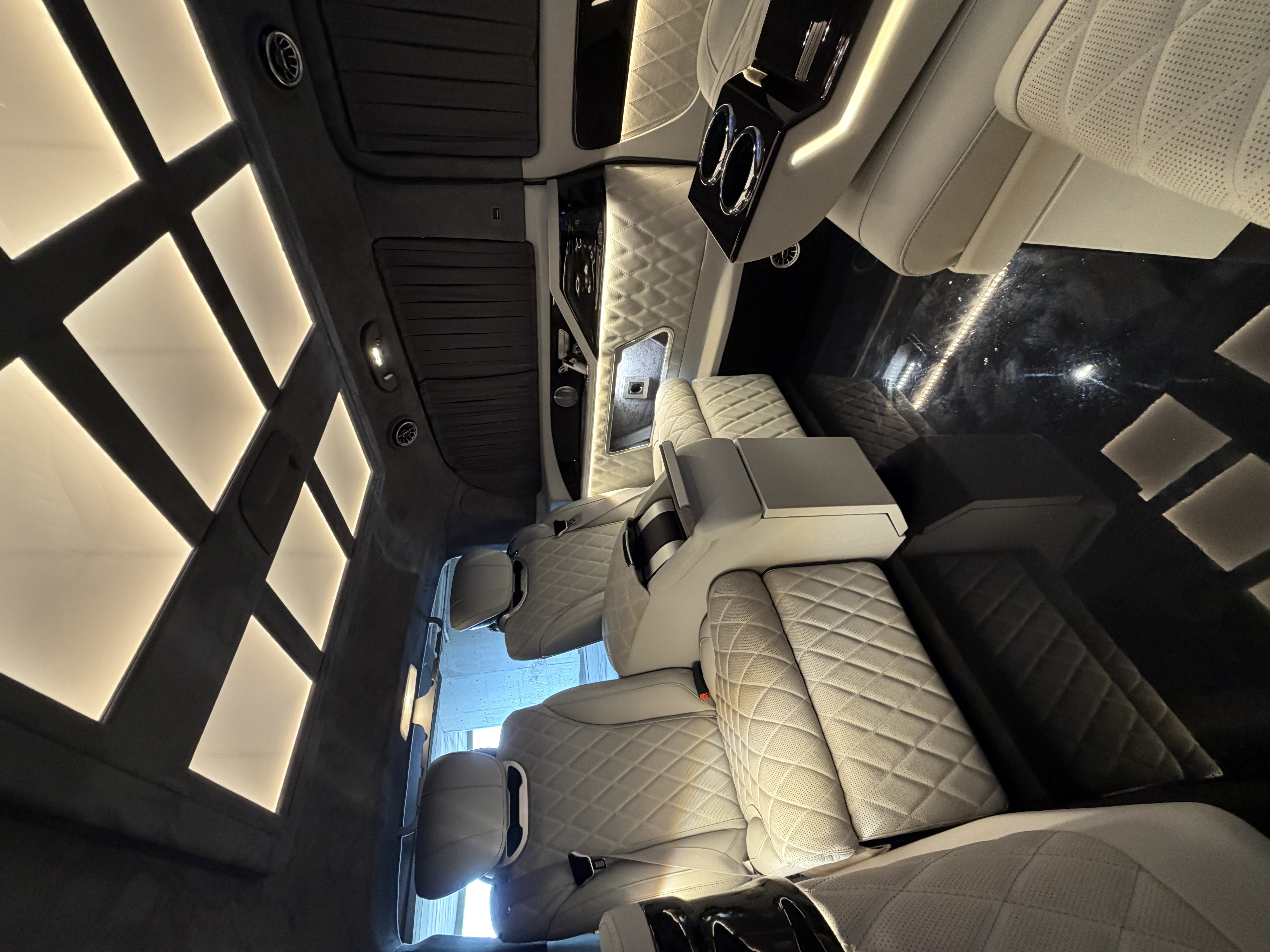
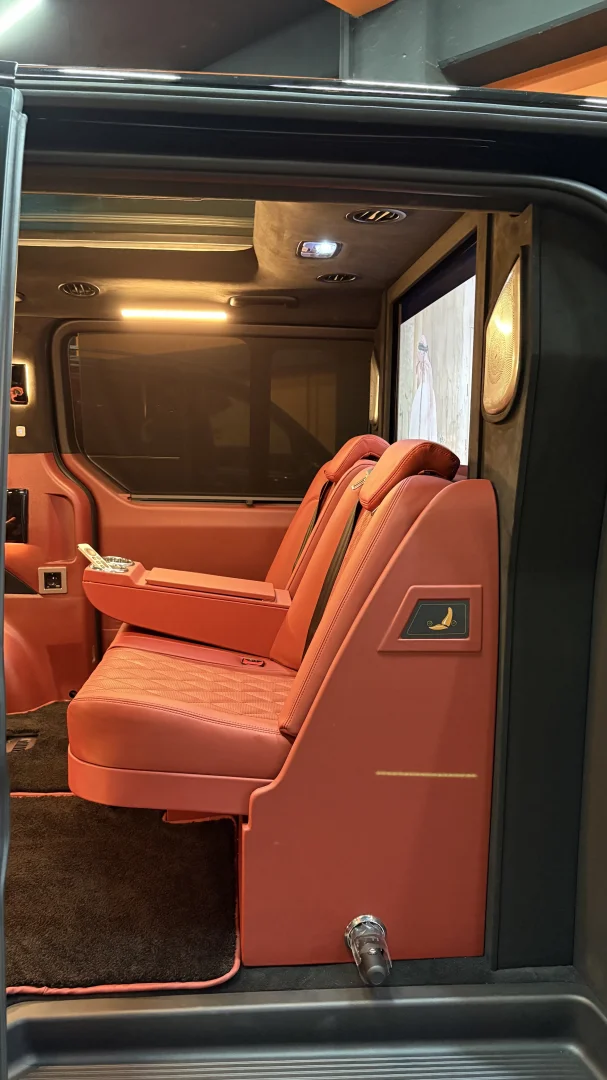
We bring the eye-catching, futuristic Hyundai Staria to VIP comfort levels with an extraordinary concept.
The Hyundai Staria stands out with its futuristic exterior design, expansive glass surfaces and spacious passenger cabin. These characteristics also make it an interesting platform for a bespoke VIP conversion designed around comfort, technology and everyday usability.
At Silver VIP Design, a Hyundai Staria VIP conversion is not approached simply as a combination of luxury seats and decorative elements. Seating layout, passenger space, centre consoles, privacy, ambient lighting, multimedia, storage and electrical infrastructure should work together as one complete interior concept.
Customers considering different vehicle platforms can also explore our Mercedes Vito VIP Conversion solutions for a more compact executive vehicle concept.
Why Is the Hyundai Staria Suitable for a VIP Conversion?
One of the Staria's strongest characteristics is its spacious and open cabin architecture.
Large windows create an airy passenger environment, while the interior dimensions provide flexibility for different seating and comfort configurations.
A VIP conversion should preserve these advantages rather than unnecessarily filling the cabin with oversized components.
Preserve the Spacious Character of the Cabin
Adding more equipment does not automatically create a more luxurious vehicle.
Large seats, consoles and side panels can reduce the feeling of space if their dimensions are not carefully planned.
The objective should be to introduce additional comfort while maintaining sufficient legroom and freedom of movement.
Hyundai Staria VIP Seating Layout
The seating arrangement should be determined according to the intended use of the vehicle.
A Staria designed for private or family travel may require a different configuration from a chauffeur-driven vehicle.
Depending on the project, electrically adjustable premium seats can include heating, ventilation, massage and powered footrests.
Seat Movement and Legroom
The dimensions of a VIP seat should never be considered only when the seat is in its normal position.
Forward and backward travel, reclining movement and the space required for the footrest should also be calculated.
This prevents the seat from interfering with consoles or other interior components when its comfort functions are being used.
Choosing the Right Interior Layout
Before the conversion begins, the intended passenger capacity and everyday use of the vehicle should be clearly defined.
Factory equipment, original seating configuration and existing vehicle systems can influence the possibilities available during the conversion.
Factory Equipment and Passenger Requirements
A family vehicle, an executive vehicle and a chauffeur-driven vehicle do not necessarily require the same seating arrangement.
The base vehicle should therefore be evaluated together with the planned passenger layout, storage requirements and comfort equipment.
This helps avoid unnecessary modifications later in the conversion process.
Ambient Lighting and Interior Atmosphere
The futuristic character of the Hyundai Staria can be complemented by carefully designed ambient lighting.
Indirect LED lighting, reading lights and other decorative lighting elements can be incorporated into the cabin according to the overall interior concept.
Lighting Should Have a Function
A VIP cabin may require different lighting conditions for travelling, reading and relaxing.
For this reason, the position and intensity of the lighting should be considered alongside its appearance.
The objective is to enhance the interior without creating distracting light during night journeys.
Bespoke Curtains and Passenger Privacy
The Staria's expansive glass surfaces create a bright and spacious cabin.
However, the same glass area can increase the need for privacy, particularly in chauffeur-driven or private-use vehicles.
Privacy Without Losing the Open-Cabin Character
Bespoke curtain systems should be designed around the shape of the windows and surrounding interior panels.
When closed, they can provide additional privacy. When open, they should allow passengers to benefit from the Staria's large windows and airy interior.
Centre Console and Refrigerator Planning
The centre console can become one of the most functional areas of a Hyundai Staria VIP interior.
Depending on the project, cup holders, storage compartments, USB and USB-C connections, wireless charging and a refrigerator can be incorporated into the console.
Do Not Sacrifice Passenger Space
The size of the centre console should be determined according to the seating arrangement and available cabin width.
A large console may provide more storage and equipment, but it should not restrict seat movement or make it difficult for passengers to move through the cabin.
Smart Controls and Multimedia
Technology can play an important role in a modern Hyundai Staria VIP conversion.
Depending on the technical specification of the project, supported functions such as lighting, curtains and multimedia can be operated through conveniently positioned controls.
Controls Should Be Easy to Reach
Technology should simplify the passenger experience.
Frequently used controls should therefore be positioned where passengers can reach them comfortably from their seats.
The location of screens, switches and control panels should be considered together with the seating layout.
Hyundai Staria Compared with Larger VIP Platforms
The Hyundai Staria offers a useful balance between passenger space, exterior dimensions and everyday usability.
However, some projects require significantly more interior volume, additional seating or larger equipment areas.
In these situations, customers can also consider a Mercedes Sprinter Conversion UK, where the larger body provides greater flexibility for executive seating, multimedia, consoles and other VIP equipment.
The Vehicle Should Match the Intended Use
There is no single vehicle platform that is ideal for every VIP project.
A Staria may suit customers who want a modern and practical vehicle, while a Vito can provide a more compact executive configuration and a Sprinter can offer considerably more interior planning space.
The correct choice depends on passenger numbers, luggage requirements, journey type and the equipment expected inside the vehicle.
Boot Space and Luggage Capacity
Passenger comfort should not be created at the expense of luggage space.
The Staria can be used for family journeys, private travel and chauffeur-driven transportation where passengers may be travelling with several suitcases.
Balance Passenger Space and Luggage Space
Seat positions, rear cabin length and storage requirements should be considered together.
Filling every available area with seats and consoles can create an impressive-looking cabin but reduce its practicality during real journeys.
A well-planned VIP conversion should maintain a useful balance between passenger comfort and luggage capacity.
Sound and Thermal Insulation
Some of the most important elements of a premium interior are hidden behind the finished surfaces.
Sound and thermal insulation should be considered before the side panels, floor and ceiling are completed.
A Quieter Cabin Improves Travel Comfort
Appropriate insulation can help reduce unwanted road, tyre and body-related noise inside the passenger compartment.
This can create a calmer environment for conversation, relaxation and long-distance travel.
Thermal insulation can also contribute to more consistent cabin comfort in different weather conditions.
Climate Control and Air Distribution
A redesigned passenger cabin should also take airflow into consideration.
New seats, consoles, side panels and ceiling components can influence how air circulates through the rear cabin.
Passenger Comfort in Different Climates
Air outlets should remain functional and should not be unnecessarily obstructed by new interior components.
The objective is to maintain comfortable airflow around the actual passenger seating positions.
Climate control should therefore be considered together with the seating and interior architecture rather than after the conversion has been completed.
Electrical Infrastructure Behind the VIP Interior
Powered seats, ambient lighting, multimedia, refrigerators, charging systems and passenger controls all depend on a properly planned electrical system.
Cable routes, protection systems and electrical requirements should therefore be determined before the decorative interior panels are installed.
Future Service Access Should Be Considered
Electrical and mechanical equipment may eventually require inspection or servicing.
Important components should therefore remain reasonably accessible without requiring unnecessary removal of large sections of the finished interior.
A premium conversion should consider long-term usability as well as appearance on the day of delivery.
Hyundai Staria VIP for Family Use
The Staria's spacious cabin can make it particularly suitable for private and family travel.
Comfortable seating, sufficient legroom, charging points, storage and usable luggage capacity can make longer journeys more convenient.
Luxury and Practicality Should Work Together
For family use, practical details can be just as important as premium materials.
Easy access to seats, storage for personal belongings and sufficient room to move through the cabin should remain part of the design.
The result should be an interior that is comfortable to use every day rather than one designed only for appearance.
Hyundai Staria VIP for Chauffeur-Driven Travel
The same platform can also be configured for chauffeur-driven and executive passenger use.
In this type of project, rear passenger comfort, privacy, convenient controls and luggage capacity can become particularly important.
The Interior Should Reflect the Passenger Profile
A vehicle used for executive passengers may require a different balance of seating, technology and privacy from a family vehicle.
Defining the intended passenger profile before the conversion begins helps determine which features genuinely add value to the interior.
For customers comparing different Mercedes-based alternatives, our guide to Mercedes Luxury Van Conversion UK for Vito, V-Class and Sprinter provides another perspective on choosing a suitable VIP vehicle platform.
A Hyundai Staria VIP Conversion Should Work as One Complete System
A successful Hyundai Staria VIP conversion is not defined simply by premium seats, smart screens or ambient lighting.
Seating layout, legroom, centre console, privacy, luggage capacity, climate control, multimedia, insulation and electrical infrastructure should complement one another.
At Silver VIP Design, the objective is to preserve the modern and spacious character of the Hyundai Staria while creating an interior tailored to the intended use of the vehicle.
The result can be a comfortable and functional VIP passenger environment for family journeys, private travel and chauffeur-driven use.