A Mercedes Sprinter VIP conversion can include televisions, refrigerators, ambient lighting, charging points and other electrical equipment. But many of these systems may also be used while the vehicle is parked and the engine is off. Silver VIP Design explains why auxiliary battery capacity, inverter selection, electrical load and safe power distribution should be planned before the interior conversion begins.
A modern Mercedes Sprinter VIP conversion can contain far more electrical equipment than a standard passenger vehicle.
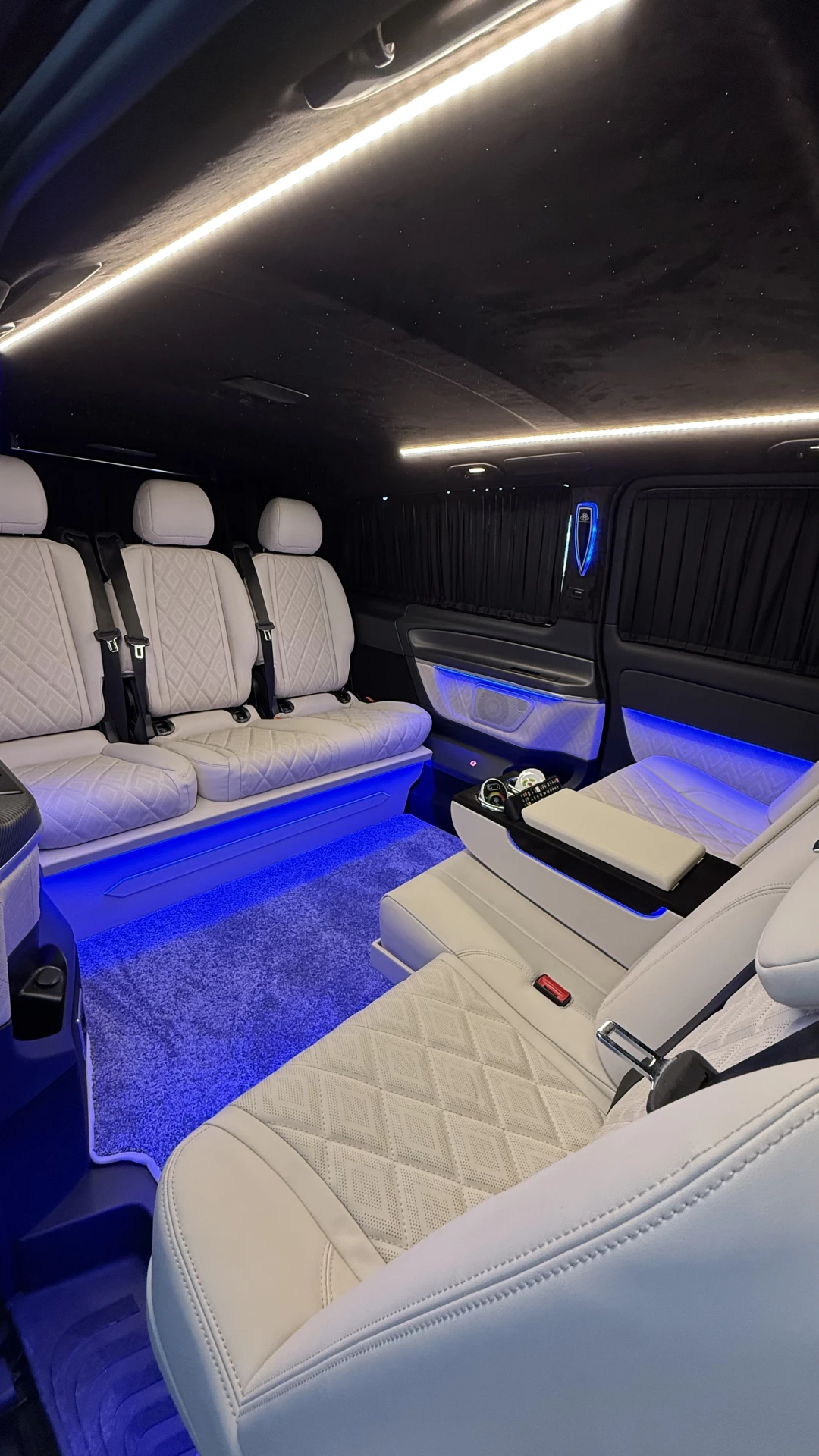
Televisions, refrigerators, ambient lighting, USB-C charging, wireless charging, multimedia systems and powered seats can all increase comfort inside the rear cabin.
However, one of the most important questions is often overlooked:
What happens when the vehicle is parked and the engine is switched off?
For a high-quality Mercedes Sprinter VIP Conversion UK project, the electrical system should be planned around real passenger use, not only around driving conditions.
Why Is Parked Power Important in a VIP Sprinter?
A VIP Sprinter may be used while waiting outside an office, hotel, airport or private residence.
Passengers may continue to work, make calls, watch television, charge devices or use the refrigerator while the vehicle remains stationary.
If all electrical equipment depends only on the vehicle’s main battery, long periods of parked use can create unnecessary risk.
For this reason, the rear cabin electrical system should be designed as a complete power management system.
The Auxiliary Battery Should Be Sized for Real Use
An auxiliary battery can support equipment in the passenger cabin without placing the same demand on the vehicle’s starter battery.
But battery capacity should not be selected only by physical size or price.
The total electrical demand should be considered.
This can include:
- television and multimedia,
- refrigerator,
- ambient lighting,
- reading lights,
- USB and USB-C charging,
- wireless charging,
- control systems,
- other comfort equipment.
A vehicle used for short waiting periods may require a different solution from a Sprinter used for several hours as a mobile lounge or business vehicle.
Electrical Load Should Be Calculated Before Installation
Every device has its own power requirement.
When several systems operate at the same time, the total load can rise quickly.
For example, a refrigerator, television, charging system and cabin lighting may all be active simultaneously.
The electrical system should therefore be designed according to combined demand rather than treating each device separately.
This helps determine suitable cable sizes, protection systems and power distribution.
What Is the Role of the Inverter?
Some equipment requires mains-style AC power rather than the vehicle’s normal DC electrical supply.
An inverter converts battery power into the type of electrical output required by compatible equipment.
Choosing an inverter that is too small can limit the equipment that can be used.
Choosing a much larger system than necessary may add unnecessary cost, space and electrical complexity.
The inverter should therefore be selected according to the actual equipment installed in the vehicle.
The Main Vehicle Battery Should Be Protected
The starter battery has one critical job: the vehicle must be able to start reliably.
A properly planned VIP electrical system should reduce the risk of passenger equipment draining the main vehicle battery.
This is why battery separation, charging management and electrical protection are important parts of the conversion.
The passenger cabin should be comfortable without compromising the basic operation of the vehicle.
Charging the Auxiliary Battery Must Also Be Planned
An auxiliary battery is useful only if it can be charged efficiently.
The charging strategy should be considered according to the vehicle and electrical system design.
Depending on the project, the system may need to recharge during driving and manage the available power correctly between the vehicle and passenger cabin systems.
This planning should take place before the interior is completed.
Cable Routing and Protection Are as Important as Battery Size
A powerful electrical system is not automatically a good electrical system.
Cable routing, fuse protection and connection quality are equally important.
Electrical cables should be organised, protected and routed away from unnecessary mechanical stress.
The system should also be designed so that technicians can access important components later without dismantling the entire VIP interior.
A Refrigerator Can Create Continuous Electrical Demand
A refrigerator is different from equipment that is used only for a few minutes.
It may operate repeatedly over a long period of time.
This makes it an important part of the electrical load calculation.
Its position, ventilation and electrical connection should be planned together.
A refrigerator should not simply be added after the rest of the electrical system has already been designed.
Charging Points Should Be Distributed Around the Passenger Cabin
VIP passengers may use several devices during a journey.
Phones, tablets and laptops can all require power.
Charging points should therefore be positioned according to actual seating positions.
USB-C, USB and wireless charging can be integrated into consoles, side structures or armrest areas.
This reduces loose cables and makes the cabin easier to use.
Parked Use Changes the Way a VIP Sprinter Should Be Designed
A Sprinter that is only used while driving has different electrical requirements from a vehicle that regularly operates as a stationary lounge, office or waiting space.
That difference should be identified before production starts.
How long will the passenger remain inside while parked?
Which systems need to stay active?
Will the television and refrigerator be used together?
Will laptops need to be charged?
These questions directly affect the electrical design.
Good Power Management Improves Reliability
The electrical system is one of the least visible parts of a VIP conversion, but it has a major effect on daily reliability.
A carefully designed system can support the rear cabin without unnecessary stress on the vehicle’s original electrical system.
Silver VIP Design plans Mercedes Sprinter VIP interiors by considering battery capacity, inverter requirements, electrical load, cable routing, protection and future service access as part of one complete system.
A luxury interior should not only look refined.
It should also continue to work reliably when the vehicle is being used exactly as the client intended.