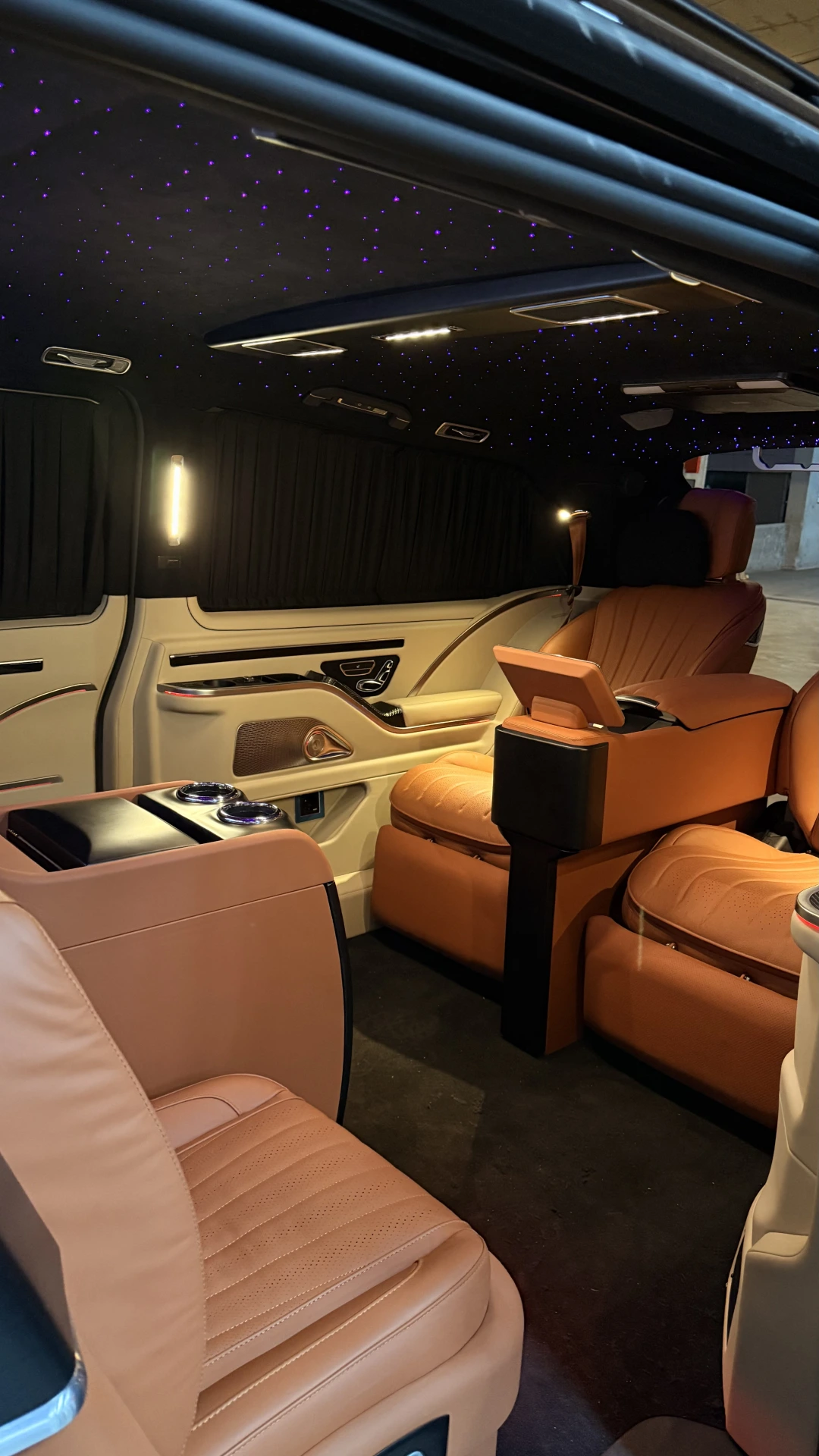

Mercedes Sprinter VIP Conversion UK with a focus on passenger access, entrance design and sliding door interior planning. Discover how step design, seat positioning, entrance lighting, premium door panels and clear passenger movement can create a more comfortable and refined VIP van interior for executive and private travel.
A Mercedes Sprinter VIP conversion should deliver a premium experience from the moment the passenger enters the vehicle. Luxury is not only defined by executive seats, leather upholstery or multimedia systems. The entrance, sliding door area, step design and the space available for passenger movement can have a major impact on everyday comfort.
For executive and private use in the UK, passenger access should therefore be considered during the earliest stages of a Mercedes Sprinter conversion. Seat positions, consoles, door panels, lighting and interior components need to work together so passengers can enter and leave the vehicle comfortably without compromising the luxury appearance of the cabin.
Why Passenger Access Matters in a Mercedes Sprinter VIP Conversion
The entrance is one of the most frequently used areas of a VIP van.
Even an impressive luxury interior can feel poorly planned if passengers have to navigate around seats, consoles or other interior components every time they enter the vehicle.
For a broader overview of the complete conversion process and interior possibilities, see Mercedes Sprinter Conversion UK – Luxury VIP Van Conversion.
The VIP Experience Begins at the Door
The first impression of a Mercedes Sprinter VIP interior starts when the sliding door opens.
The entrance should immediately feel organised, spacious and connected to the overall interior design.
Premium materials, lighting and carefully finished panels can help create this impression.
Planning the Mercedes Sprinter Entrance
A Mercedes Sprinter provides generous interior space, but that space still needs to be planned carefully.
Adding more seats or larger consoles does not automatically create a better VIP conversion.
Keep a Clear Passenger Route
Passengers should have a clear route from the sliding door to their seats.
The entrance should not be unnecessarily restricted by seat bases, consoles, storage units or decorative interior components.
A well-planned route can make the entire cabin feel more spacious.
Sliding Door Interior Design
The sliding door is a major visual element of the passenger cabin.
Its interior panel should therefore complement the seats, side panels, ceiling and other materials used throughout the vehicle.
Premium Door Panels
Leather and other premium finishes can be integrated into the sliding door area to create a consistent interior design.
Stitching, decorative details and trim should follow the same design language used across the rest of the VIP cabin.
The door should look like an integrated part of the interior rather than a separate component.
Function Must Remain a Priority
Luxury interior design should never prevent the sliding door from performing its primary function.
Any customised panel or interior component around the door needs to respect the movement and operation of the original door system.
Design Around the Vehicle
A professional Mercedes Sprinter conversion should be developed around the structure and functionality of the vehicle.
Interior design should enhance the Sprinter rather than create unnecessary obstacles for everyday use.
Step Design and Comfortable Entry
Depending on the configuration of the vehicle, the entrance step can play an important role in passenger comfort.
A properly planned step helps passengers move naturally between the ground and the passenger cabin.
Step Dimensions Need Careful Planning
The step should provide useful support without reducing the available entrance space.
Its relationship with the floor, seats and sliding door should be considered as part of the overall interior layout.
Entrance Lighting for Night-Time Travel
Passenger access becomes particularly important during evening and night journeys.
Subtle entrance lighting can help passengers clearly see the step and floor area when entering or leaving the vehicle.
Lighting Should Be Functional and Refined
Entrance lighting does not need to be excessively bright.
Low-level illumination can improve visibility while maintaining the premium atmosphere of the VIP interior.
It can also be coordinated with the ambient lighting used throughout the passenger cabin.
Seat Position and Passenger Access
Seat layout has a direct relationship with the entrance.
If the first passenger seat is positioned too close to the sliding door, access to the rear cabin may become unnecessarily difficult.
Executive Seats Need Movement Space
VIP seats may offer electrical adjustment and different comfort positions.
The interior layout should therefore be tested with the seats in multiple positions.
A passage that appears comfortable with the seat upright may become restricted when the seat is moved into a more relaxed position.
Passenger Access and Legroom
Entrance planning should not be considered separately from passenger legroom.
Moving a seat simply to create a larger doorway can reduce comfort once the passenger is seated.
Balance Is Essential
The objective is to create sufficient access while preserving the legroom expected from a luxury Mercedes Sprinter interior.
This balance requires accurate planning before the interior components are manufactured.
The original vehicle specification, body configuration and available cabin dimensions should also be considered before the final layout is determined. See Mercedes Sprinter VIP Conversion UK: Which Base Vehicle for a Luxury Conversion? for more detail.
Middle Consoles and Passenger Movement
A bespoke centre or middle console can provide useful functions such as storage, cup holders and charging.
However, its dimensions and position can also affect movement through the cabin.
Bigger Is Not Always Better
A large console may look impressive but can reduce usable space.
A more carefully proportioned console can provide the required functions while maintaining a comfortable passenger route.
Floor Design Around the Entrance
The entrance floor is exposed to frequent use.
Materials used in this area should therefore combine a premium appearance with practical durability and ease of maintenance.
A Continuous Interior Design
The entrance floor should visually connect with the main passenger cabin.
Transitions between the step, floor and side panels should be finished carefully so the entrance does not appear separate from the rest of the VIP interior.
Premium Materials Around the Sliding Door
The materials surrounding the entrance are among the first details passengers see at close range.
Leather, trim pieces and decorative surfaces should therefore be selected and installed with the same attention given to the executive seating area.
Small Details Influence Perceived Quality
Panel alignment, stitching, joints and transitions between different materials can significantly influence the perceived quality of a luxury van conversion.
Professional craftsmanship becomes especially visible around doors and frequently used areas.
Passenger Handles and Entry Support
Depending on the layout and customer requirements, carefully positioned support points can make entry and exit easier.
Any additional element should be integrated without disturbing the premium appearance of the interior.
Ergonomics Before Decoration
A support point needs to be located where a passenger would naturally reach for it.
Function should determine its position before decorative considerations are applied.
Executive Travel and Frequent Entry
A Mercedes Sprinter used for executive travel may make several stops during a working day.
Passengers may enter and leave the vehicle frequently, making access ergonomics more important than they might initially appear.
Everyday Use Reveals Good Interior Design
A luxury conversion should not require passengers to adjust several components simply to enter or leave the cabin.
Good interior planning makes these movements feel natural.
Privacy and Passenger Access
Executive VIP interiors may include features designed to increase privacy in the rear passenger compartment.
These features should be positioned carefully so they do not unnecessarily restrict the entrance or passenger route.
Privacy Without Losing Space
The objective is to create a private rear environment while preserving comfortable movement through the cabin.
This requires the partition, seats and other interior elements to be planned together.
Sliding Door Area and Electrical Systems
Modern VIP interiors may contain electrical components around the side panels and entrance area.
Ambient lighting, charging systems and other equipment require professional wiring and secure connections.
Electrical Components Should Remain Serviceable
Wiring should be protected and organised behind the interior panels.
Where future access may be required, the design should allow qualified technicians to reach electrical components without damaging premium upholstery or decorative surfaces.
Professional Installation Around the Door
The sliding door and entrance area are subjected to repeated movement and everyday use.
Interior panels and components in this area therefore need secure and precise installation.
Preventing Vibration and Unwanted Noise
Poorly fitted panels can eventually create vibration or rattling noises while driving.
Correct mounting and careful finishing help maintain the quiet, refined environment expected from a Mercedes Sprinter VIP conversion.
Serviceable Interior Panels
Professional interior construction should consider future maintenance from the beginning.
Certain areas around the sliding door may need to remain accessible for vehicle servicing or body-related work.
Removable Construction Protects the Interior
Where technical access is required, interior panels should be designed so they can be professionally removed and reinstalled.
This can reduce unnecessary damage to leather, trim and customised interior components during future service work.
For projects involving structural interior work, seating and technical installation, Mercedes Sprinter VIP Conversion UK: Build Documentation and Seat Anchorage provides additional information about planning these elements as part of the complete conversion.
Passenger Access for Long-Distance Travel
Entrance design also matters on longer journeys, especially when several passengers use the vehicle.
A clear route allows passengers to move through the cabin with less disruption.
Movement Should Not Disturb Other Passengers
A carefully planned Sprinter interior can allow passengers to reach their seats without requiring other occupants to repeatedly move or adjust their seating position.
This becomes particularly valuable in larger VIP cabin layouts.
Designing the Interior from the Passenger's Perspective
One of the most useful ways to evaluate a VIP conversion is to view the interior from the passenger's perspective.
How easy is it to step into the vehicle?
Is there enough space to move towards the seat?
Does the first seat restrict the entrance?
Is the step clearly visible at night?
Can passengers leave the vehicle comfortably?
These practical questions can reveal design issues before production begins.
Mercedes Sprinter VIP Conversion UK for Executive and Private Use
For UK customers considering a Mercedes Sprinter VIP conversion, passenger access should be treated as part of the complete luxury interior rather than as a secondary detail.
Sliding door design, entrance space, step planning, seat positioning, lighting and interior craftsmanship all contribute to the passenger experience.
A well-designed VIP interior should feel comfortable before the passenger even reaches the seat.
Bespoke Mercedes Sprinter Interior Design
Every Mercedes Sprinter conversion has different requirements.
The number of passengers, seating configuration, intended use and interior equipment all influence the ideal entrance layout.
Silver VIP Design develops bespoke Mercedes Sprinter VIP interiors by planning passenger access, executive seating, side panels, flooring, lighting, electrical systems and interior components as one complete design.
The objective is to create a luxury Sprinter interior that combines premium appearance with comfortable passenger movement, practical everyday use and professional craftsmanship for executive and private travel.