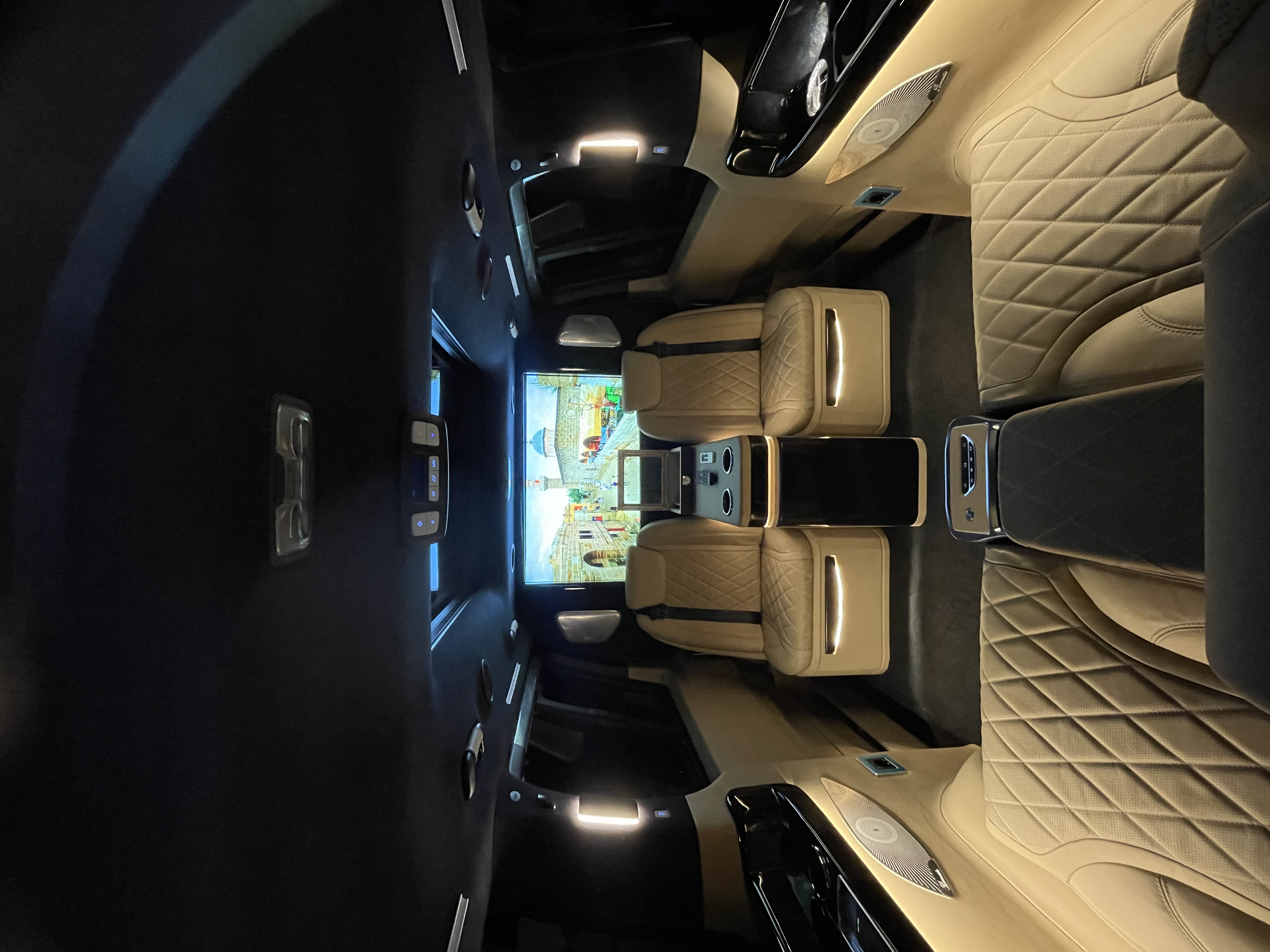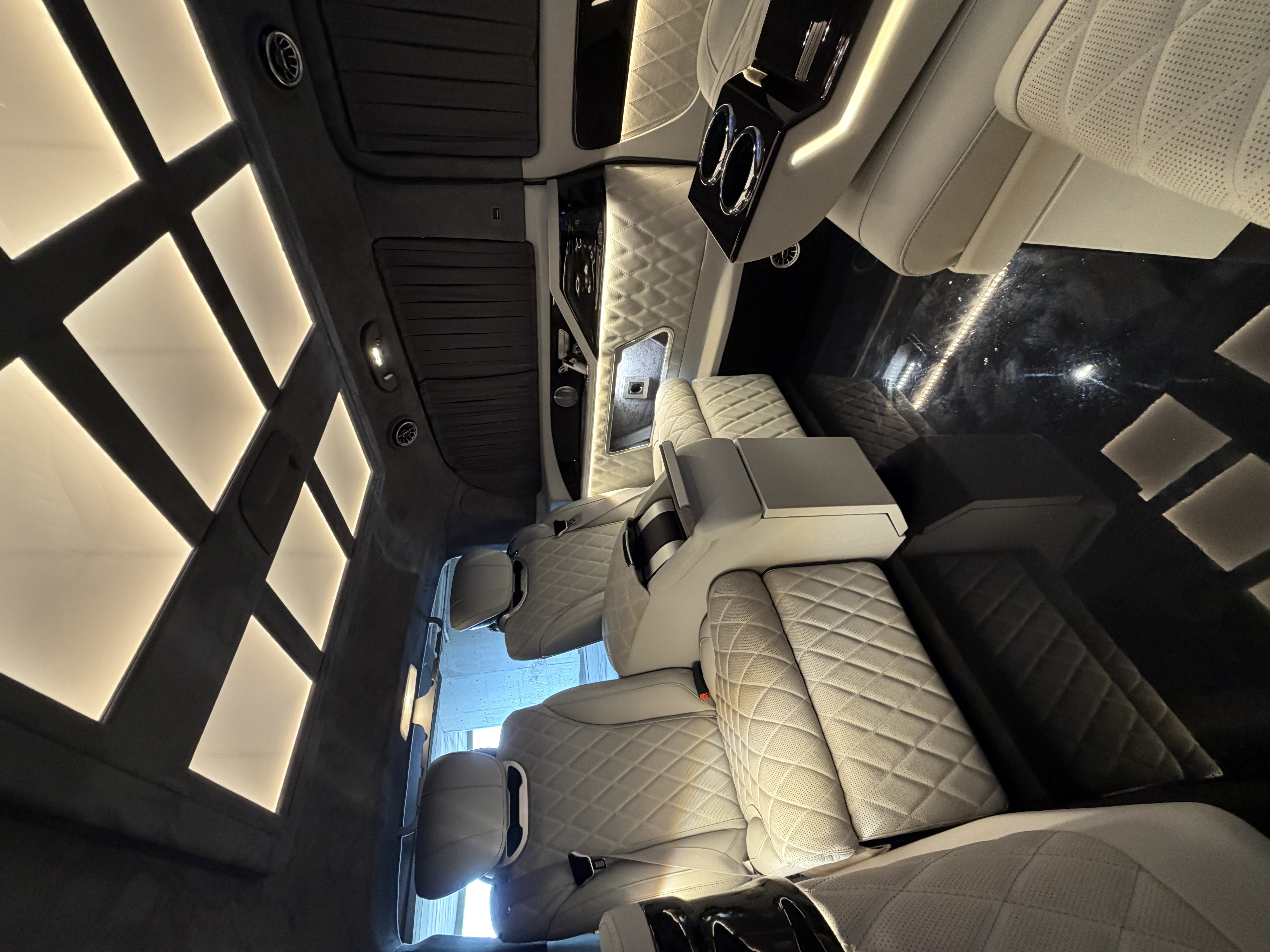
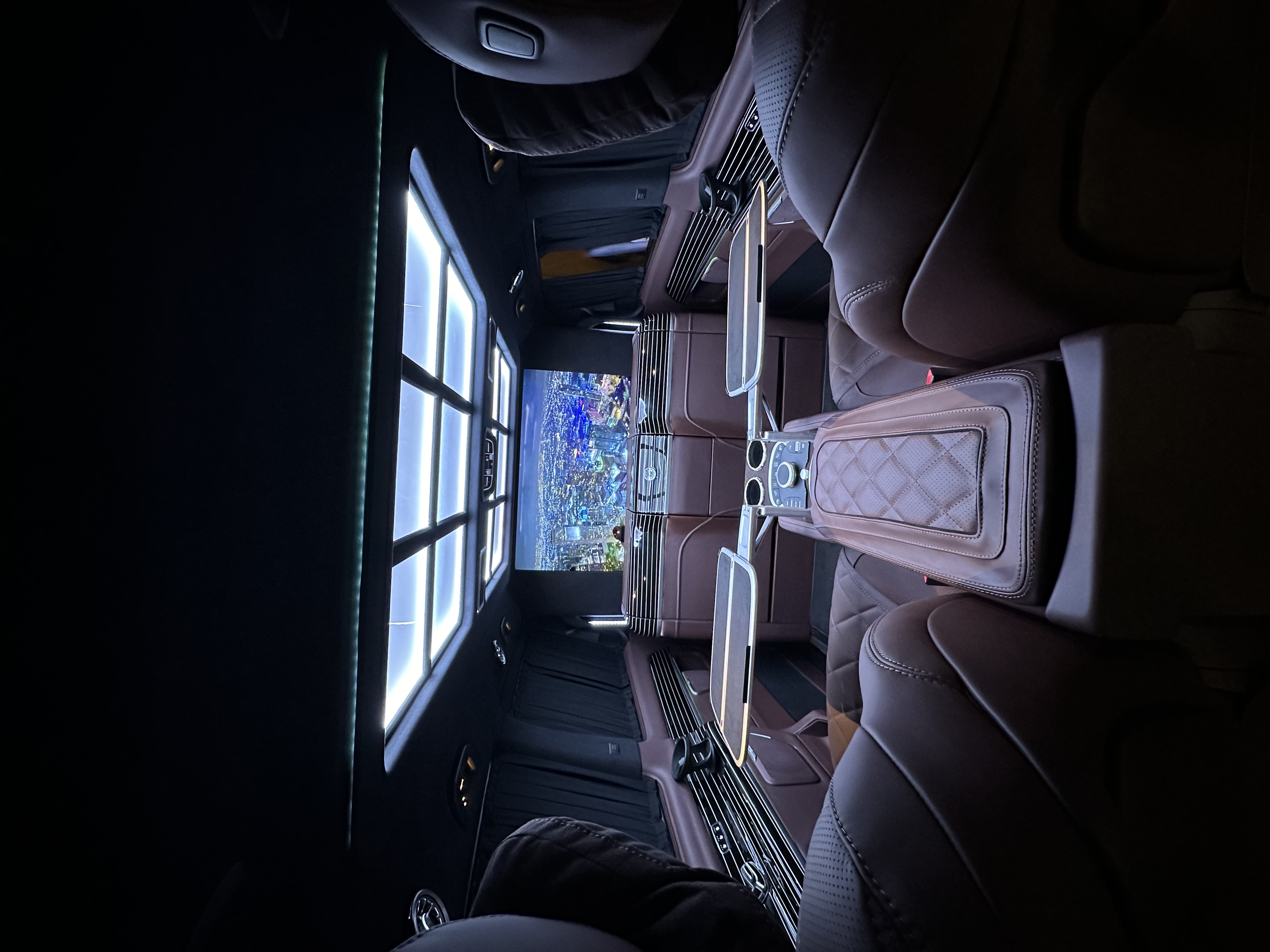
Explore Mercedes V-Class VIP conversion options, including executive seating, bespoke trim, centre consoles, lighting and rear passenger comfort.
The Mercedes V-Class combines the premium character of Mercedes-Benz with a spacious and versatile passenger cabin. With a carefully planned VIP conversion, it can be transformed into a bespoke vehicle for executive travel, chauffeur-driven journeys, private use or comfortable long-distance transportation.
At Silver VIP Design, the objective is not simply to add luxury materials and technology. Seating ergonomics, interior finishes, privacy, lighting, multimedia, electrical infrastructure and everyday usability should work together as one complete interior concept.
For a broader look at this type of project, explore our Mercedes V-Class VIP Conversion UK guide.
How Should a Mercedes V-Class VIP Interior Be Planned?
The first step is to define how the vehicle will actually be used.
A chauffeur-driven executive V-Class may prioritise rear passenger comfort, privacy and convenient access to controls. A vehicle designed for private or family travel may require a different balance between seating flexibility, storage and long-distance comfort.
Preserve the Original Mercedes Character
The Mercedes V-Class already has a premium design language.
A bespoke conversion should therefore complement the original vehicle rather than make the interior feel like a collection of unrelated aftermarket components.
Seats, side panels, consoles, ceiling materials and decorative surfaces should be designed to create a consistent visual identity throughout the cabin.
Executive Seating and Rear Passenger Comfort
The seating system is one of the most important elements of a Mercedes V-Class VIP conversion.
Depending on the individual project, electrically adjustable executive seats can include heating, ventilation, massage, footrests and memory functions.
However, the number of features built into the seat is only part of the overall comfort equation.
Legroom and Seat Movement
Forward and backward movement, reclining space and the position of the footrest should be considered before the final seat location is determined.
A seat should be able to use its comfort functions without interfering with the centre console, opposite seats or other interior components.
This is particularly important in the V-Class, where intelligent use of the available cabin length can make a significant difference to passenger comfort.
Premium Leather, Genuine Wood and Alcantara
Materials have a major influence on the character of a bespoke V-Class interior.
Premium leather upholstery can be combined with genuine wood veneers, Alcantara headlining, bespoke stitching and carefully selected decorative surfaces.
Create One Consistent Interior Design
Luxury does not come from using the largest possible number of premium materials.
The colours and textures of the seats, ceiling, side panels, floor and consoles should complement one another.
The result should feel like one complete interior rather than separate components added at different stages.
Bespoke Centre Consoles
A centre console can provide both a visual focal point and useful everyday functions.
Depending on the project, storage compartments, cup holders, USB and USB-C connections, wireless charging and passenger controls can be incorporated into the console.
Do Not Restrict Seat Movement
The dimensions of the console should be determined together with the seating layout.
An oversized console may look impressive but can reduce passenger space or interfere with the movement of electrically adjustable seats.
Functionality and proportion are therefore just as important as appearance.
Smart Controls and Multimedia
Technology should make the VIP cabin easier to use.
Depending on the technical specification of the project, supported functions such as ambient lighting, curtains, multimedia and selected passenger comfort systems can be brought together through conveniently positioned controls.
Controls Should Be Within Easy Reach
A control panel should not be positioned purely for visual reasons.
Frequently used functions should be accessible while the passenger remains comfortably seated.
The aim is to reduce complexity and make the rear cabin intuitive to operate.
Integrating Factory Features into a Bespoke Interior
A V-Class conversion should take the vehicle's existing factory systems into account from the beginning.
Original equipment, air vents, switches, electrical systems and multimedia components may influence how new interior parts are designed and installed.
Our guide to Mercedes V-Class factory features and bespoke VIP interiors explains why these elements should be considered as part of the conversion rather than treated separately.
Ambient Lighting and Starlight Headliner
Lighting can dramatically change the atmosphere inside a Mercedes V-Class.
Indirect ambient lighting, reading lights and, depending on the project, a fibre-optic starlight headliner can be incorporated into the overall design.
Lighting Should Serve Different Uses
The rear cabin may need different lighting conditions for travelling, reading, working or relaxing.
For this reason, the intensity and position of the lighting are just as important as its appearance.
A well-planned lighting system should enhance the materials and architecture of the interior without becoming distracting during night travel.
Privacy for Chauffeur-Driven Travel
Privacy is often an important consideration in executive and chauffeur-driven vehicles.
Curtains, appropriate glazing solutions and the general architecture of the passenger compartment can all contribute to a more private environment.
Executive Travel Requires More Than Luxury Materials
A business passenger may need to make telephone calls, work on a laptop or hold a private conversation while travelling.
The interior should therefore be planned around these real-world requirements rather than focusing only on visual luxury.
Sound and Thermal Insulation
Many of the details that influence passenger comfort disappear behind the finished interior.
Sound and thermal insulation should be considered before side panels, flooring and the finished ceiling are installed.
A Quiet Cabin Improves the Journey
Reducing unwanted road, tyre and body-related noise can help create a calmer environment for conversations, business calls and long-distance journeys.
Thermal insulation can also contribute to more consistent passenger comfort in different weather conditions.
Electrical Infrastructure Behind the Interior
Powered seats, multimedia equipment, ambient lighting, charging systems and passenger controls all rely on the vehicle's electrical infrastructure.
Cable routing, protection systems and control modules should therefore be planned before the decorative interior is completed.
Future Service Access Matters
A premium conversion should also consider what happens after the vehicle has been delivered.
Important electrical and mechanical components should remain reasonably accessible if inspection or servicing is required in the future.
This can reduce the amount of interior trim that needs to be removed during maintenance.
Handover and Final Inspection
Before a completed V-Class is delivered, the visible finish and functional systems should be checked together.
Seat movement, trim alignment, controls, lighting, charging equipment and other installed features should operate as intended.
The final inspection is particularly important in a bespoke interior where many different components have been integrated into one vehicle.
A Mercedes V-Class VIP Conversion Should Work as One Complete Interior
A successful Mercedes V-Class VIP conversion is not defined by leather seats, wood trim or technology alone.
Seating ergonomics, passenger space, material quality, privacy, lighting, multimedia, insulation, electrical infrastructure and everyday functionality should complement one another.
At Silver VIP Design, every V-Class project is planned around the intended use of the vehicle while respecting the premium character of the original Mercedes interior.
The result is a bespoke passenger environment designed for executive travel, chauffeur-driven journeys, private use and comfortable long-distance transportation.