We subject every project to a rigorous quality, safety and craftsmanship standard from the design stage right through to final delivery.
At Silver VIP Design, a vehicle conversion begins long before the first interior component is installed. The process starts by understanding the client's expectations, intended use of the vehicle, passenger requirements and preferred interior concept.
Whether the project is based on a Mercedes Vito, Mercedes V-Class or Mercedes Sprinter, seating layout, passenger space, luggage requirements, technology and comfort equipment should be considered together from the beginning.
For customers researching larger luxury vehicle projects, our Mercedes Sprinter Conversion UK guide provides further information about planning a bespoke VIP passenger cabin.
How Does a VIP Vehicle Conversion Begin?
The first stage is understanding how the vehicle will actually be used.
A vehicle designed for private family travel may require a different layout from one intended for chauffeur services, executive transportation or long-distance business travel.
Understanding the Client's Requirements
Passenger capacity, seating preferences, luggage requirements and desired comfort equipment are discussed before the main interior design is finalised.
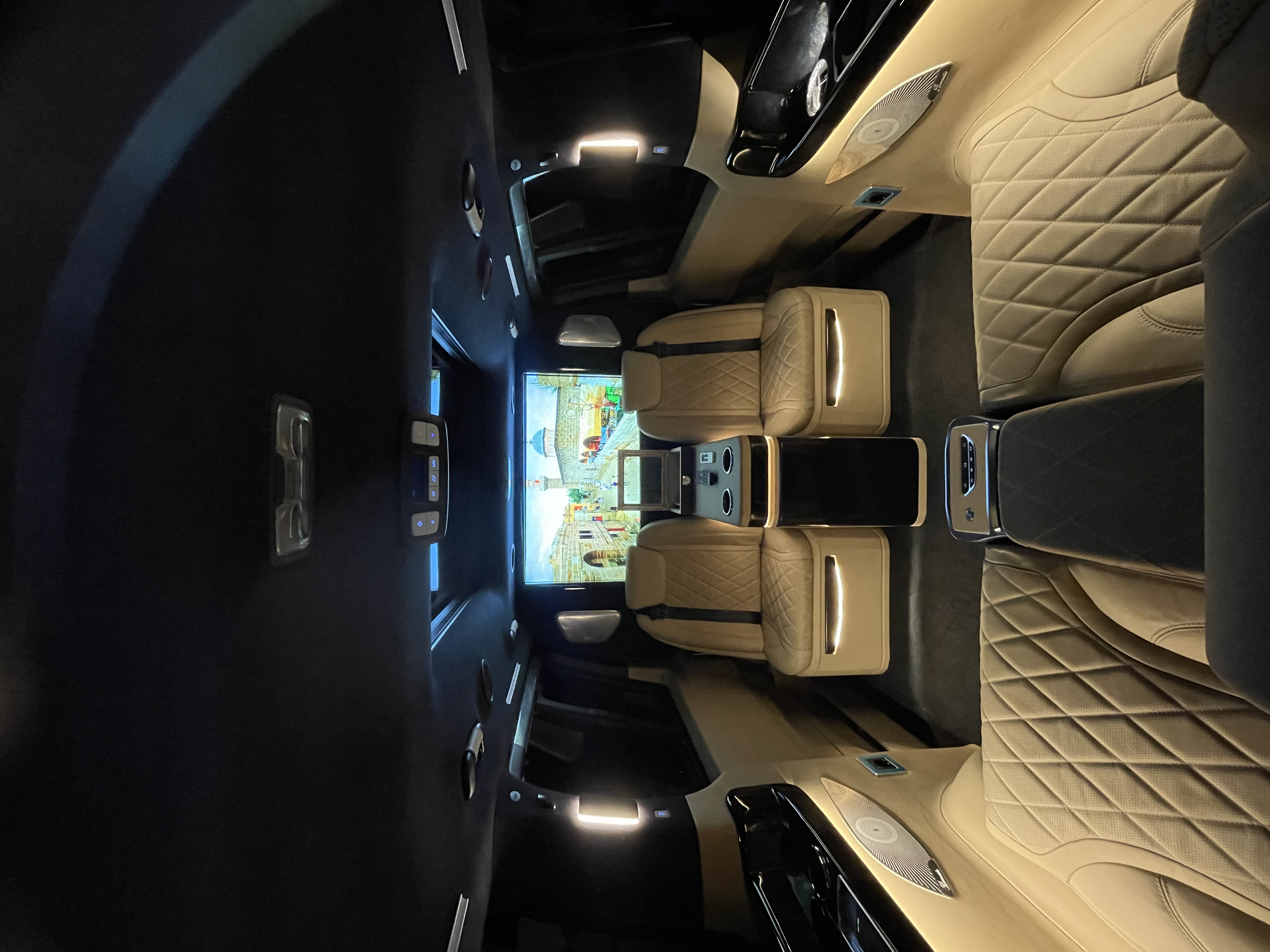
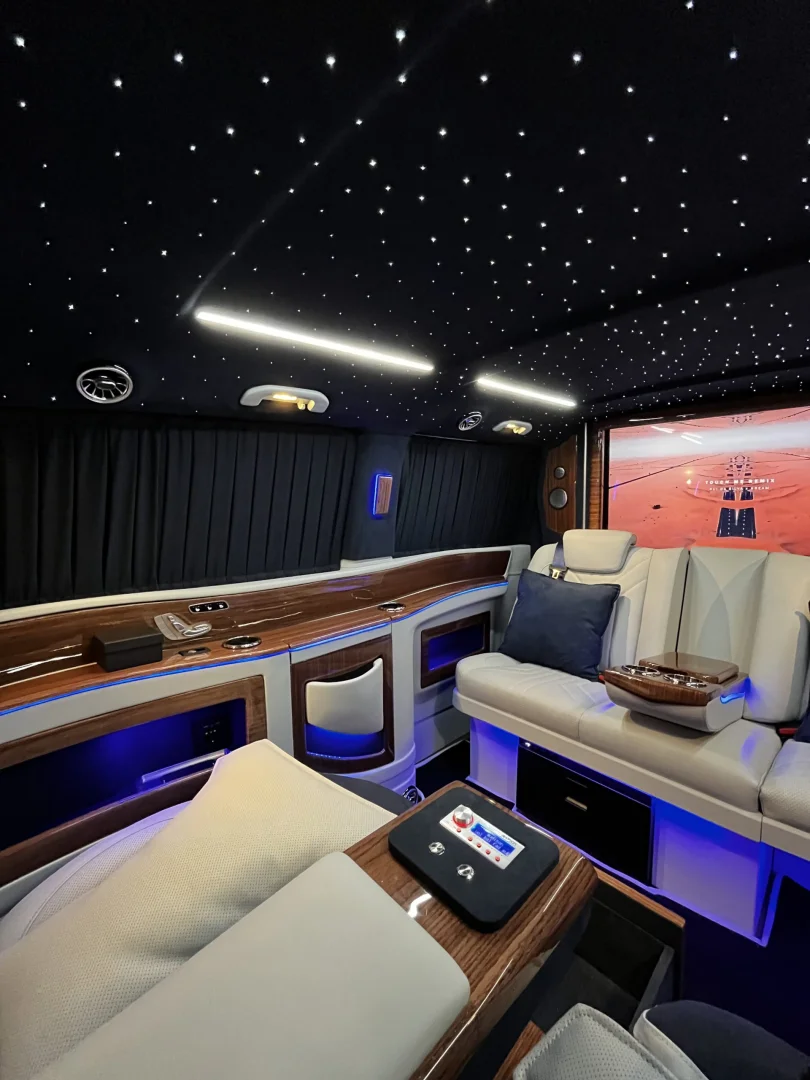
Features such as powered VIP seats, refrigerators, centre consoles, televisions, ambient lighting, charging systems and privacy solutions can influence the entire cabin layout.
The objective is not simply to create a list of equipment. All components should work together within the available interior space.
3D Design and Interior Visualisation
Once the main requirements have been established, the interior concept can move into the design stage.
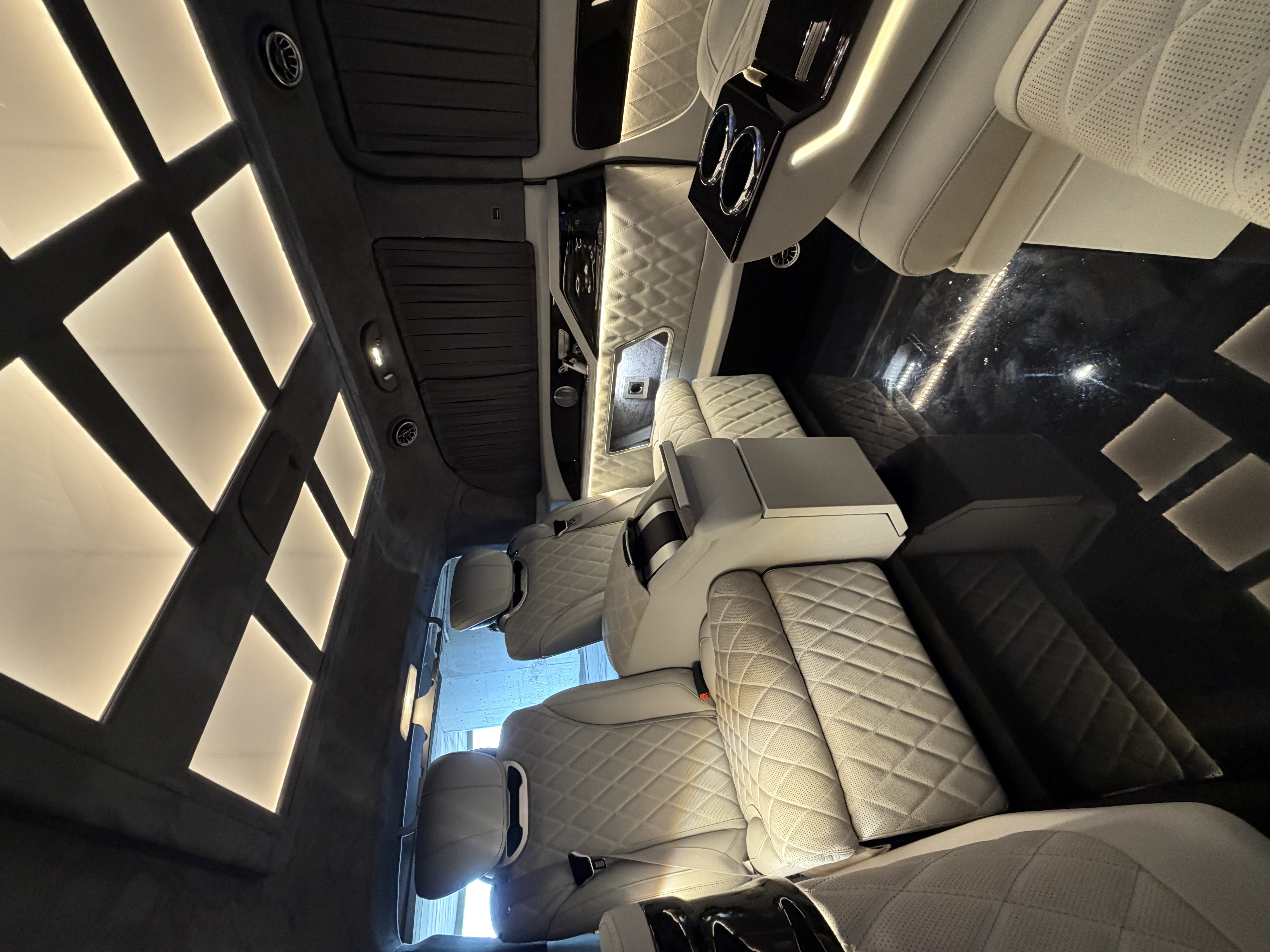
Seating positions, side panels, centre consoles, ceiling design, lighting, screens, storage areas and material combinations are considered as part of the overall cabin.
Why Is 3D Visualisation Important?
3D visualisation helps the client understand the proposed interior before production begins.
It provides an opportunity to review the general layout, colour combinations, materials and major design elements.
Important changes can therefore be discussed before the project reaches the more advanced production stages.
Planning the VIP Seating Layout
VIP seats should not be positioned according to appearance alone.
Their dimensions, movement range and relationship with other interior components need to be calculated.
Seat Movement and Legroom
An electrically adjustable seat occupies different amounts of space depending on its position.
Forward and backward travel, backrest recline and the movement of a powered leg rest should all be considered.
This helps prevent interference between seats, centre consoles and other cabin components while maintaining useful passenger legroom.
Preparing the Vehicle for Conversion
After the design has been approved, the vehicle can be prepared for production.
Depending on the scope of the project, original interior components may need to be carefully removed to provide access to the areas where technical work will take place.
Inspecting the Existing Vehicle Structure
Removing selected interior components provides access to areas that will later be hidden behind the finished cabin.
Existing wiring routes, structural areas and installation spaces can then be evaluated before new systems are introduced.
This preparation can help the later stages of production proceed in a more organised manner.
Structural and Mounting Preparation
Different VIP components may require appropriate mounting and supporting structures.
The requirements depend on the base vehicle, interior layout and equipment being installed.
Mounting Points Should Be Planned Early
The locations of consoles, panels and other equipment should be considered before the finished surfaces are installed.
Planning these areas early reduces the need for unnecessary modifications later in the project.
Structural work should always take account of the vehicle's original construction and the specific requirements of the conversion.
Sound and Thermal Insulation
Some of the most important elements of passenger comfort are hidden once the interior is complete.
Sound and thermal insulation should therefore be considered during the early production stages.
Creating a Quieter Passenger Cabin
Appropriate insulation can help reduce unwanted road, tyre and body-related noise entering the passenger area.
This can create a calmer environment for conversation, relaxation and longer journeys.
Thermal insulation can also contribute to more consistent passenger comfort in different weather conditions.
Electrical Infrastructure Before the Interior Is Finished
Modern VIP vehicles can contain numerous electrical systems.
Powered seats, ambient lighting, multimedia, refrigerators, USB and USB-C connections, wireless charging and passenger controls all depend on properly planned electrical infrastructure.
Wiring, Protection and Cable Routes
Cable routes and appropriate protection should be considered before decorative panels and other finished surfaces are installed.
Trying to add major electrical systems after the cabin has been completed can require finished components to be removed again.
Electrical planning should therefore be integrated into the overall production process rather than treated as a final addition.
Climate Control and Air Distribution
Changing the seating, side panels or ceiling design can influence airflow within the rear passenger cabin.
Climate control should therefore be considered alongside the interior architecture.
Airflow Should Reach the Passenger Positions
Air outlets should not be unnecessarily obstructed by newly installed panels, seats or consoles.
The objective is to maintain effective airflow around the positions where passengers will actually be sitting.
This becomes particularly important in vehicles designed for long-distance travel or operation in different climates.
Bespoke Upholstery and Interior Craftsmanship
Once the main technical infrastructure has been prepared, production of the visible interior elements can progress.
Seats, side panels, ceiling components, centre consoles, leather surfaces and decorative finishes are produced according to the approved design concept.
Materials Should Work Together
Premium materials do not automatically create a premium interior.
Leather, Alcantara, wood and other surfaces should complement one another in colour, texture and proportion.
Stitching, panel alignment and transitions between different materials can have a significant influence on the final appearance of the cabin.
Centre Consoles and Comfort Equipment
A bespoke centre console can perform several functions within a VIP passenger cabin.
Depending on the project, it may incorporate cup holders, storage compartments, wireless charging, USB connections or a refrigerator.
Functionality Should Not Reduce Passenger Space
The dimensions of the console should be considered together with seat movement and passenger legroom.
A large console may accommodate more equipment but can become impractical if it restricts the movement of the seats or passengers.
The seating and console layout should therefore be developed together.
Multimedia and Passenger Controls
Televisions, audio systems, ambient lighting and other supported comfort functions can be integrated according to the specification of the project.
Technology Should Be Easy to Use
Frequently used controls should be positioned where passengers can reach them comfortably.
Technology should make the journey easier rather than simply increase the number of screens and switches inside the vehicle.
The seating position, viewing angle and location of passenger controls should therefore be considered together.
Mercedes V-Class VIP Conversion Process
A Mercedes V-Class requires a different approach from a larger Sprinter because the available interior dimensions and factory features are different.
Original Mercedes systems should be considered alongside any bespoke components being introduced during the conversion.
Integrating Factory Features
A professional conversion does not necessarily require replacing every original feature inside the vehicle.
Where appropriate, useful factory systems can remain part of the new interior and be integrated into the overall VIP concept.
Our guide to Mercedes V-Class VIP Conversion UK explains this approach in greater detail.
Mercedes Sprinter VIP Conversion Process
A Mercedes Sprinter provides significantly more interior volume, allowing more complex seating arrangements and additional equipment.
However, the larger cabin also requires careful planning.
More Space Still Requires Careful Planning
Passenger movement, seat travel, centre consoles, multimedia, luggage capacity and technical equipment should all be considered before the interior layout is finalised.
For Sprinter projects, the specification of the base vehicle can also influence the conversion. Our guide to choosing the right Mercedes Sprinter base vehicle for a VIP conversion covers this stage in more detail.
Final Assembly of the VIP Interior
Once the technical preparation and bespoke components are ready, the different elements of the interior are brought together.
Seats, side panels, ceiling sections, consoles and decorative components are installed according to the planned layout.
Future Service Access Should Be Considered
Electrical and mechanical components may require inspection or maintenance during the life of the vehicle.
Where practical, important technical areas should remain accessible without requiring unnecessary removal of large sections of the finished cabin.
Long-term serviceability should therefore be considered during production.
Quality Control Before Vehicle Handover
The final stage should involve more than a visual inspection.
Systems and equipment installed during the project need to be checked before the vehicle is handed over.
Electrical and Functional Checks
Depending on the specification, powered seats, lighting, charging points, multimedia, refrigerators and passenger controls should be tested.
Moving components should also be checked throughout their intended operating range.
Interior Finish Inspection
Leather surfaces, stitching, panel alignment, decorative components and other visible areas are inspected as part of the final finishing process.
Doors, drawers, consoles and other moving interior components should operate correctly without unnecessary interference.
Vehicle Handover
Once the required inspections have been completed, the vehicle is prepared for delivery to its owner.
Handover should not simply mean passing over the keys.
Explaining the Vehicle's VIP Systems
The customer should understand how the bespoke equipment installed in the vehicle operates.
Seat controls, lighting, multimedia, charging systems and other project-specific functions can be explained during handover.
This allows the owner to begin using the main features of the vehicle correctly from the first day.
A VIP Vehicle Conversion Is a Complete Process
A professional VIP conversion is not defined only by the leather, wood, lighting and technology visible when the vehicle is finished.
Client requirements, 3D design, seating layout, technical preparation, insulation, electrical infrastructure, climate control, craftsmanship, assembly and final quality checks are interconnected stages of the same project.
At Silver VIP Design, our approach is to plan the visible design and the technical infrastructure together, creating a VIP passenger cabin intended to combine comfort, functionality and detailed craftsmanship throughout everyday use.