What stages does the VIP vehicle design process consist of, from needs analysis to design, from insulation to electrical and flooring applications, from assembly to final checks?
VIP vehicle design process is a comprehensive transformation process that begins with determining the purpose of use of the vehicle and is completed with design, technical applications, interior assembly and final checks.
Since the intended use of each vehicle and the customer's expectations are different, the first step of a successful VIP conversion project is correct planning. At Silver VIP Design, projects are planned taking into account the vehicle model, usage style, passenger layout and customer design preferences.
1. Needs Analysis and Project Planning
In the first stage of the VIP vehicle design process, it is determined how the vehicle will be used.
The needs of a vehicle that will be used for official, family, tourism or private transfer purposes may differ from each other. For this reason, the number of seats, seating arrangement, storage areas and technological equipment to be used are planned before the application begins.
Determining the Purpose of Use
The number of people traveling in the vehicle, the weight of long-distance or urban use, and the functions specifically requested by the customer are evaluated.
This stage is important for proper planning of subsequent applications.
2. Creating the Interior Design
After the needs are determined, the interior concept of the vehicle is created.
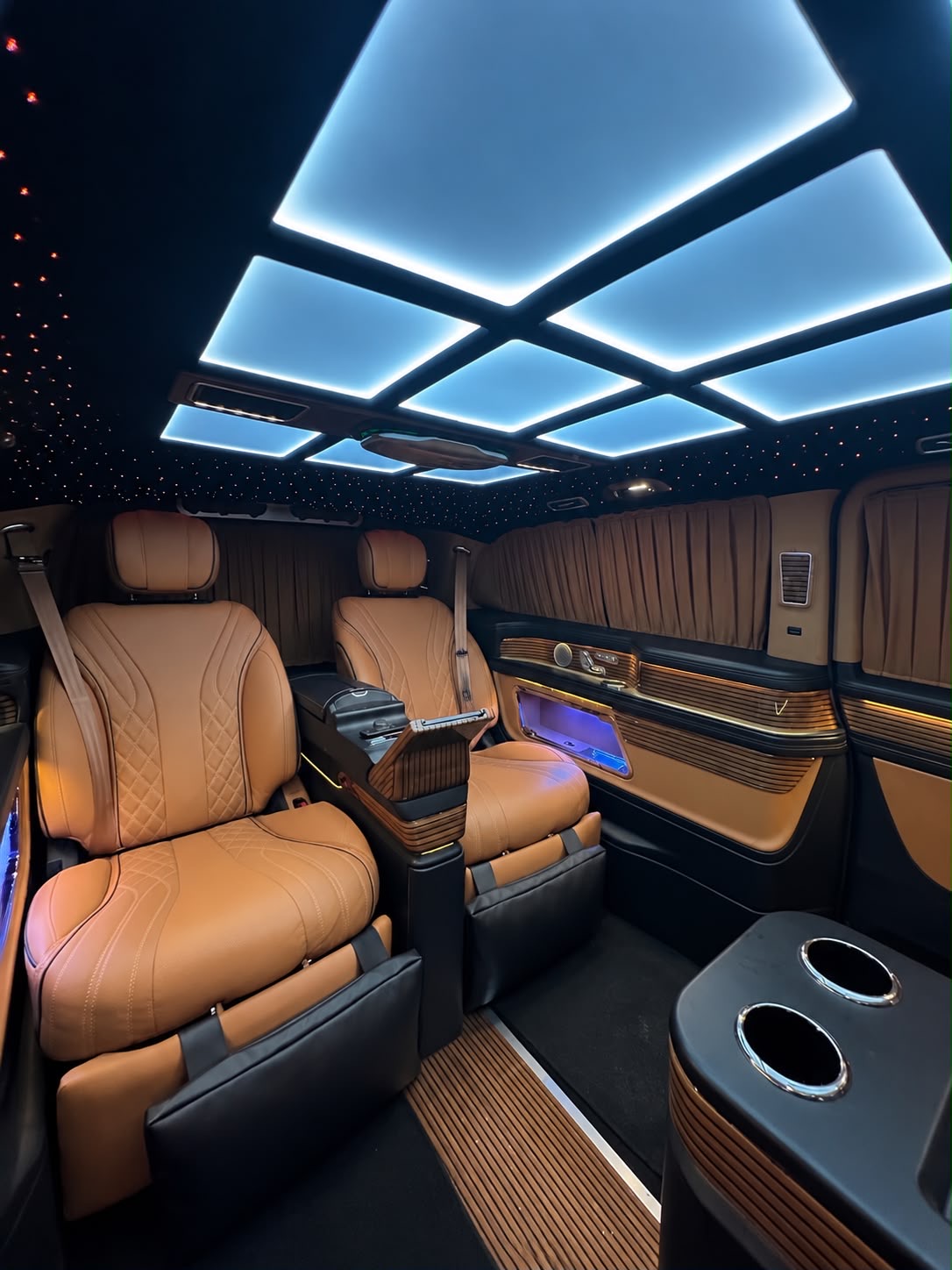
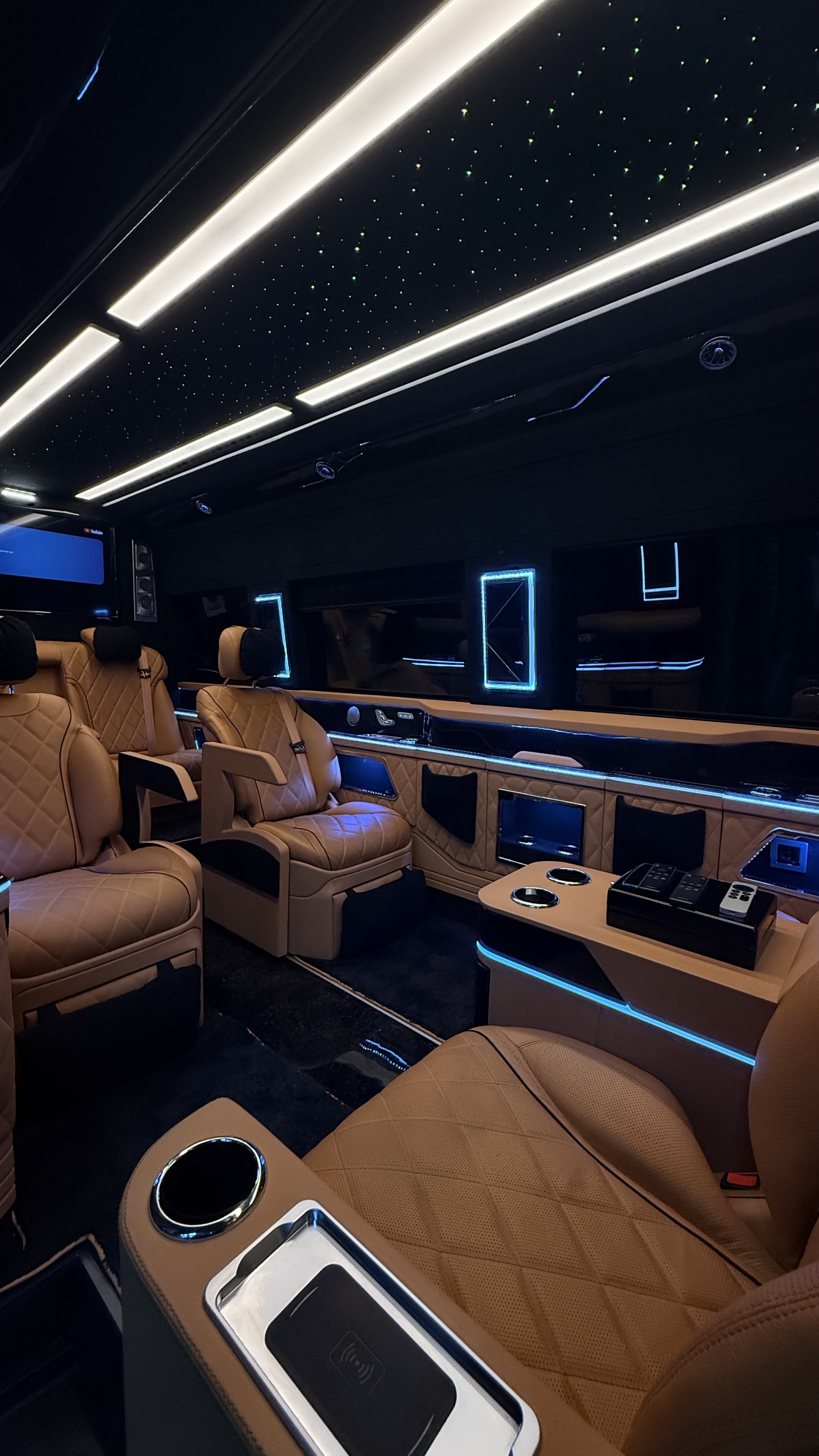
The aim is to ensure that the position of the seats, center console, side panels, ceiling design and other interior parts are compatible with each other.
Color and Material Selection
Leather color, stitching details, Alcantara, decorative coatings and other materials are determined according to the general design line of the project.
The aim is not to use only beautiful parts one by one, but to create a holistic design for the entire vehicle.
3. Preparing the Vehicle Interior for Application
After the design and project planning is completed, the vehicle is prepared for the implementation phase.
The interior areas to be processed within the scope of the transformation are prepared in a controlled manner and a work area is created for subsequent technical applications.
At this stage, the sequence of operations to be performed is planned in advance, with the aim of ensuring that subsequent assemblies do not interfere with each other.
4. Sound and Heat Insulation Applications
Before interior installation, sound and heat insulation work required by the project is carried out.
The purpose of the insulation application is to help reduce the effect of road and outdoor sounds in the cabin and to support travel comfort.
Why is Insulation Done at the Early Stage?
Since the insulation materials remain under the vehicle's interior coverings, these operations must be completed before the decorative parts and flooring are installed.
This creates a more organized work sequence for subsequent applications.
5. Preparation of Electrical and Technology Infrastructure
A modern VIP vehicle can have many different electrical systems.
The necessary infrastructure for seat control systems, USB connections, wireless charging units, lighting, multimedia and other technological equipment is prepared according to the characteristics of the project.
It is aimed to position cables and connections as discreetly and tidily as possible within the interior design.
6. Application of Flooring and Interior Parts
After the technical infrastructure, interior applications that create the visual character of the vehicle are started.
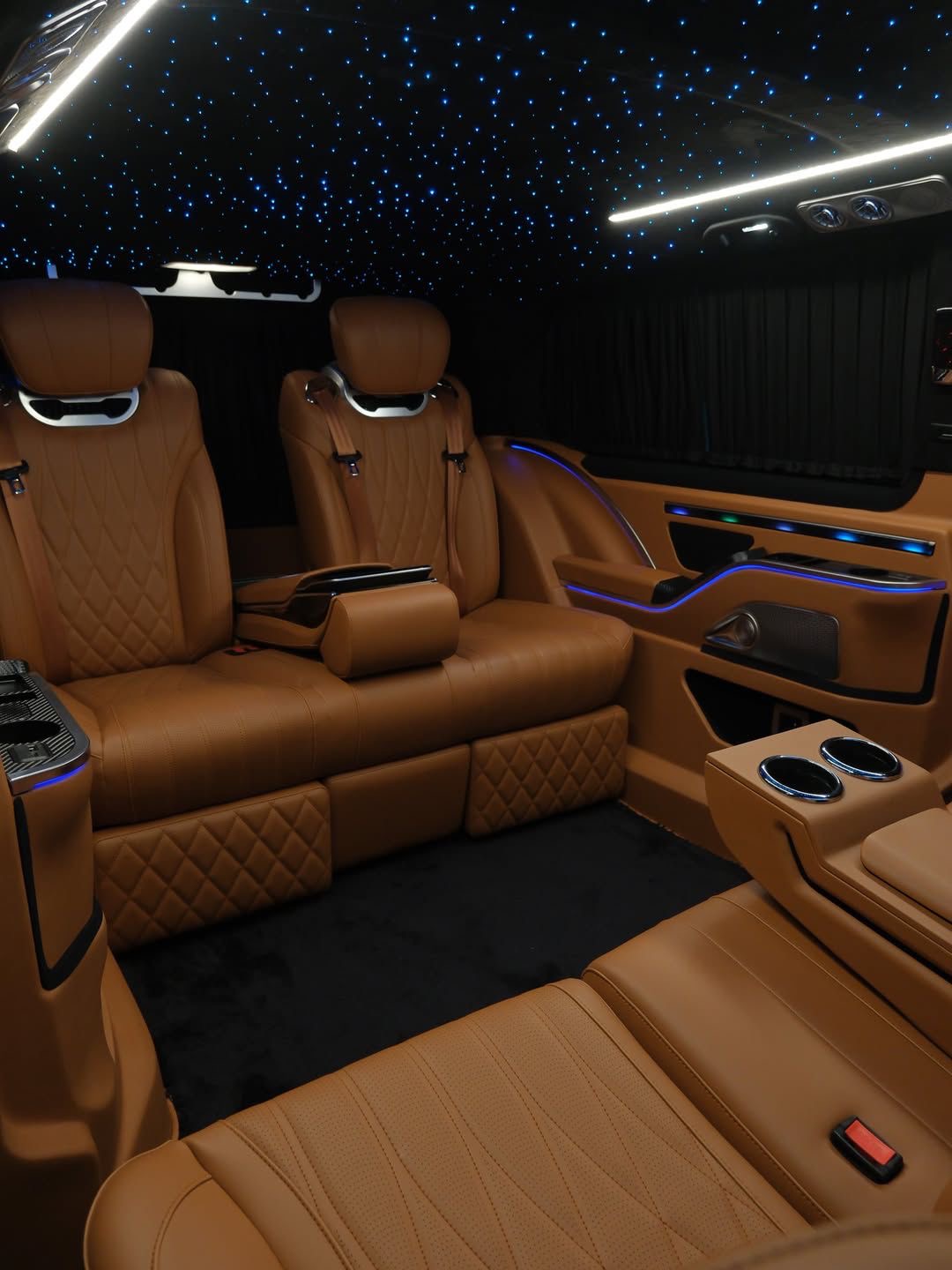
Leather upholstery, ceiling covering, side panels, decorative parts and interior components produced specifically for the project are applied according to the determined design.
Workmanship and Design Integrity
Seam lines, joints, coating transitions and the harmony of the parts directly affect the overall appearance of the vehicle.
For this reason, not only the materials used but also the application and workmanship details are important in VIP vehicle design.
7. Seat and Center Console Installation
After the interior is prepared, the assembly of the main parts such as the seats and center console determined in the project begins.
When determining the position of the seats, passenger movement space, leg room and the way the vehicle is used are taken into account.
The center console and other functional parts are positioned considering both ease of use and interior design integrity.
8. Lighting and System Controls
After the installation is completed, ambient lighting, star ceiling, electric seat functions, charging systems and other technological equipment in the project are checked.
Not only the operation of the systems, but also their functioning in harmony with each other during use is evaluated.
9. Final Check and Vehicle Delivery
The final stage of VIP vehicle transformation is the general check.
The assembly of interior parts, flooring details, electrical systems, lighting and functional equipment are reviewed.
After the checks are completed, the vehicle is ready to be delivered to the customer.
Why is Planning Important in VIP Vehicle Design?
A quality VIP vehicle transformation is not just about the final image. Correct planning of the design, technical infrastructure and application sequence before the project begins is important for the integrity of the process.
As Silver VIP Dizayn, we develop personalized projects according to the customer's intended use in different vehicles, especially Mercedes Vito, V-Class and Sprinter.
You can visit our page to examine Silver VIP Design's application and design options in more detail.