Plan a Sprinter VIP cabin around an artist’s touring day: changing passengers, rest between venues, personal belongings and a clear conversion brief.
A touring day can involve an early hotel departure, a soundcheck, a period of waiting and a late journey after the performance. The same passengers may need conversation on one leg and a quiet space on the next. For an artist, tour manager or small crew commissioning a Mercedes Sprinter VIP conversion, the useful starting point is this working day.
Silver VIP Design develops and builds bespoke interiors in Istanbul. This guide is for UK clients planning their own passenger vehicle; the requirements below should be discussed for the individual base vehicle and project.
Describe one realistic touring day
Write down the sequence of journeys before choosing the interior finish. Include who travels on each leg, when people board or leave, and what must stay accessible inside the cabin. A vehicle carrying the artist and two colleagues has a different brief from one carrying a changing group of crew members.
The broader Mercedes Sprinter Conversion UK guide introduces the platform. For touring use, turn that starting point into a specific passenger schedule rather than a list of luxury accessories.
An example to discuss with the converter
- Hotel to venue: passengers need their day bags and information for the arrival.
- Between appointments: some people may work while others prefer a quieter cabin.
- After the performance: lighting, conversation and media preferences may change.
- Next morning: a different driver or passenger group may need a clear cabin handover.
This is a planning example, not a description of a completed artist vehicle. Replace it with the route pattern and passenger needs of your own operation.
If the passenger group is smaller, compare the brief with a Mercedes V-Class Conversion UK project before choosing the base vehicle. Our VIP Van Conversion UK guide provides a broader starting point for discussing vehicle choice and interior priorities.
Separate passenger belongings from production equipment
Identify what genuinely travels with the passengers. A laptop bag, coat and personal case create different requirements from instruments, flight cases or stage equipment. Agree which items belong in the passenger vehicle and which need a separate transport arrangement.
Record the dimensions of unusually shaped cases. A photograph of an empty cabin does not show whether the same space remains usable when passengers and bags are present. Equipment must not obstruct access, seat movement or the agreed passenger layout. Load restraint and vehicle capacity need to be assessed for the actual installation.
Plan for changing preferences between venues
The person preparing for a performance may want a different environment from someone discussing the schedule. Describe these needs in ordinary language: a clear view of a document, a less distracting screen, or straightforward control of the light at a seat.
A screen should not become the centre of every journey simply because it is installed. Discuss when entertainment will be wanted, when it should remain off and who will operate it. The aim is to make the recurring changes easy to understand, with controls that suit the passengers using them.
Rest and travelling positions
If passengers expect to rest, explain what that means and when it happens. Discuss permitted seat positions, restraint use and the space available around each seat with the converter. A reclining passenger seat should not be presented as a berth or assumed to be suitable for every position while travelling.
Include the driver and tour manager in the brief
A tour manager may be the person who knows the schedule, while the driver sees the practical boarding routine. Bring both perspectives into the conversation. Who checks that the passenger area is ready? Who keeps the agreed equipment list? Who records a cabin issue between dates?
Agree a short handover note for changing drivers. It can identify the next passenger group, belongings that remain in the vehicle and any function needing attention. Shared media accounts and phone connections should be covered through a suitable user routine rather than an indiscriminate reset of the installed control system.
Turn the schedule into a concise conversion brief
A useful brief contains the regular and maximum passenger group, typical journey pattern, personal luggage, essential work tasks and the changes expected during the day. Mark requirements as essential or optional. This gives the design discussion a practical order.
Our guide to planning a chauffeur-driven Sprinter passenger cabin covers the broader relationship between seating, access and passenger controls. A touring brief should add the particular sequence of use instead of repeating that general equipment specification.
Share the base vehicle details and a sample touring day when discussing your project with Silver VIP Design. Design, equipment, transport and handover arrangements can then be considered together for the proposed build.
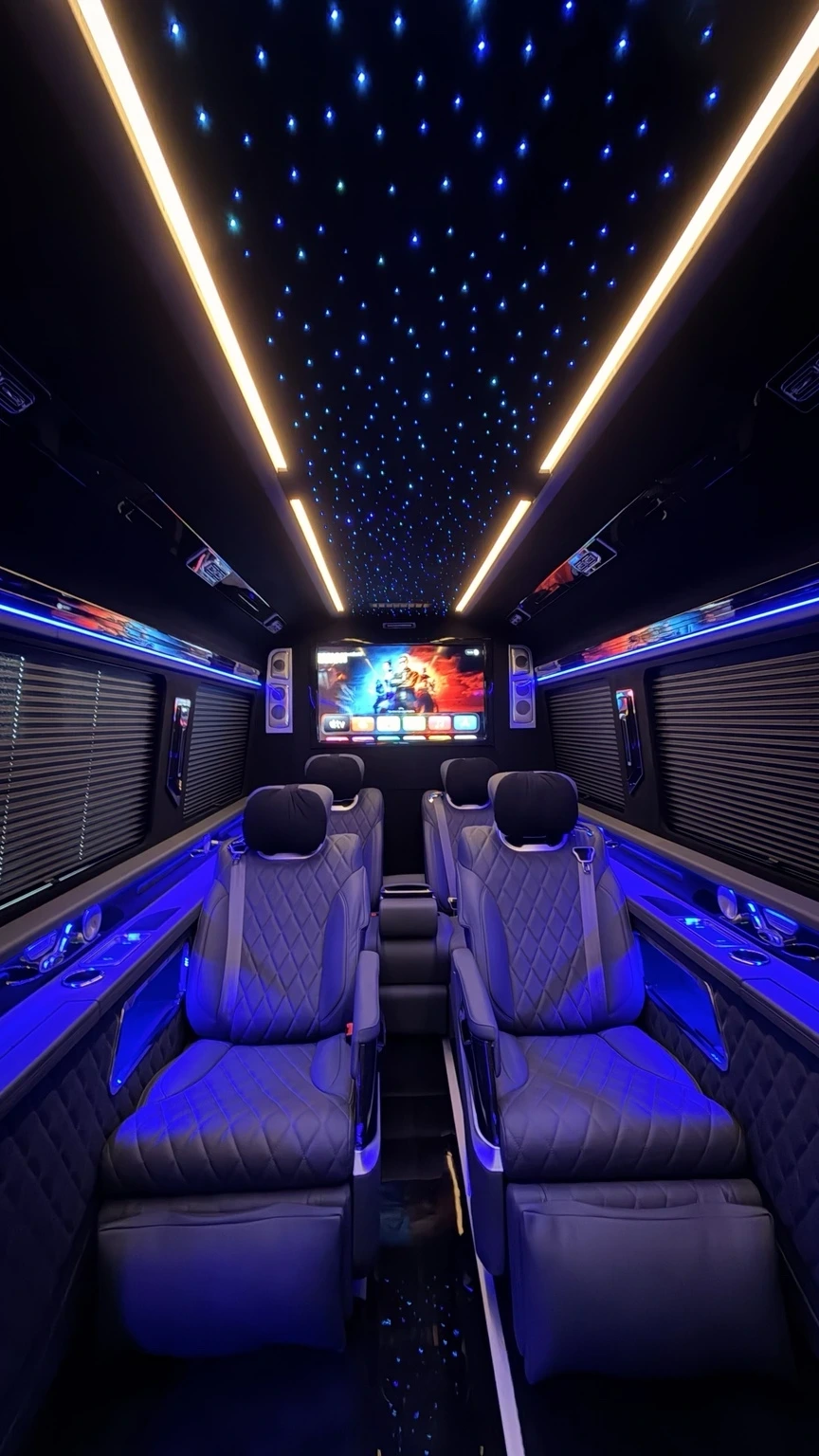
Cover photograph: a completed Silver VIP Design Sprinter project for a UK customer. It illustrates a real passenger cabin and is not presented as a vehicle commissioned by an artist or touring company.