Explore bespoke Mercedes V-Class VIP interiors built in Istanbul for UK clients, with executive seating, premium materials and clear project planning.
Silver VIP Design creates bespoke Mercedes V-Class VIP interiors in Istanbul for clients in the UK and international markets. Each project begins with the vehicle’s existing specification, the intended passenger use and the customer’s preferred level of comfort.
For UK customers considering a Mercedes V-Class conversion, the interior design and the practical arrangements should be discussed together. Seating, materials, electrical equipment, production scope, vehicle transport and handover all contribute to the complete project.
Mercedes V-Class Conversion for UK Customers
A V-Class interior should suit the way its passengers travel. A chauffeur-driven business vehicle may prioritise rear-seat comfort, privacy and convenient passenger controls. A privately used vehicle may need a different balance of seating, luggage space and everyday practicality.
We use these requirements to define the interior layout before selecting the final trim and equipment. Our production takes place in Istanbul; arrangements for a UK customer’s vehicle are discussed as part of the individual project.
Start With the Actual Vehicle
The model year, body length, existing seating and factory equipment provide the starting point.
Before agreeing the scope, share photographs of the passenger cabin and details of the vehicle’s current specification. These help identify which components will be retained, modified or replaced.
Right-hand-drive configuration should also be considered when assessing access, passenger controls and the proposed layout.
Executive Seating and Rear Passenger Comfort
Executive seating can change how the rear cabin is used, but seat size and available space must be considered together.
The layout should allow passengers to enter comfortably, reach controls and use the intended seat functions without unnecessary restrictions.
Electric Adjustment and Comfort Functions
Depending on the selected seat and agreed specification, comfort options may include electric adjustment, heating, ventilation, massage and an adjustable leg support.
The final equipment list should identify the actual seat model and its functions. Features shown in an example vehicle should not be assumed to be included in every conversion.
Legroom, Seat Movement and Luggage Space
Passenger numbers, seat direction and luggage requirements should be established early.
Seat travel and backrest movement affect the space available for consoles, side panels and other equipment. A layout that looks spacious in a photograph still needs to be assessed against the dimensions of the actual vehicle.
Bespoke Leather and Interior Craftsmanship
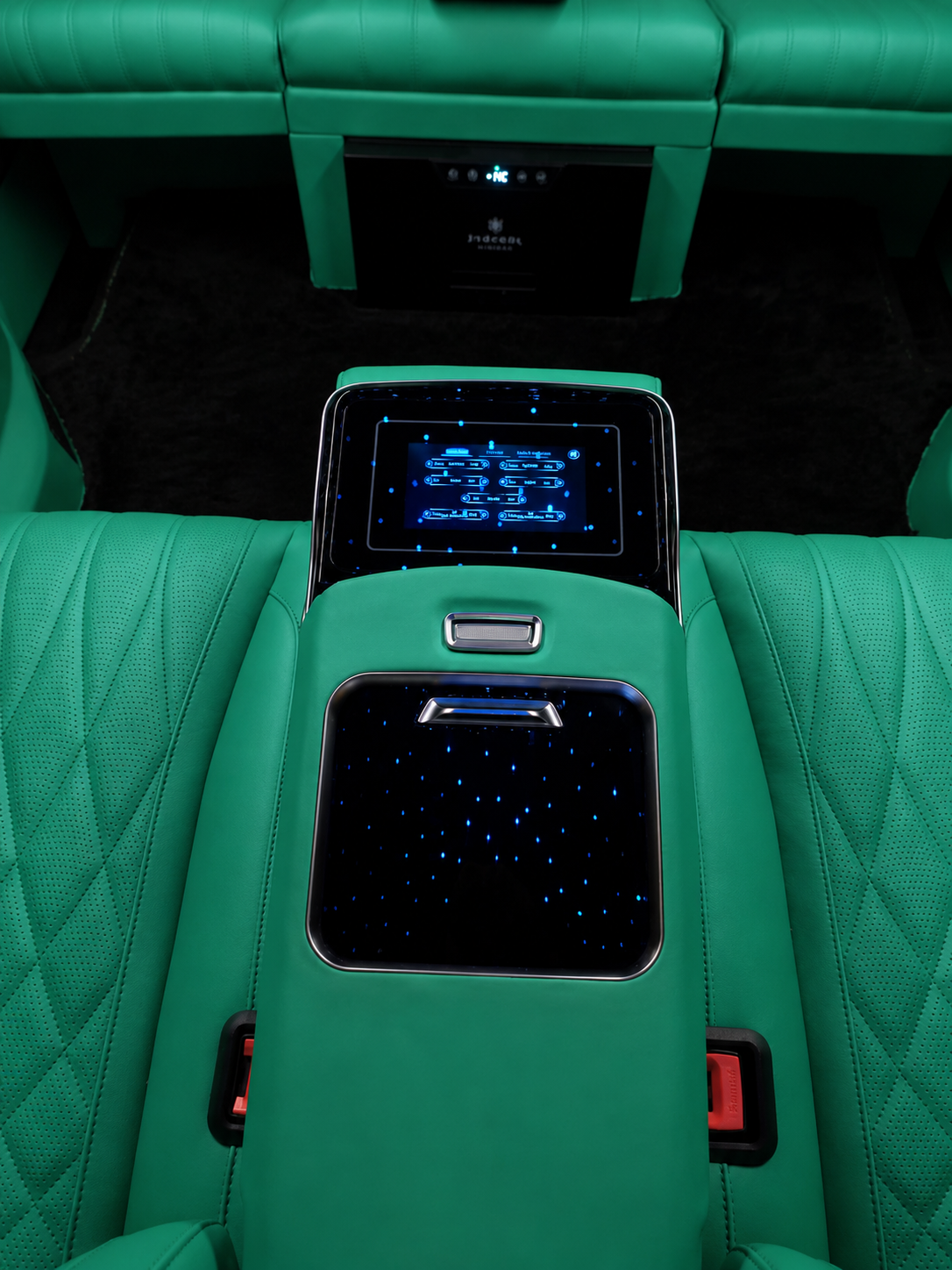
Leather colours, stitching, roof trim, flooring and decorative finishes can be selected as a coordinated interior scheme.
The aim is to create a cabin with consistent detailing across the seats, consoles and surrounding panels. Samples and agreed material specifications help make the intended finish clear before production.
Door Panels, Armrests and Side Trim
Armrests, passenger switches, storage and speaker surrounds should be positioned around the final seating layout.
For a closer look at these details, read our guide to Mercedes V-Class VIP door panels, armrests and side interior design.
Centre Consoles, Lighting and Passenger Technology
A bespoke centre console can provide practical storage, cup holders, charging connections and passenger controls, depending on the agreed design.
A refrigerator, screen or additional multimedia equipment should be assessed for available space, access and everyday use before being added to the specification.
Lighting and Controls
Ambient lighting should complement the materials and make the cabin comfortable to use after dark.
Frequently used controls should remain accessible from the passenger’s normal seating position. Their location, labelling and operation should be included in the design discussion.
Electrical Integration and Maintenance Access
Powered seats, charging equipment, lighting and multimedia require coordinated electrical planning.
The installation scope should address wiring, connections, protection and access to components that may need servicing. These details should be considered before the interior panels are completed.
Retaining Mercedes Factory Features
The existing vehicle equipment should be reviewed before modifications are agreed.
Factory ventilation, door operation, original controls and access to relevant systems need to be considered alongside the new interior components. Retaining a feature or changing its operation should be an explicit part of the project scope.
Our guide to Mercedes V-Class factory features and bespoke VIP interior planning explores this relationship in more detail.
How a V-Class Conversion Project Is Planned
A clear project specification gives the customer and production team the same reference point.
1. Vehicle Details and Intended Use
Provide the model year, vehicle specification, interior photographs, expected passenger numbers and typical journey requirements.
Explain whether the vehicle will be used privately, for executive travel or for chauffeur-driven work.
2. Layout and Equipment Selection
Agree the seating arrangement, required movement space, materials and equipment.
Distinguish essential features from optional additions so that alternatives can be compared against the same requirements.
3. Written Scope and Quotation
The quotation should describe the selected products, custom components and installation work.
The agreed scope should also identify exclusions, payment terms, anticipated production timing and handover arrangements.
4. Production and Handover
Production and completion timing depend on the confirmed specification and project arrangements.
At handover, the agreed functions, operating instructions and applicable warranty and support terms should be reviewed with the customer.
V-Class Conversion Cost for UK Customers
A Mercedes V-Class VIP conversion is quoted individually. The existing vehicle, seat specification, materials, custom fabrication and electrical equipment all influence the budget.
A Vito conversion price should not be treated as a confirmed V-Class price. An accurate quotation must refer to the actual model and agreed work.
What Should the Quote Make Clear?
Ask for the following items to be identified:
- Whether the base vehicle is included.
- The quotation currency.
- Taxes and any additional charges.
- Seat models, quantities and comfort functions.
- Upholstery and trim materials.
- Electrical installation and multimedia equipment.
- Custom consoles and interior components.
- Transport and handover arrangements.
- Production timing and payment terms.
- Warranty coverage and after-sales support arrangements.
This makes it easier to compare quotations that may otherwise describe very different projects.
Transport, Documentation and UK Use
For a conversion produced in Istanbul, vehicle movement and delivery arrangements should be discussed before the project is confirmed.
The quote should state which transport and organisational services are included and which require separate arrangements.
The documentation needed for the intended UK use should also be identified before production. Any approval or registration requirements depend on the actual vehicle and modifications; a bespoke interior should not be presented as automatically approved for UK use.
Discuss Your Mercedes V-Class VIP Conversion
To begin planning, send Silver VIP Design your vehicle details, passenger requirements, interior photographs and preferred equipment.
We can discuss an interior concept and prepare a quotation around the agreed scope, with production in Istanbul and the arrangements for your UK project clearly identified.
Contact Silver VIP Design about your Mercedes V-Class conversion.