Planning a Mercedes V-Class conversion? Compare iPad interfaces and physical controls for passenger comfort, clear operation and everyday chauffeur use.
A passenger should be able to settle into an executive vehicle, adjust their seat and find the reading light without needing a lengthy explanation. This matters particularly when a vehicle is used by different family members, business guests or chauffeur passengers.
When planning a Mercedes V-Class conversion for UK clients, the choice between an iPad interface and physical controls should follow the way the cabin will be used. A carefully considered combination can give passengers convenient access to everyday functions while keeping the interior visually organised.
Start with the Passenger’s First Few Minutes
Imagine a guest entering the vehicle for the first time. They may want to move their seat, switch on a reading light or lower the sound level.
These simple actions provide a useful starting point for the control specification. Frequently used functions should be easy to identify and reachable from the seat where they will be used.
A cabin used mainly by its owner may suit a personalised interface. A chauffeur vehicle with regularly changing passengers benefits from controls that can be understood with very little instruction.
Give Each Function a Clear Control Method
Before selecting a tablet or switch panel, list the equipment and decide how each function will be operated.
Seat adjustment, lighting and entertainment do not necessarily need the same type of control. Heating, ventilation and massage functions also depend on the selected seat equipment and its integration.
The agreed specification should explain what is included rather than relying on a general description such as “full iPad control”.
What an iPad Interface Can Add
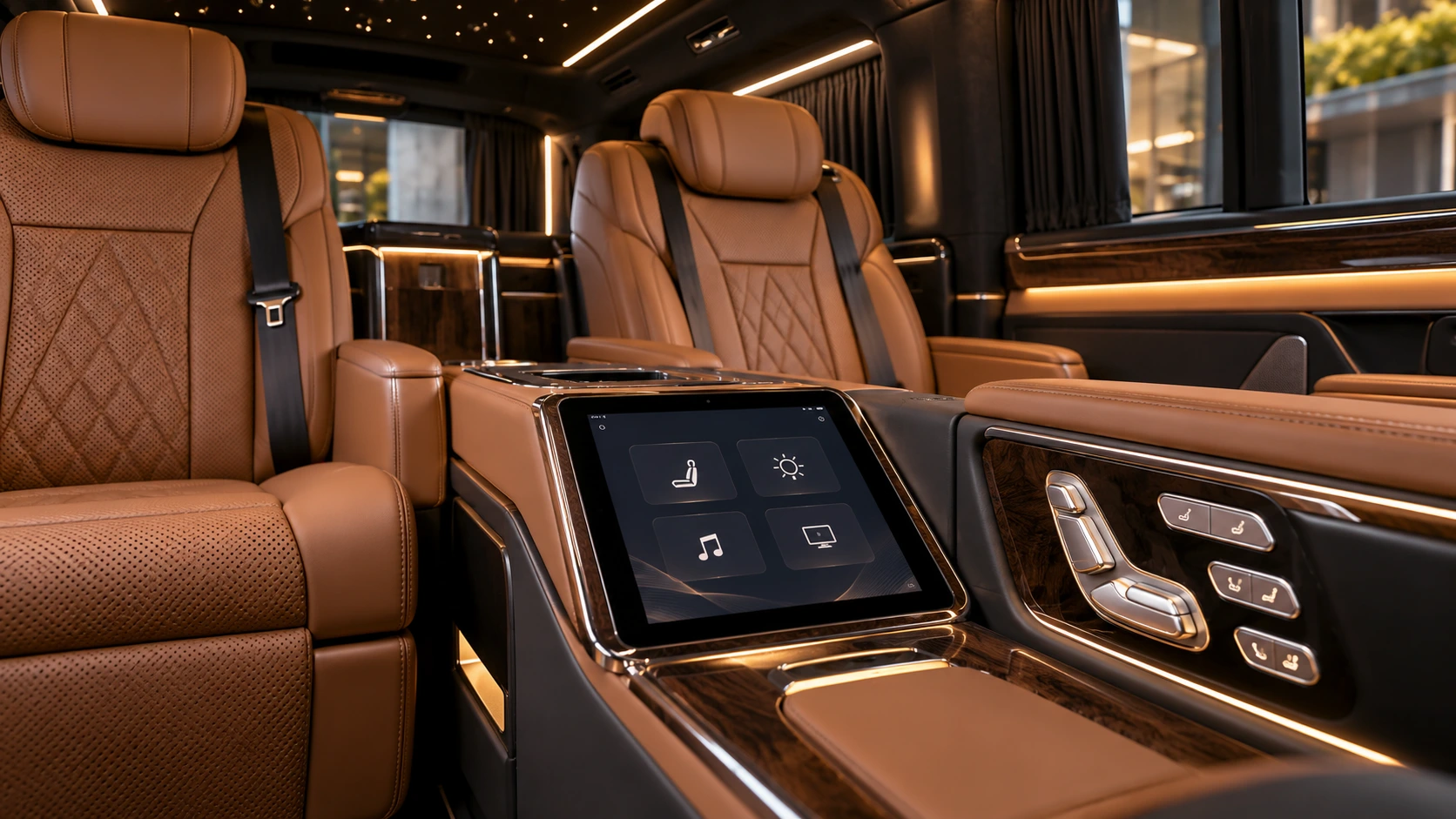
An iPad can provide a central interface for the cabin functions connected to a compatible control system. Depending on the project, this may include selected lighting and multimedia functions or other integrated equipment.
The tablet is the user interface; the equipment behind it determines what can actually be controlled.
Large, clearly labelled controls and a simple menu structure can make the interface easier to use. The passenger should not have to search through several screens to find a routine adjustment.
Mounting, Charging and Screen Position
The iPad’s location should be considered alongside seat movement, cupholders and access through the cabin. A removable device also needs a suitable place to be secured and charged.
Screen reflections, night-time brightness and reach from a reclined seat should be assessed during the cabin review. A position that looks attractive in a photograph may not be the most convenient during a journey.
The installation should also allow the device to be removed or serviced when necessary, without making routine access unnecessarily difficult.
Where Physical Controls Remain Useful
Physical buttons can provide direct access to regularly used functions such as seat adjustment or a dedicated reading light.
Their shape, labelling and location should make their purpose clear. The passenger should be able to reach them comfortably without leaning across a console or another seating position.
Seat controls should be assessed with the passenger sitting normally and with the seat in its intended reclining positions. Controls that are easy to reach with an upright backrest may become less convenient when the seating position changes.
Using physical switches alongside a tablet does not automatically create an independent backup system. If operation without the tablet is required, that behaviour must be designed into the installation and demonstrated at handover.
A Completed Project with Both Types of Equipment
Our EMK Tower Mercedes Vito VIP project includes original S500 seat controls and an Apple iPad control system.
It provides a real example of physical controls and a tablet interface appearing within the same bespoke interior. The project was completed on a Vito; a V-Class installation requires its own equipment specification and layout.
Customers considering that platform can explore our Mercedes Vito VIP conversion service.
The practical lesson is to consider the control equipment together with the seats, consoles and passenger requirements. A component list alone does not explain how comfortably the finished cabin will operate.
Planning Controls for a Sprinter Passenger Cabin
A Mercedes Sprinter VIP conversion may include several seating positions or distinct passenger areas, depending on the vehicle and chosen layout.
In that situation, personal and shared functions should be clearly identified. A passenger may need individual access to a reading light, while a shared display or audio system needs an agreed method of operation.
The number of screens and control panels should follow the actual seating plan. Additional interfaces are useful when they improve access or make the cabin easier to operate.
The same passenger-focused assessment can also be applied to a Hyundai Staria VIP conversion, with the layout adapted to that vehicle’s own dimensions and equipment.
Agree the Handover Demonstration Before the Build
The finished vehicle should be demonstrated from the passenger seats, using the equipment supplied with the conversion.
At handover, the demonstration should cover:
- The functions assigned to physical buttons.
- The equipment controlled through the iPad.
- How the tablet is secured and charged.
- How the interface reconnects after a restart.
- Which functions remain available when the tablet is switched off.
- Any internet connection required by the specified system.
These checks help the owner understand the installation and explain it to other passengers. Clear operating instructions are particularly useful when the vehicle is shared between family members or used with a chauffeur.
Plan Your VIP Interior with Silver VIP Design
Silver VIP Design develops bespoke interiors in Istanbul for international clients. Control equipment is considered alongside seating, consoles, lighting and multimedia as part of the overall project.
Share your vehicle model, passenger numbers and preferred equipment with our team. Whether the project involves a Mercedes V-Class, Sprinter, Vito or Hyundai Staria, the aim is a cabin whose controls suit the people who will use it.
A well-planned VIP interior combines carefully selected equipment with straightforward everyday operation.