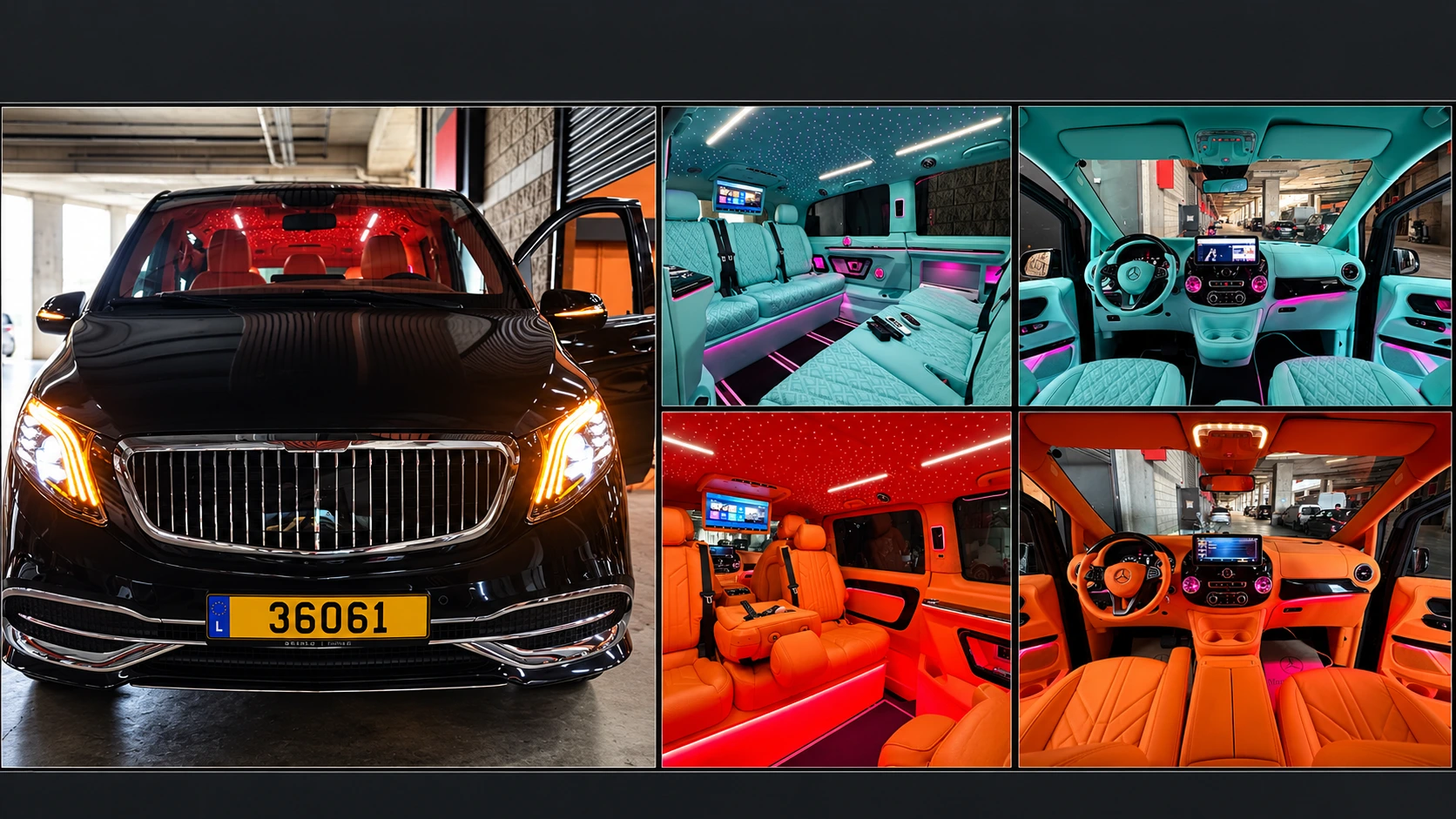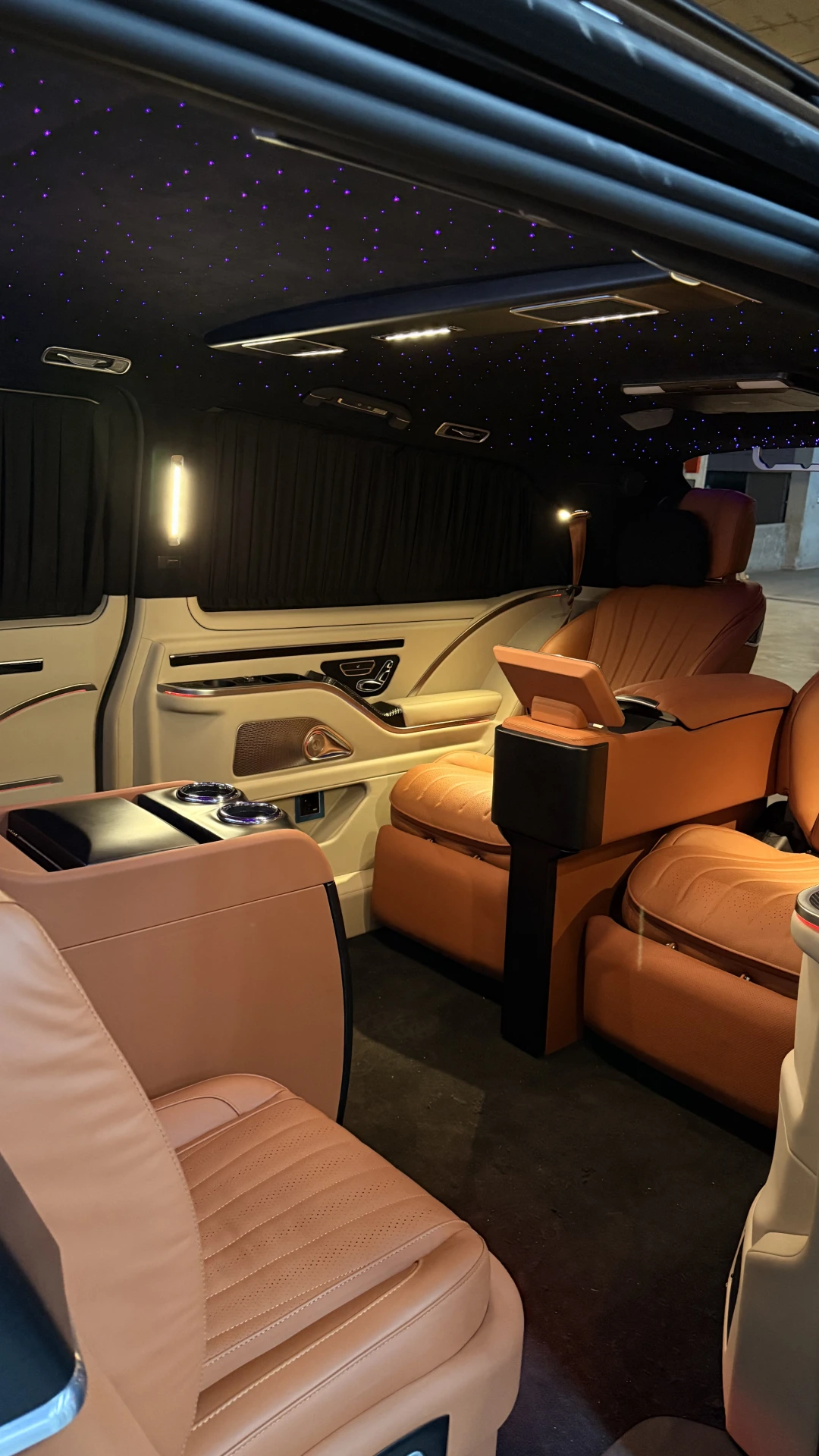

In a Mercedes V-Class VIP conversion in the UK, door and side panels are more than decorative surfaces. Armrests, storage areas, speaker integration, material quality and passenger ergonomics all influence the rear cabin experience. Silver VIP Design develops bespoke Mercedes V-Class VIP interiors for UK clients, combining premium craftsmanship, comfort and practical everyday use.
Why Side Interior Design Matters in a Mercedes V-Class VIP Conversion
Door panels and side interior surfaces influence how a Mercedes V-Class rear cabin looks, feels and functions. Alongside the seats, they shape the passenger experience through armrest positioning, storage access, speaker integration and available space.
These components should be planned together with the seats and centre console rather than designed independently. Their dimensions affect passenger comfort, access to controls and the operation of the sliding doors.
For an overview of seating, materials, equipment and project planning, explore our Mercedes V-Class Conversion UK guide.
Side Panels Should Follow Passenger Ergonomics
A side panel should be designed around the passenger's actual seating position. Its shape and dimensions should support comfortable travel while preserving usable cabin space and access to everyday functions.
Armrest Height Is Important
The armrest should provide comfortable support without requiring the passenger to raise or lower their shoulder unnecessarily. If it is too high or too low, longer journeys can become less comfortable.
Its position should be assessed alongside the selected seat, upholstery thickness, final seating height and available adjustment range.
Passenger Reach Should Be Considered
Storage compartments and frequently used controls should be easy to reach from the seat.
Passengers should be able to use them without leaning awkwardly or repeatedly changing their seating position. Access should also be checked when the seat is reclined or moved backwards, as a feature that is convenient in one position may be difficult to use in another.
Door Panels Should Remain Clean and Elegant
Visual balance is an important part of a bespoke Mercedes V-Class interior. The sliding-door area should remain practical and uncluttered.
Avoid Excessive Protrusions
Large or bulky door structures can restrict access, reduce usable passenger space and make the cabin feel narrower.
Panel depth should reflect the space available and the functions being integrated. A slimmer design can help preserve the entrance area and maintain a more open appearance.
Keep the Design Consistent
Door panels should complement the seats, side walls, ceiling and centre console.
Coordinated materials, colours, stitching and decorative finishes help create a consistent interior, with each component contributing to the same design concept.
Premium Armrests Improve Passenger Comfort
Armrests are among the most frequently touched and used parts of the rear cabin. Their shape, padding and position therefore deserve careful attention during planning.
Correct Width and Padding
An armrest should provide adequate support without occupying unnecessary passenger space.
Padding, edge shape, surface form and upholstery should be selected together to provide a comfortable contact area suitable for everyday use.
Integration With the Side Panel
The armrest should fit naturally into the surrounding panel.
Clean transitions between upholstered surfaces, decorative trim and storage areas help create a more refined finish.
Storage Areas Should Be Practical and Discreet
Rear passengers may need convenient storage for phones, documents and other small personal items.
Storage should be included where it supports everyday use without adding unnecessary bulk or interfering with the seats.
Slim Storage Pockets
Compact pockets can provide useful storage while preserving the shape of the side panel and the available cabin width.
Their dimensions should reflect the items passengers are likely to carry, the space around the seats and the position of moving components.
Easy Access
Storage should remain accessible from the intended seating position.
Its location should also allow passengers to enter, leave and move within the cabin comfortably. The finished layout should be assessed together with seat movement, armrests and the centre console.
Speaker Integration and Audio Design
Speaker grilles and surrounding trim should be planned together with the audio system and interior panels.
The aim is to integrate the equipment neatly while allowing it to function as intended. The selected audio equipment, available installation space and access for future servicing should be considered before the panels are manufactured.
Speaker Grilles and Decorative Finishes
Metal, satin-finish or other suitable speaker grilles can provide a refined detail when coordinated with the surrounding materials.
Their appearance, dimensions and mounting should suit the selected speaker and panel design without dominating the interior.
Positioning Matters
Speaker placement should consider sound distribution, passenger position, usable cabin space and the construction behind the panel.
The installation should also remain compatible with nearby door mechanisms and electrical components, with suitable access for future servicing where required.
Material Selection Defines the Character of the Interior
Door and side-panel materials should support the overall interior concept.
Leather, suitable textile or suede-effect surfaces, satin-finish trim and decorative panels can be combined according to the customer's preferences and the agreed project specification.
Material selection should consider appearance, durability, cleaning and how frequently each surface will be touched.
Upholstery Should Complement the Seats
Coordinated upholstery colours and stitching help connect the side panels with the seating design.
The aim is to maintain a consistent interior concept while considering the practical requirements of frequently touched surfaces.
Decorative Details Should Be Balanced
Satin-finish trim can introduce subtle decorative detail without excessive reflections, while other finishes may suit a different design preference.
The final selection and placement should remain balanced with the upholstery, lighting and surrounding surfaces.
Side Panels Should Preserve Usable Cabin Space
Side-panel dimensions affect shoulder room, seat movement and access through the passenger compartment.
The available space should be assessed before adding armrests, storage compartments or decorative structures.
Slim Construction Preserves Space
A carefully planned panel can incorporate armrests and storage while keeping its overall depth appropriate for the cabin.
The dimensions should be checked against the actual seat position, surrounding components and equipment behind the trim.
Avoid Unnecessary Bulk
Each feature should serve a clear purpose.
Storage, speakers and decorative structures should be assessed for their effect on passenger movement, seating comfort and access to other cabin equipment.
Sliding-Door Function Must Be Considered
A bespoke interior should be planned around the operation of the vehicle's original sliding doors.
Panel thickness, component weight, added equipment and upholstered surfaces should be assessed for the specific vehicle before fabrication.
Interior Trim Must Respect Door Movement
Armrests, speaker housings, grilles and decorative components should be positioned with the door mechanism and movement path in mind.
The design should account for the door in both its open and closed positions. Available clearances depend on the specific vehicle and proposed interior layout.
Check Clearances During Installation
Moving components should have sufficient clearance to operate without rubbing against adjacent trim.
Door operation should be checked during installation and final inspection to identify rubbing, obstruction or interference.
For a broader discussion of original vehicle equipment, read our guide to factory features in a bespoke Mercedes V-Class VIP interior.
Side Interior Design and VIP Seating Should Be Planned Together
The selected seats influence the position of armrests, storage areas, passenger controls and surrounding panels.
These components should be planned together so that passengers can use the available space and equipment comfortably.
Seat Height Changes the Panel Relationship
Different seat designs may place the passenger higher or lower than the original seating.
Side-panel dimensions should therefore be checked against the final seat installation, including the actual seating height, reclining position and adjustment range.
Allow for Seat Movement
A panel that fits beside an upright seat may interfere with it when the seat reclines or moves.
Forward and backward adjustment, reclining and any fitted leg supports should be considered when positioning nearby panels. The layout should allow passengers to use the agreed seat functions without unnecessary restrictions.
Easy Maintenance Is Part of Interior Planning
Frequently touched surfaces should be suitable for everyday use and practical to clean. Important components should also remain accessible for maintenance.
These requirements should be considered before the final panels are manufactured.
Service Access Should Be Planned
Where necessary and technically practical, removable panel sections can provide access to wiring, speakers or other serviceable equipment.
Access points should be incorporated into the design so that routine servicing does not require unnecessary dismantling. The appropriate arrangement depends on the equipment and construction of the individual project.
Craftsmanship Is Visible in Small Details
Stitching, panel alignment and material transitions influence the finished appearance of the cabin.
Consistent workmanship helps the separate interior components form a coherent design. These details should be checked alongside the practical operation of the interior.
Panel Gaps Should Be Consistent
Careful fitting creates a neat finish around doors, seats and surrounding trim.
Panels should align with adjoining surfaces without obstructing doors, seats or access points. Alignment should be checked during installation, with the components fitted together.
Material Transitions Should Be Clean
Upholstery, decorative trim and speaker grilles should meet neatly.
Edges and frequently touched areas should be finished with passenger comfort and durability in mind.
Bespoke Mercedes V-Class Interiors for UK Clients
Silver VIP Design plans and produces bespoke Mercedes V-Class interiors in Istanbul for UK and international clients.
Door panels, armrests, storage, speaker integration and upholstery are developed alongside the seating configuration and complete cabin layout.
The aim is to create an interior that combines individual design with comfortable passenger space, practical access and maintainable equipment.
To discuss your vehicle, seating requirements and preferred interior specification, contact Silver VIP Design.