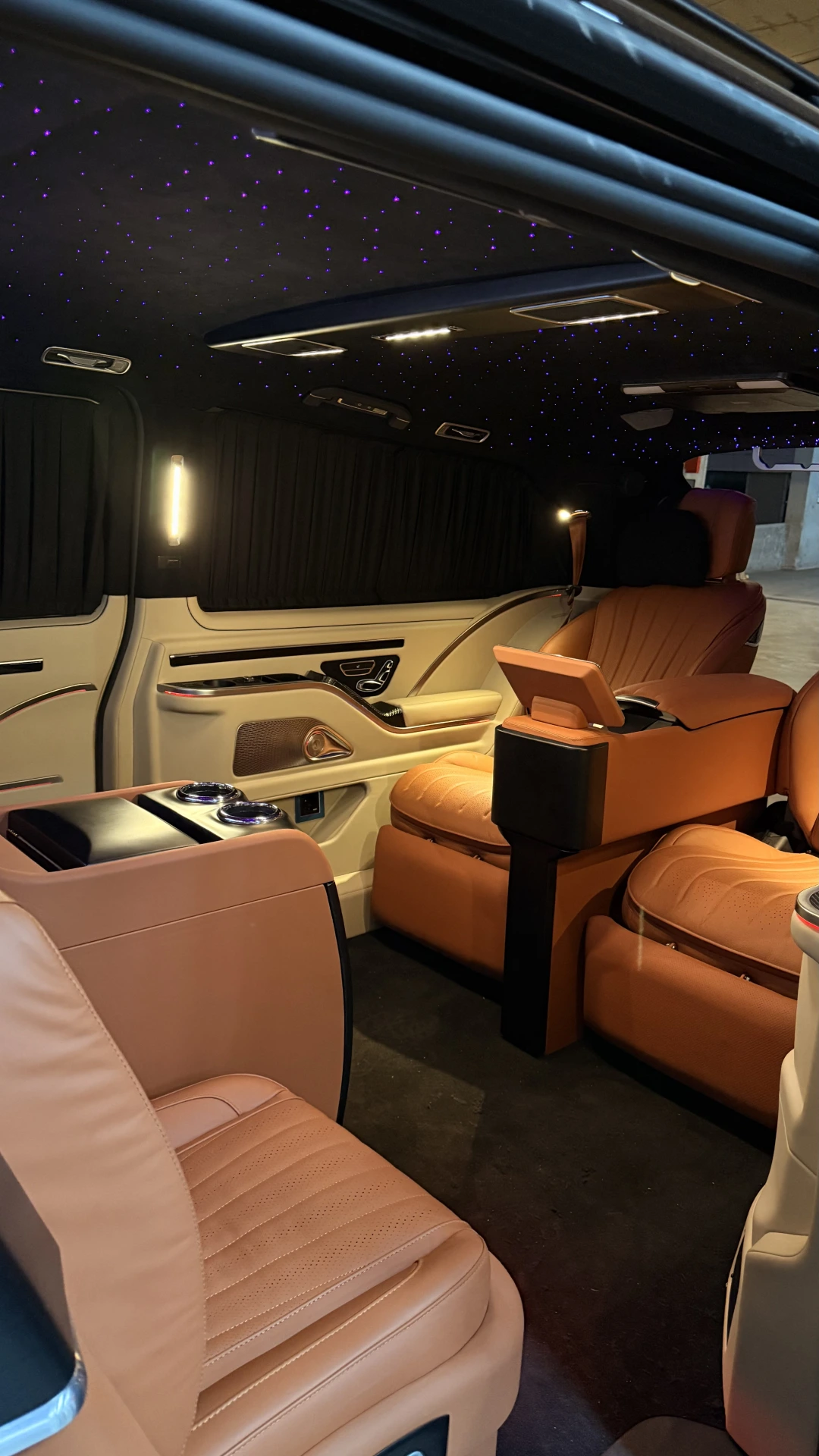

Mercedes V-Class rear seat comfort is an important consideration for UK clients using their vehicle for executive, chauffeur-driven or private travel. The right executive seating position, generous legroom, easy entry and exit, passenger-focused controls, charging and a carefully planned cabin layout can transform the rear of a Mercedes V-Class into a refined and comfortable travel space. Silver VIP Design develops bespoke V-Class interiors around the needs of rear passengers and the vehicle’s intended use.
For many executive and chauffeur-driven vehicles, the most important seat is not the driver's seat but the rear passenger seat. A Mercedes V-Class used for business or private travel should therefore be designed around the comfort, space and daily experience of the passengers travelling in the rear cabin.
Mercedes V-Class rear seat comfort depends on much more than installing premium seats. Seat position, legroom, entry and exit, armrest height, access to charging, passenger controls, storage and the overall cabin layout all influence how comfortable the vehicle feels during everyday use and longer journeys.
Why Is Rear Seat Comfort Important in a Mercedes V-Class?
The Mercedes V-Class is frequently chosen when passengers want the practicality of a premium vehicle combined with a spacious rear cabin.
For executive and chauffeur-driven use, passengers may spend significant amounts of time in the rear of the vehicle. This makes passenger-focused interior planning particularly important.
For a broader overview of how the original V-Class specification can be combined with a bespoke passenger environment, see Mercedes V-Class VIP Conversion UK: Factory Features and Bespoke VIP Interior.
Design the Interior From the Passenger's Perspective
A luxury interior should be evaluated from the position where the customer will actually spend most of their time.
Can the passenger stretch their legs comfortably?
Are important controls within easy reach?
Can a phone be charged without reaching across the cabin?
Is there enough space to enter and leave the vehicle comfortably?
These practical details can have a greater impact on daily comfort than decorative features alone.
Executive Seating in the Mercedes V-Class
Executive seating forms the foundation of a comfortable rear passenger environment.
The seat should provide an appropriate combination of support, adjustability and usable space around the passenger.
Depending on the individual project, electrically adjustable premium seating can be combined with additional comfort functions.
Seat Position Matters as Much as the Seat
Even a high-quality executive seat can feel uncomfortable if it is installed in the wrong position.
The distance from surrounding panels, consoles and other seats should be calculated carefully. Seat travel should also be considered so that passengers can adjust their position without creating unnecessary restrictions elsewhere in the cabin.
How Much Legroom Does a VIP V-Class Need?
Generous legroom is one of the most noticeable differences between a standard passenger layout and a carefully planned executive interior.
However, creating legroom does not simply mean moving a seat backwards.
Balance Legroom With the Complete Cabin Layout
Seat position must work with the sliding-door entrance, centre console, storage areas and other passenger seats.
The objective is to provide generous usable space while keeping the interior functional.
A Mercedes V-Class rear seat comfort project should therefore consider the complete cabin rather than focusing on one measurement.
Easy Entry and Exit for Rear Passengers
Comfort begins before the passenger sits down.
The route from the sliding door to the executive seating area should remain clear and practical.
Avoid Overcrowding the Entrance Area
Large consoles or poorly positioned seats can make a visually impressive cabin frustrating to use.
For executive and chauffeur-driven vehicles, frequent entry and exit should be considered during the initial layout planning.
A clean passage and appropriate seat positioning can make the vehicle significantly more comfortable in daily use.
Rear Passenger Comfort for Chauffeur-Driven Travel
A chauffeur-driven Mercedes V-Class has different priorities from a conventional family vehicle.
The rear passenger becomes the centre of the interior concept.
Create a Calm Executive Environment
Business passengers may want to make calls, work, relax or simply travel quietly between appointments.
A comfortable seating position, good cabin insulation, discreet lighting and easily accessible controls can help create a more refined environment.
The interior should support the passenger without requiring constant interaction with the driver.
Passenger Controls Within Easy Reach
Convenience is an important part of luxury.
Frequently used controls should be positioned where the passenger can reach them naturally from the executive seat.
Plan Controls Around the Seating Position
Lighting, multimedia and other available passenger functions should be considered together with seat movement.
A control that is easy to reach when the seat is upright may become inconvenient when the passenger changes position.
This is why passenger controls and executive seating should be planned as one system.
USB and Wireless Charging for Rear Passengers
Phones, tablets and other mobile devices are now part of both business and private travel.
Charging facilities should therefore be positioned around the passenger rather than added wherever space remains.
Charging Should Be Convenient and Discreet
USB connections and wireless charging areas can be integrated into consoles or other appropriate interior components.
The electrical infrastructure behind these features should also be professionally organised so that visible cables do not compromise the appearance of the cabin.
Centre Console Design and Passenger Convenience
A centre console can provide valuable functionality in a Mercedes V-Class VIP interior.
Depending on the project, it may incorporate storage, cup holders, charging areas and passenger controls.
Do Not Sacrifice Space for an Oversized Console
A larger console is not automatically more luxurious.
Its dimensions should be balanced with legroom, seat movement and the route through the passenger cabin.
The best solution is one that provides useful functions without making the rear compartment feel crowded.
Armrests and Small Ergonomic Details
Rear seat comfort is influenced by details that may appear relatively minor during the design stage.
Armrest position, cup holder location, storage access and the height of surrounding surfaces all affect the way passengers interact with the cabin.
Luxury Should Feel Natural to Use
Passengers should not have to lean forward or change their seating position repeatedly to reach everyday functions.
When these details are planned correctly, the interior feels more intuitive and comfortable.
Sound Insulation and Rear Passenger Comfort
A comfortable executive seat cannot provide the complete experience if excessive road and exterior noise enters the cabin.
Professional sound insulation can help create a calmer environment for conversations, telephone calls and longer journeys.
A Quiet Cabin Supports Executive Travel
Reduced unwanted noise can make the rear compartment feel more refined.
It can also improve the experience of multimedia and audio systems because passengers do not need excessive volume to overcome road noise.
Thermal Comfort in the Rear Cabin
Temperature is another important element of passenger comfort.
The rear seating area should remain comfortable during different seasons and journey conditions.
Interior Materials and Insulation Work Together
Thermal insulation and appropriate interior materials can support the overall cabin environment.
This should be considered during the construction stage before final panels and decorative surfaces are installed.
Ambient Lighting for Rear Passenger Comfort
Lighting should improve the atmosphere without becoming distracting.
Indirect ambient lighting can be integrated around the cabin to provide a softer environment during evening and night journeys.
Lighting Should Support Rather Than Dominate the Interior
Brightness and positioning are more important than simply adding more light sources.
For chauffeur-driven travel, a discreet lighting concept can provide a more professional and relaxing atmosphere.
Reading lights can also be positioned according to the needs of individual passengers.
Privacy in a Chauffeur-Driven Mercedes V-Class
Executive passengers may value privacy during telephone calls, conversations or private journeys.
Interior planning can support a more discreet rear passenger environment.
Privacy and Comfort Should Be Planned Together
The seating position, cabin layout, lighting and other interior features should work together.
Privacy should not make the passenger compartment feel enclosed or reduce useful space unnecessarily.
Long-Distance Comfort in the Mercedes V-Class
Small ergonomic problems become more noticeable as journey time increases.
For this reason, long-distance passenger comfort should be considered when determining seat position, legroom and access to controls.
Movement Space Is Part of Comfort
Passengers should have enough room to adjust their seating position during longer journeys.
An interior that looks spacious but restricts actual movement will not provide the same level of comfort as a cabin planned around real passenger use.
Avoiding an Overloaded VIP Interior
Luxury does not require filling every available surface with equipment.
In a Mercedes V-Class, careful use of the available space is particularly important.
More Usable Space Can Mean More Luxury
Leaving appropriate space around executive seats can create a cleaner appearance while improving comfort.
Every console, screen, storage compartment and decorative component should have a clear purpose within the interior.
For customers comparing cabin dimensions and interior possibilities across different Mercedes platforms, Mercedes Luxury Van Conversion UK – Vito, V-Class and Sprinter provides a broader comparison.
Professional Installation and Long-Term Comfort
Rear passenger comfort also depends on components that are not immediately visible.
Secure mounting, organised electrical systems and professional installation of panels and consoles can help reduce unwanted movement and noise over time.
A Premium Interior Should Remain Comfortable
The quality of a conversion should continue after the vehicle leaves the workshop.
Interior components should be installed with long-term use and future service access in mind.
This helps maintain both the appearance and functionality of the passenger cabin.
Mercedes V-Class Rear Seat Comfort for UK Clients
A premium rear passenger environment is created by combining executive seating, generous legroom, practical entry and exit, accessible controls, charging, cabin quietness and intelligent use of space.
For chauffeur-driven, executive and private travel, these elements should be planned around the person who will actually travel in the rear of the vehicle.
The same passenger-focused principles are also important when planning a more compact Mercedes platform. See Mercedes Vito VIP Conversion for Official and Private Use for another example of executive and private-use interior planning.
Silver VIP Design develops bespoke Mercedes V-Class interiors for UK clients with a passenger-focused approach. Seating positions, legroom, consoles, technology, materials and comfort features are planned according to the vehicle's intended use and the individual requirements of each project.
Silver VIP Design plans and produces bespoke Mercedes V-Class interiors in Istanbul for UK clients. To see how executive seating, legroom, passenger controls and the complete cabin layout can be planned together, explore our Mercedes V-Class Conversion UK guide.