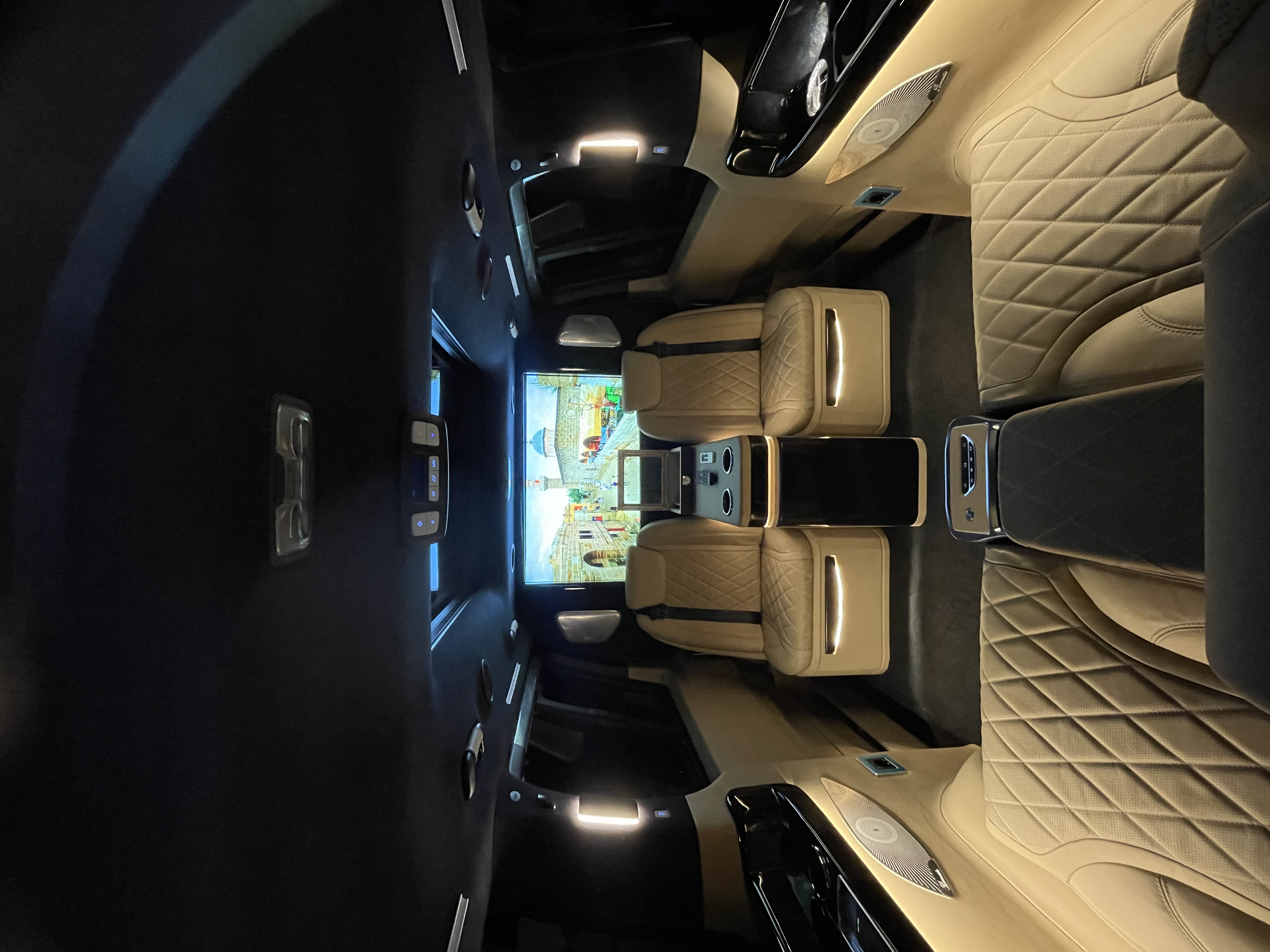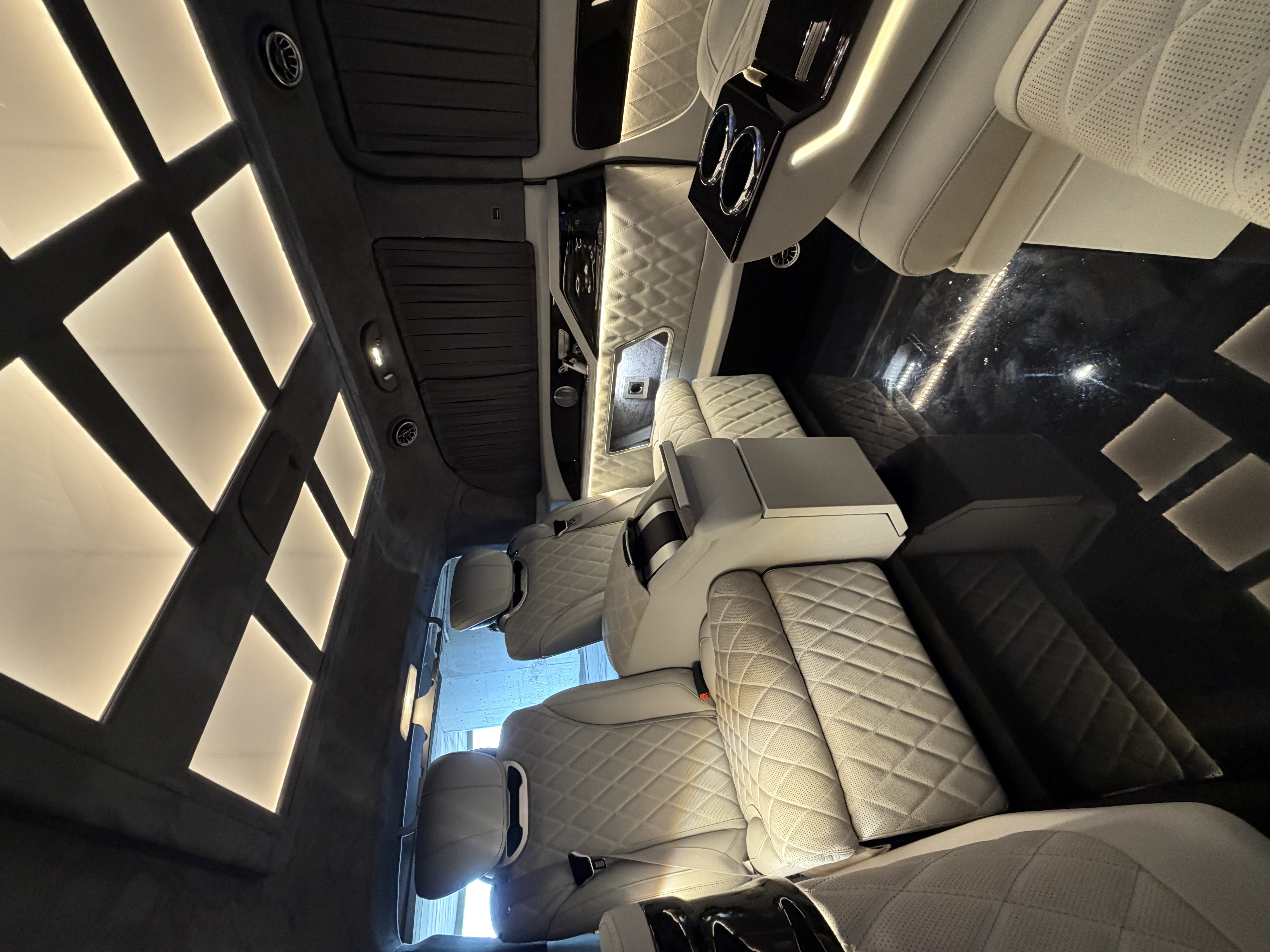
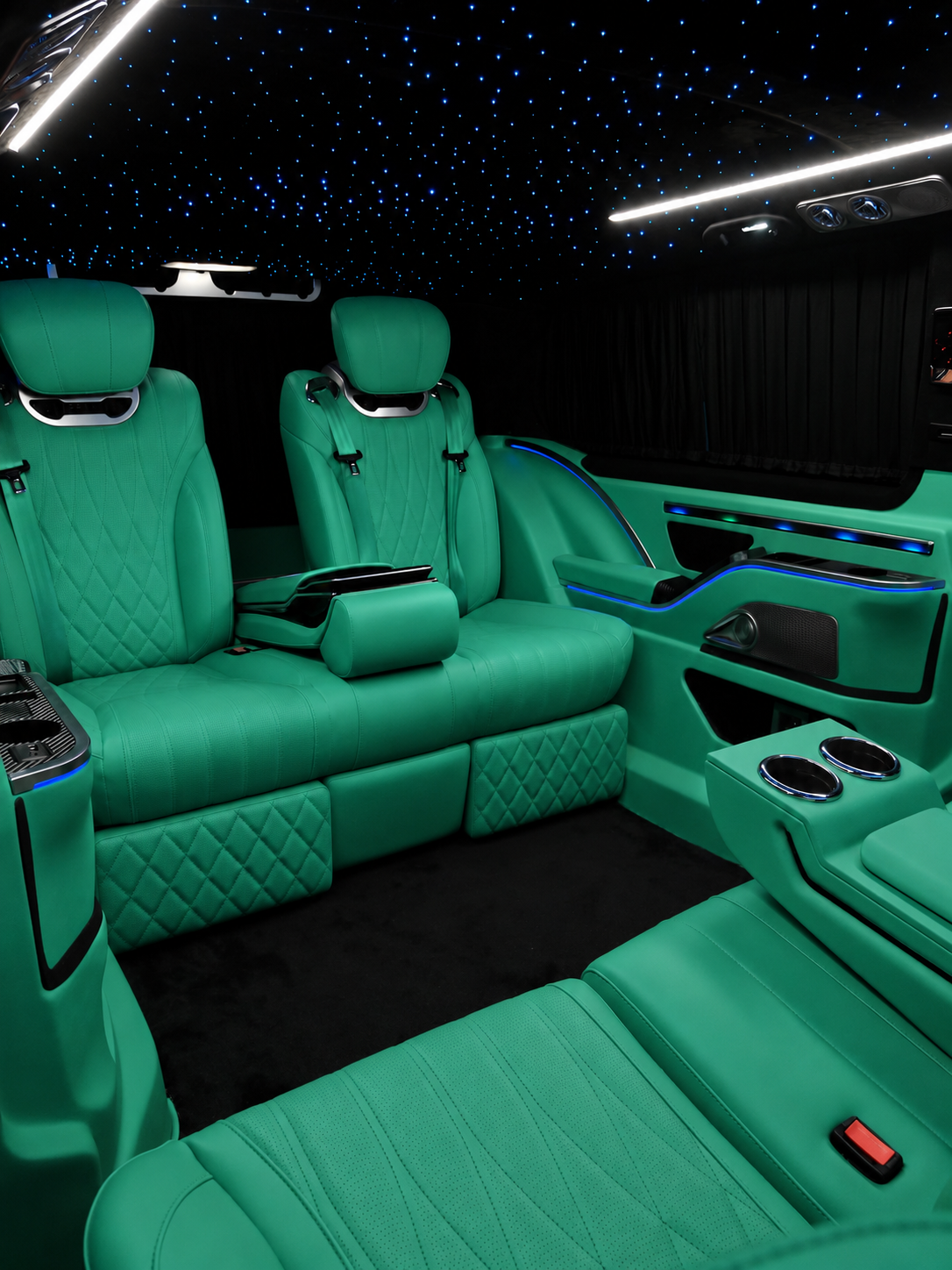
Planning a VIP vehicle conversion? Explore seating, materials, electrics, insulation and practical layouts for Mercedes V-Class and Sprinter interiors.
A successful VIP vehicle conversion starts with understanding how the vehicle will be used. Before choosing leather colours, screens or lighting, establish the passenger capacity, luggage requirements and comfort features that matter most to you.
For a Mercedes V-Class or Sprinter, interior design should bring seating, materials, electrical equipment and everyday usability together. The finished cabin needs to work during real journeys as well as look attractive in photographs.
Define the Purpose of the Vehicle
Executive travel, family journeys and private use can require different interior layouts. A vehicle used mainly for business may prioritise individual seats, privacy and accessible passenger controls. A family specification may need more luggage space, practical storage and surfaces that are easy to maintain.
Write down your essential requirements before selecting optional equipment. This gives the designer a clear starting point and helps keep the project within its intended scope.
Consider Passengers and Luggage Together
Confirm how many people will regularly travel and what they normally carry. Seat numbers alone do not describe the space a cabin needs.
Luggage, personal belongings and access through the passenger compartment should be considered alongside the seating arrangement.
Choose the Right Base Vehicle
The vehicle’s dimensions, model year, condition and original equipment influence the conversion. Assess the actual vehicle before deciding which components will be replaced or retained.
A Mercedes V-Class and a Sprinter offer different possibilities. The appropriate platform depends on your required seating, equipment and journey habits.
For an overview of one of these options, explore our Mercedes V-Class conversion guide for UK customers.
Review Existing Features Before Making Changes
Original climate controls, air outlets, seat systems and door arrangements can affect the new layout. Identifying useful factory equipment early helps the conversion design work with the vehicle.
Plan Seating Around Usable Space
Seat comfort depends on positioning as well as features. Electric adjustment, heating, ventilation, massage and leg supports may be available depending on the selected seat model and specification.
Before approving the layout, consider how passengers will enter, move through the cabin and reach their controls.
Check Reclining and Adjustment Clearance
A seat requires more space when reclined or when its leg support is extended. Consoles, adjacent seats and trim panels should be positioned with these movements in mind.
Seat installation and seat-belt arrangements also need to be assessed for the particular vehicle and proposed changes.
Select Materials for Appearance and Daily Use
Leather, roof fabrics, flooring and decorative surfaces should suit the intended use of the cabin. Colour and texture matter, but so do care requirements and the areas where each material will be fitted.
A coordinated selection helps the seats, panels, roof and consoles feel like parts of one interior.
Examine Workmanship Details
When reviewing completed projects, look at stitching, panel alignment, trim edges and how adjoining surfaces meet.
Ask how components are installed and how they can be accessed later. These details provide a fuller picture of the work than material names alone.
Position Consoles and Storage Carefully
A centre console can accommodate cup holders, charging points, storage and passenger controls. A refrigerator may also be included in the specification.
Its dimensions and opening clearance should be planned alongside the seats. Frequently used items need to remain accessible without restricting legroom or movement through the cabin.
Choose Technology That Serves a Clear Purpose
Screens, audio equipment, wireless charging and USB connections can improve the passenger experience when their placement suits the layout.
Select equipment according to how you expect to use it. Controls should be understandable and within comfortable reach of the passengers who operate them.
Plan Electrical Integration Early
Additional equipment affects power requirements, wiring and protection. These should be considered before the decorative panels are installed.
Discuss access to electrical components and the information that will be available for future inspection or servicing.
Coordinate Lighting and Roof Design
Ambient lighting and starlight headlining can complement a VIP interior. Their position, brightness and controls should be coordinated with the roof finish and surrounding materials.
Consider reading, conversation and evening travel when choosing the lighting arrangement. A comfortable cabin may need several lighting functions rather than one decorative setting.
Consider Insulation and Ventilation
Sound and thermal insulation can form part of the agreed conversion scope. The proposed materials and application areas should be discussed with the interior installation.
New panels, seats and consoles must also be planned around the existing ventilation. Rear passengers need effective airflow as well as comfortable seating.
Keep Maintenance in the Design Brief
Some components will eventually need inspection, adjustment or replacement. Ask how the design provides access to important electrical and mechanical equipment.
Removable panels and identifiable components can make future work more straightforward when planned from the beginning.
Agree a Clear Specification and Quotation
A useful quotation describes what will be supplied and installed. It should identify the seating, materials, electrical equipment, custom components and other agreed work.
Confirm the production schedule, payment arrangements, handover process and warranty terms before the project begins. Any later changes should be reflected in the agreed specification.
Clarify Transport and Documentation
If the conversion is carried out abroad, discuss transport, handover and the documentation needed for the vehicle’s destination before committing to the project.
For a more detailed discussion of technical records, see our guide to Mercedes Sprinter VIP conversion documentation for UK customers.
Planning Your Project with Silver VIP Design
Silver VIP Design plans bespoke vehicle interiors in Istanbul around the customer’s intended use and preferred specification.
Share your vehicle details, interior photographs, passenger requirements and essential features. These provide the basis for discussing a conversion that combines your design preferences with practical comfort and a clearly defined scope of work.