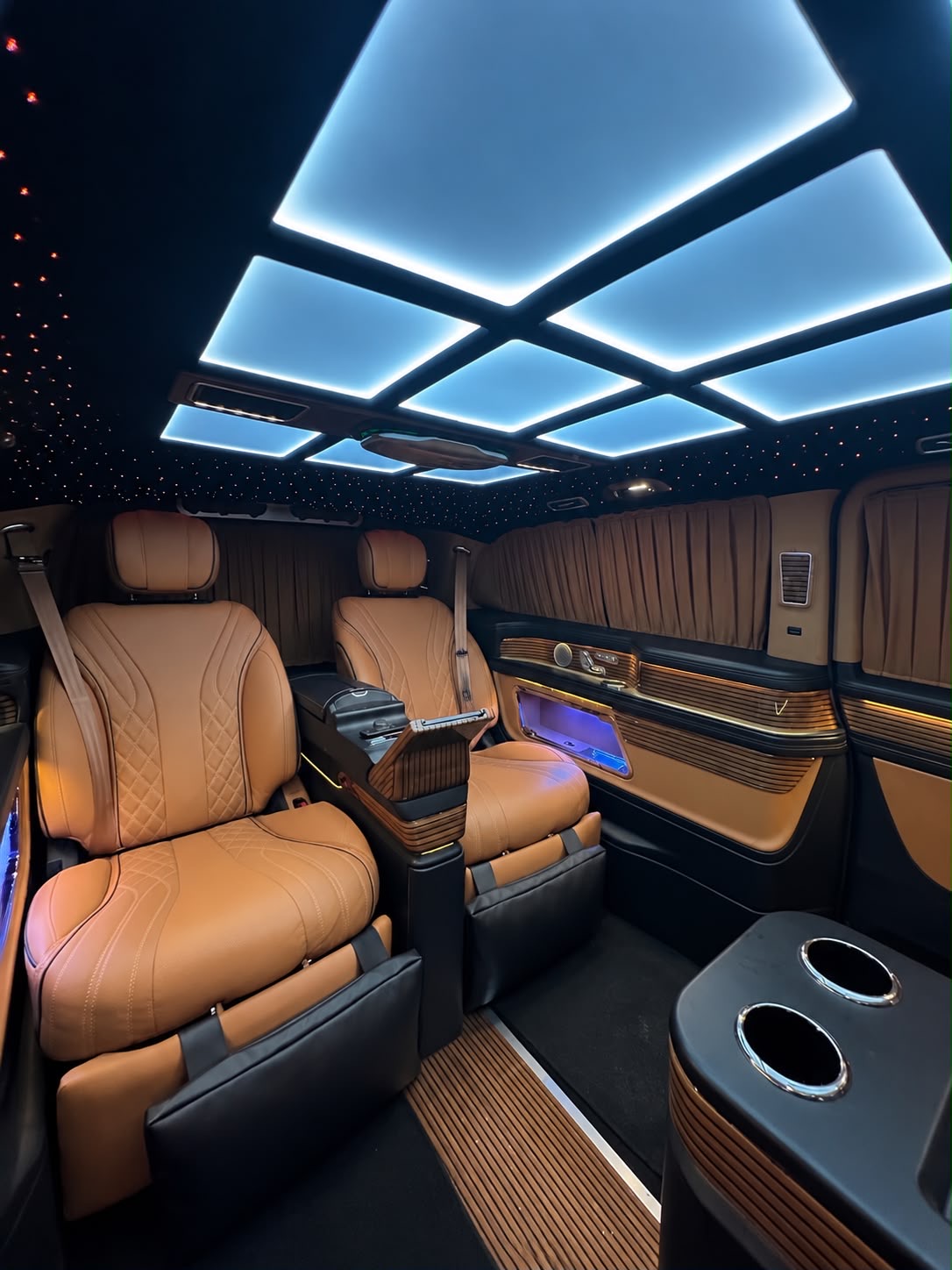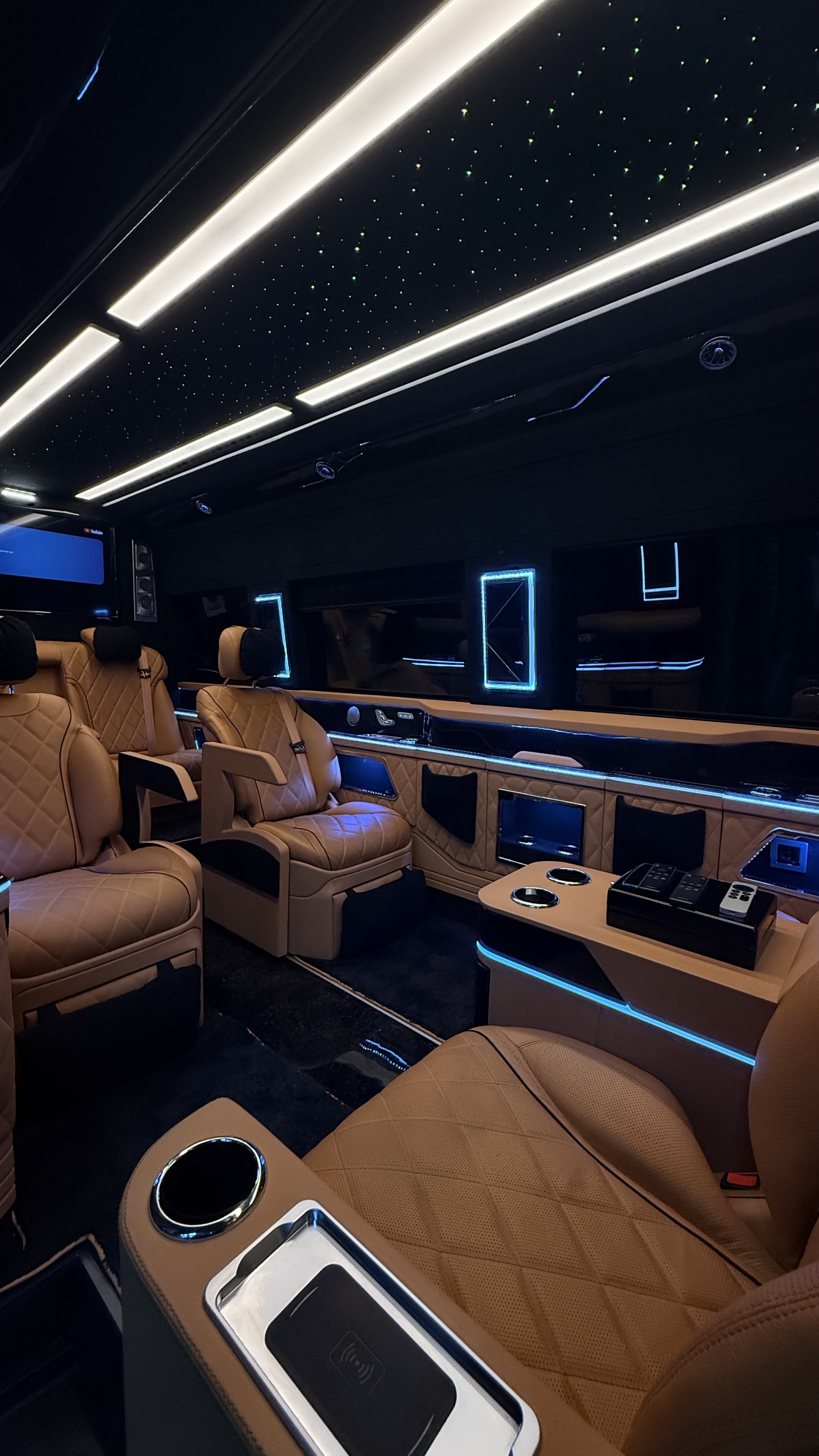
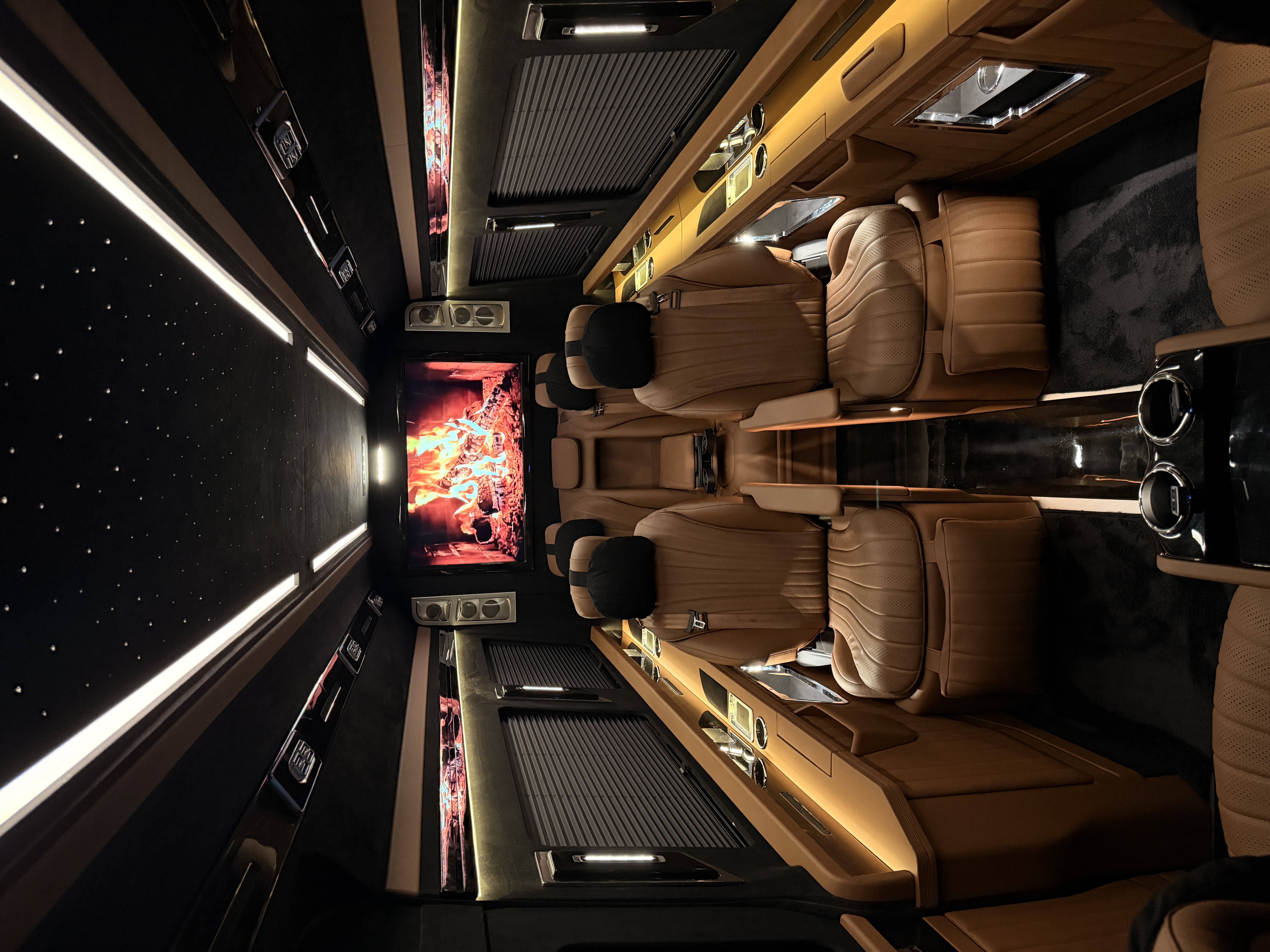
Before starting a Mercedes Sprinter VIP conversion, important details such as seating layout, electrical infrastructure, insulation, weight, material quality, service access, production time and warranty should be clarified with the conversion company.
# What Should You Ask Before a Mercedes Sprinter VIP Conversion?
Before starting a Mercedes Sprinter VIP conversion, the most important question is not simply “How much does it cost?”
A professional conversion should be evaluated according to how the vehicle will be used, how the technical infrastructure will be built and how the interior components will work together.
Before signing a contract, customers should clarify several important points with the conversion company.
For an overview of different interior possibilities, see our Mercedes Sprinter VIP Conversion content.
1. How Will the Seating Layout Be Planned?
The number and position of the seats should be determined according to the intended use of the vehicle.
Passenger capacity, legroom, access to the seats and luggage requirements should all be considered.
Executive seats may include electric adjustment, heating, cooling and massage functions, but their dimensions and positioning must also suit the available cabin space.
2. How Will the Electrical Infrastructure Be Designed?
A VIP Sprinter may contain many electrical components.
Executive seats, refrigerator, multimedia systems, ambient lighting, USB connections, wireless charging, television and inverter systems all require correctly planned electrical infrastructure.
The wiring and power requirements should be determined before the final interior panels are installed.
3. What Type of Sound and Thermal Insulation Will Be Used?
Insulation is particularly important in a vehicle designed for long journeys.
Road noise, vibration and heat transfer can directly affect passenger comfort.
Customers should ask which areas of the vehicle will be insulated and which materials will be used.
4. How Will Additional Weight Be Managed?
VIP conversion components add weight to the vehicle.
Seats, consoles, electrical equipment, interior panels, insulation and multimedia systems should therefore be considered as part of the complete project.
The conversion company should plan the interior according to the technical characteristics and intended use of the base vehicle.
5. Which Materials Will Be Used?
Customers should ask for clear information about seats, leather, upholstery, interior panels, electrical components and other equipment.
A visually impressive interior does not necessarily indicate the quality of the materials underneath.
Material selection should therefore be discussed before production begins.
6. Will Technical Components Remain Accessible for Service?
Electrical systems, air-conditioning components and other technical equipment may require maintenance in the future.
The interior should be designed so that important service points can be reached without unnecessarily dismantling large sections of the cabin.
7. How Long Will Production Take?
The production schedule should be discussed before the project begins.
Custom seats, upholstery, consoles, electrical installation and individually manufactured interior components may affect the completion time.
The agreed scope of work and estimated delivery period should be clearly documented.
8. What Does the Warranty Cover?
Customers should ask which parts of the conversion are covered by the company's warranty.
The warranty conditions for workmanship, electrical systems, installed equipment and third-party components should be explained clearly.
9. Is the Interior Planned as One Complete System?
One of the most important questions is whether the company designs the complete passenger cabin as a single system.
Seats, electrical infrastructure, insulation, climate control, lighting and interior panels affect each other.
This is especially important when creating a vehicle for business or long-distance use. You can also review our Mercedes Sprinter VIP equipment guide for business, long-distance and private use.
Choosing a Company for a Mercedes Sprinter VIP Conversion
A Mercedes Sprinter VIP conversion is a comprehensive project involving design, electrical systems, seating, insulation, climate control and custom interior production.
Before making a decision, customers should compare not only the final appearance and price but also the technical planning, materials, production process, service accessibility and warranty conditions.
At Silver VIP Design, Mercedes Sprinter VIP interiors are planned according to the base vehicle, intended use, passenger requirements and selected equipment.