Compare plain, fluted and diamond-quilted upholstery for a bespoke Mercedes V-Class interior, including pattern scale, stitching and seat-panel coordination.
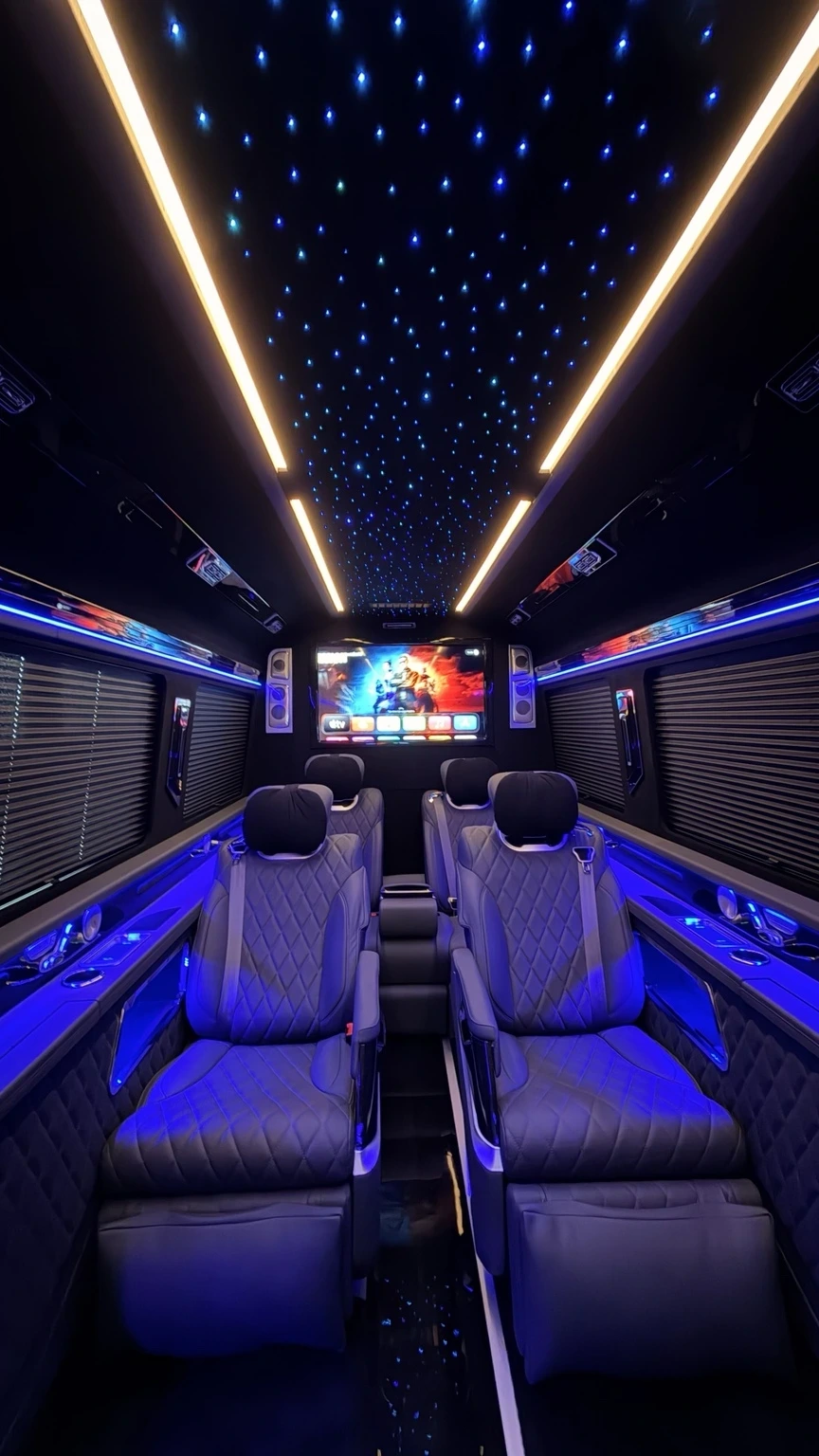
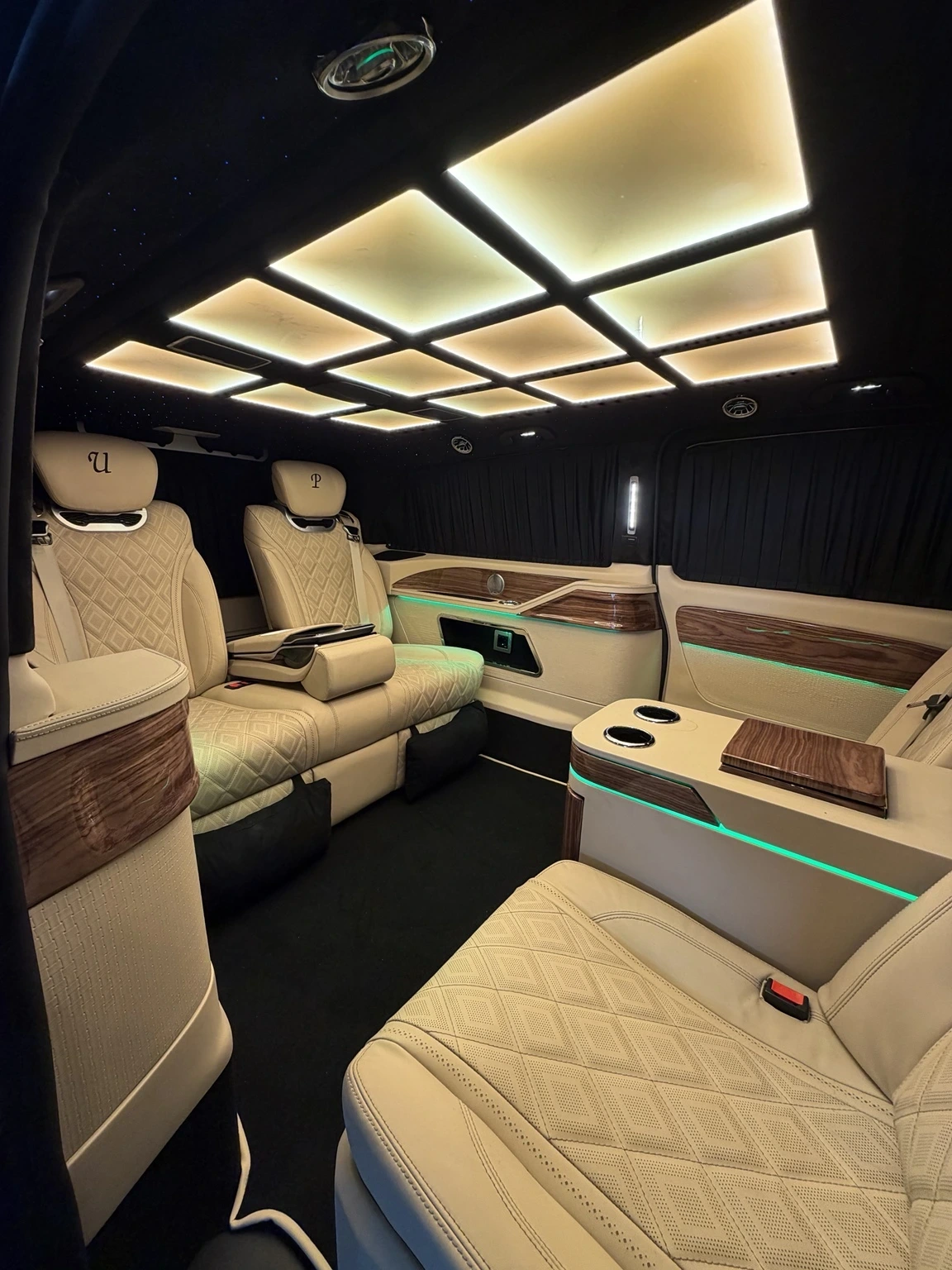
Upholstery example: Silver VIP Design’s completed Çatısan Mercedes Vito project. The photograph illustrates stitching and trim craftsmanship; it does not show a V-Class or every upholstery option discussed below.
The same leather colour can create three very different interiors. A plain seat centre draws attention to the shape of the seat; fluted upholstery adds a directional rhythm; diamond quilting introduces a more decorative surface. For a bespoke Mercedes V-Class, the decision is about how much visual detail the cabin should contain and where that detail belongs.
For UK clients commissioning a Mercedes V-Class Conversion UK, upholstery should be developed around the selected seat and the surrounding interior. A pattern that looks attractive on a flat sample may behave differently across a shaped backrest or a small headrest.
Plain leather: make the seat shape visible
A plain centre panel gives the seat’s contours, seams and proportions a prominent role. It can suit a restrained executive interior, particularly when wood, lighting or another cabin feature already provides the main visual interest.
Plain does not mean unfinished. The placement of the panel boundaries, the tension of the covering and the finish around curved edges remain visible. A carefully positioned seam can define the seat without introducing an additional decorative pattern.
Where should contrast stitching go?
Contrast thread makes a seam more noticeable. It can outline the seat’s shape, but using it on every panel may create more visual activity than intended. A closer colour match gives a quieter result. Compare both approaches using the actual leather and thread, rather than relying only on screen images.
Fluted upholstery: give the surface a direction
Fluted upholstery uses repeated channels. Their width and direction influence the seat’s appearance: narrow channels create a different rhythm from wider sections, while vertical and horizontal arrangements lead the eye in different ways.
The layout should account for the shape of the backrest, cushion and headrest. Continuing a pattern across all three areas without checking their proportions can leave awkward partial channels at the edges. A plain border can provide a deliberate ending and separate the patterned centre from the seat bolsters.
Diamond quilting: control the scale of the pattern
Diamond quilting can become the strongest decorative element in the passenger cabin. Its appearance depends on the size of the diamonds, the thread colour and the way the pattern meets the surrounding panels. Small diamonds may look busy on a large surface; a large pattern can lose its intended shape on a narrow insert.
Match the pattern across paired seats
Where two executive seats sit together, compare the position of the pattern on both backrests and headrests. The upper starting point and the way diamonds end at the sides should look deliberate. The goal is a consistent composition across the seating pair, not merely the presence of the same stitching design.
Use patterned and plain areas together
A quilted seat does not require quilted doors, quilted consoles and a matching ceiling. Repeating one detail selectively can connect the cabin while leaving other surfaces calm. For example, patterned seat centres can be paired with plain bolsters and a small coordinated insert elsewhere.
Door trim also has different dimensions from a seat. Rather than copying the pattern at the same scale everywhere, assess how it fits each surface. For a larger passenger cabin, these upholstery choices can also be discussed as part of a Mercedes Sprinter Conversion UK project, with the pattern scaled to the selected seats and panels.
Approve the upholstery on a representative sample
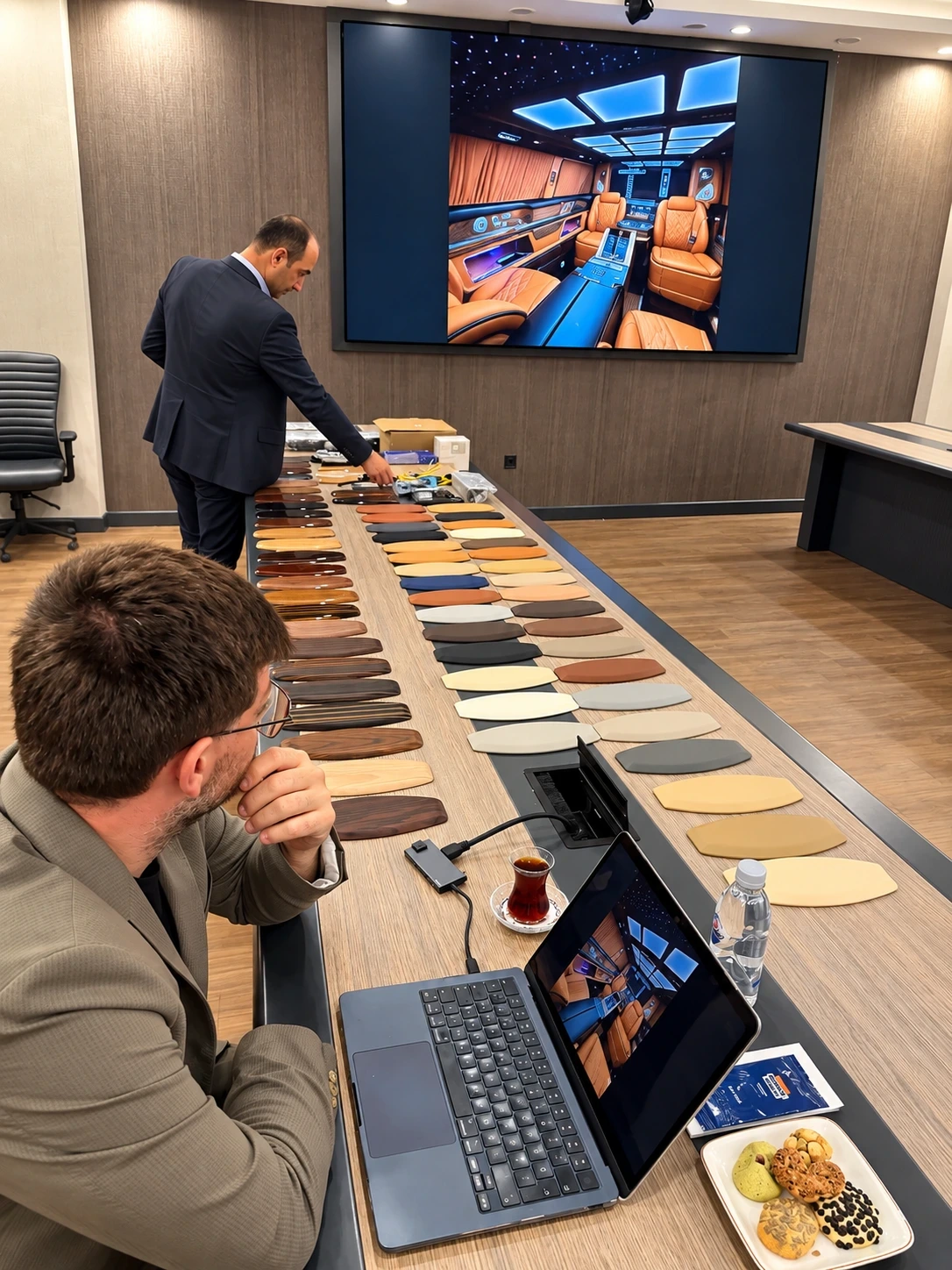
Review a sample containing the intended leather, thread, backing and edge treatment. Look at it in daylight and under the proposed cabin lighting. If the chosen seat includes ventilation, heating or integrated safety equipment, upholstery changes must be assessed against that seat’s requirements; a decorative pattern alone cannot establish compatibility.
Silver VIP Design develops bespoke interiors in Istanbul. Send your V-Class details, preferred leather colour and examples of the stitching you like. The upholstery design and feasible options can then be discussed as part of your individual project, with the final materials and pattern recorded before production.
Applying upholstery choices to a luxury Sprinter van
A Mercedes Sprinter Van Conversion provides a larger canvas for bespoke upholstery. In a luxury Mercedes Sprinter, the size of each seat insert should relate to the wider cabin, rather than simply copying the V-Class pattern. A Sprinter Van Conversion also allows the leather palette to be coordinated with larger side panels and individually designed consoles.
For a luxury Sprinter van, restrained stitching can work alongside expressive wood or metal finishes. Clients exploring Sprinter van luxury should compare representative material samples and the complete seating composition. Across bespoke conversion vans, the right balance depends on the intended passenger space; Mercedes Sprinter VIP Conversion UK projects can use these same design principles with a layout developed for the individual vehicle.